“Parapluie” - Umbrella
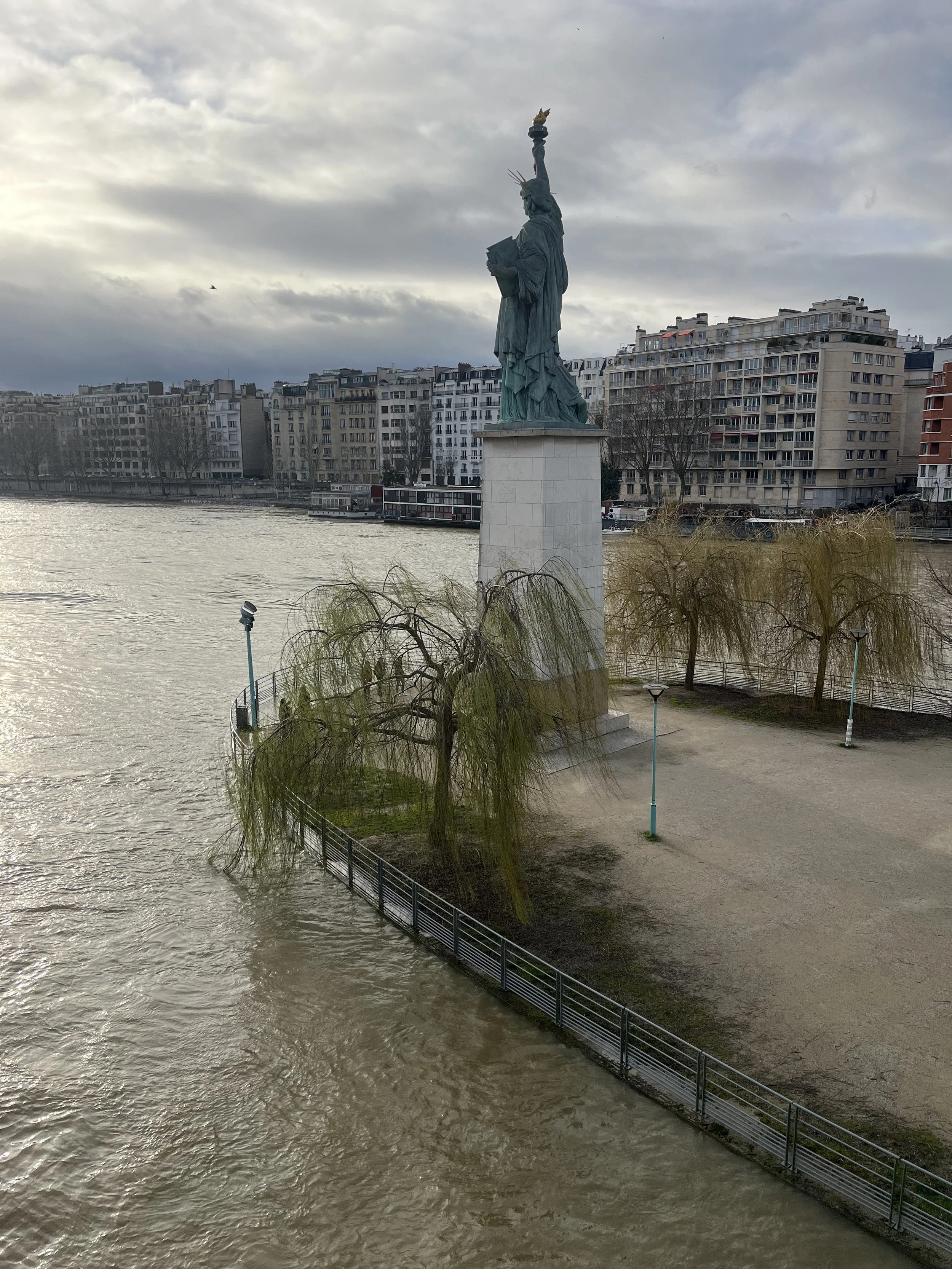
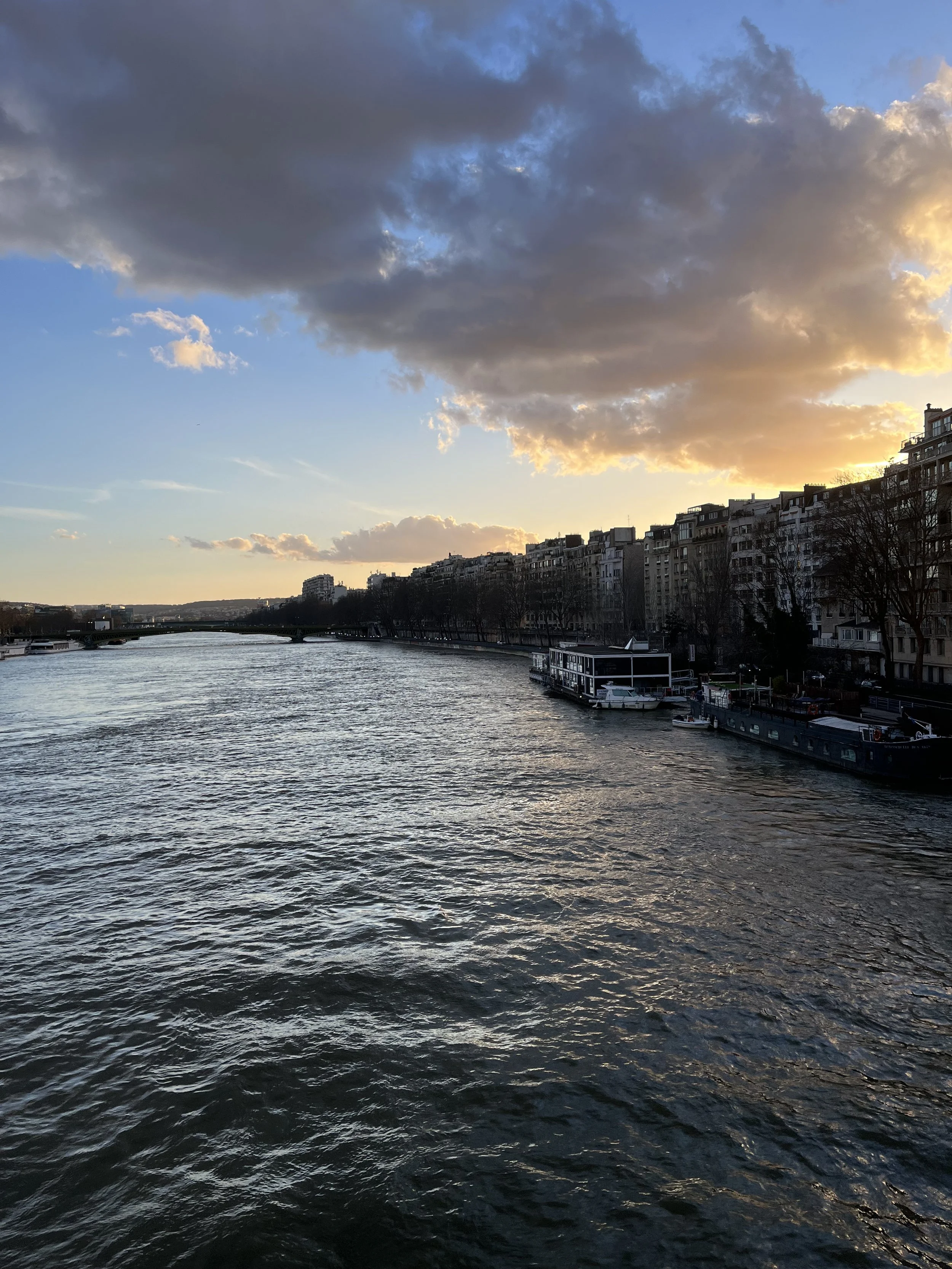
France is flooding. The Seine is incredibly high. The Ile aux Cygnes, a small island in the middle of the river on which Katy sometimes runs and which is home to the French Statue of Liberty, is partially underwater. It rained here nearly every day for what feels like—and probably is—weeks. Katy and I have experienced a little cabin fever because it hasn’t been fun to leave the apartment.
This week has changed that. Temps are on the upswing. Daffodils (which my family colloquially called “Easter flowers”) are blooming, as are the magnolias and cherry blossoms. My schedule isn’t as packed as it was earlier in the year, so I’ve spent a few mornings on my own getting lost in a few different arrondissements. Indiana has taught me not to trust the nice weather, especially this early in the year. So I’ll soak it up while I can.
Things have slowed down a bit at Le Cordon Bleu, as we move towards the final exam for the Basic Cuisine certificate. Most of my demos and practicals are at 7:30am. My mornings then start around 5:45am, crawling out of bed and making an espresso. I catch up on texts and emails from the western world, shave if I need to, do a French lesson or two, make a second espresso and knock it back, and then walk the twelve minutes to school.
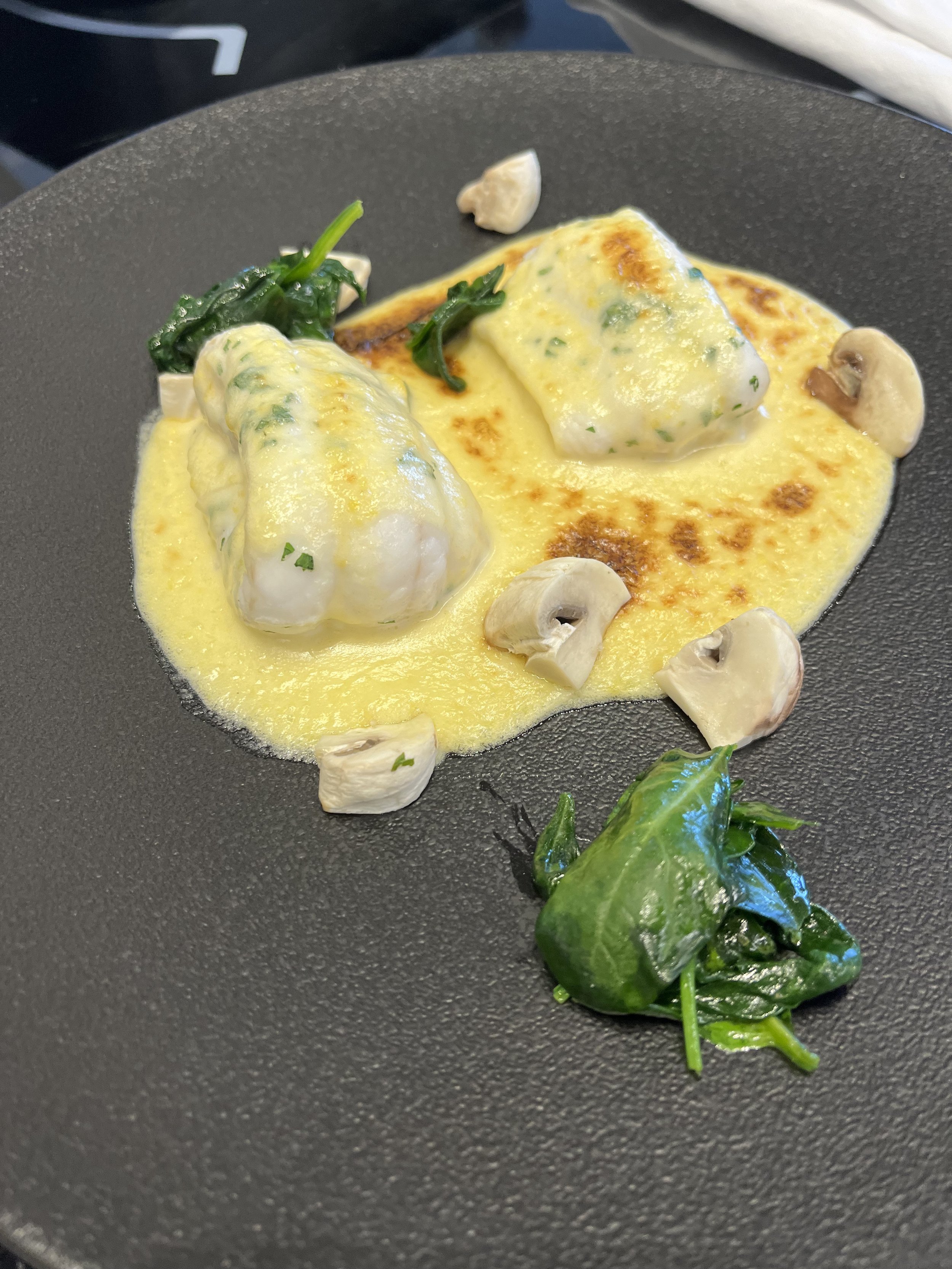
In the highlight of my culinary school career so far, we cooked sole again last week—that’s the funky flat fish with both eyes on one side of its face. Our chefs have a tendency to walk behind us and look over our shoulders as we work, which was nerve-wracking at the beginning but a bit less so now. I peeled the skin off the fish and went to work trimming its fillets, two on each side. With three filets sitting in the hotel pan, my chef walked behind me and said, “Ah, ces filets sont parfaits, Cyril.” (Those filets are perfect, Cyril.) I stopped my knife and stood up straight, turned to look at him, and stared for a second. “Um. Thank you. Merci. Chef. Vraiment?” He nodded and kept walking down the line.
The dish we made is called filets de sole Bonne Femme. The fish is poached in white wine and fish stock (which we call fumet), topped with a savory sabayon mounted with butter—technically turning it into a kind of hollandaise—and browned under a broiler. I plated my fish, with spinach and mushrooms, and presented to chef. He took a bite of the spinach. Then a mushroom. Cut the fish in half to ensure it was cooked (it was). Took a bite of the fish. Scooped the sabayon onto another bite of the fish and ate that. And ate another bite of spinach.
This was my 23rd cook of Basic Cuisine. I have never seen a chef eat so much of a plate I’ve presented. He turned to me and said, “Wow.”
Last week, after several of the early-to-rise days, I got home and sat on the couch for entirely too long. In a series of several conversations, Katy encouraged me to stop sitting on the couch and to instead go and experience more of Paris, Cy, come ON. And wouldn’t you know it, she’s right. Now, my downtime is being translated into several dozen kilometers being put on my feet every day. While Auggie is with his Norwegian nanny and Katy is working, I’ve been visiting museums.
Honoré de Balzac, despite having a snicker-inducing surname, was one of the greatest French writers. He’s most well-known for his several volume-series called La Comédie humaine. And when I say “several volumes” I mean 91 finished works and 46 unfinished. I haven’t read them, nor is it likely that I ever will. But I can appreciate a man who woke not long after midnight, fueled himself on coffee, and wrote prolifically. His apartment sits just across the Seine, and is now a small museum dedicated to the man and his work. It includes a series of sketches of Honoré by Picasso, as well as a few small sculptures of the man by Rodin. Art appreciates art.
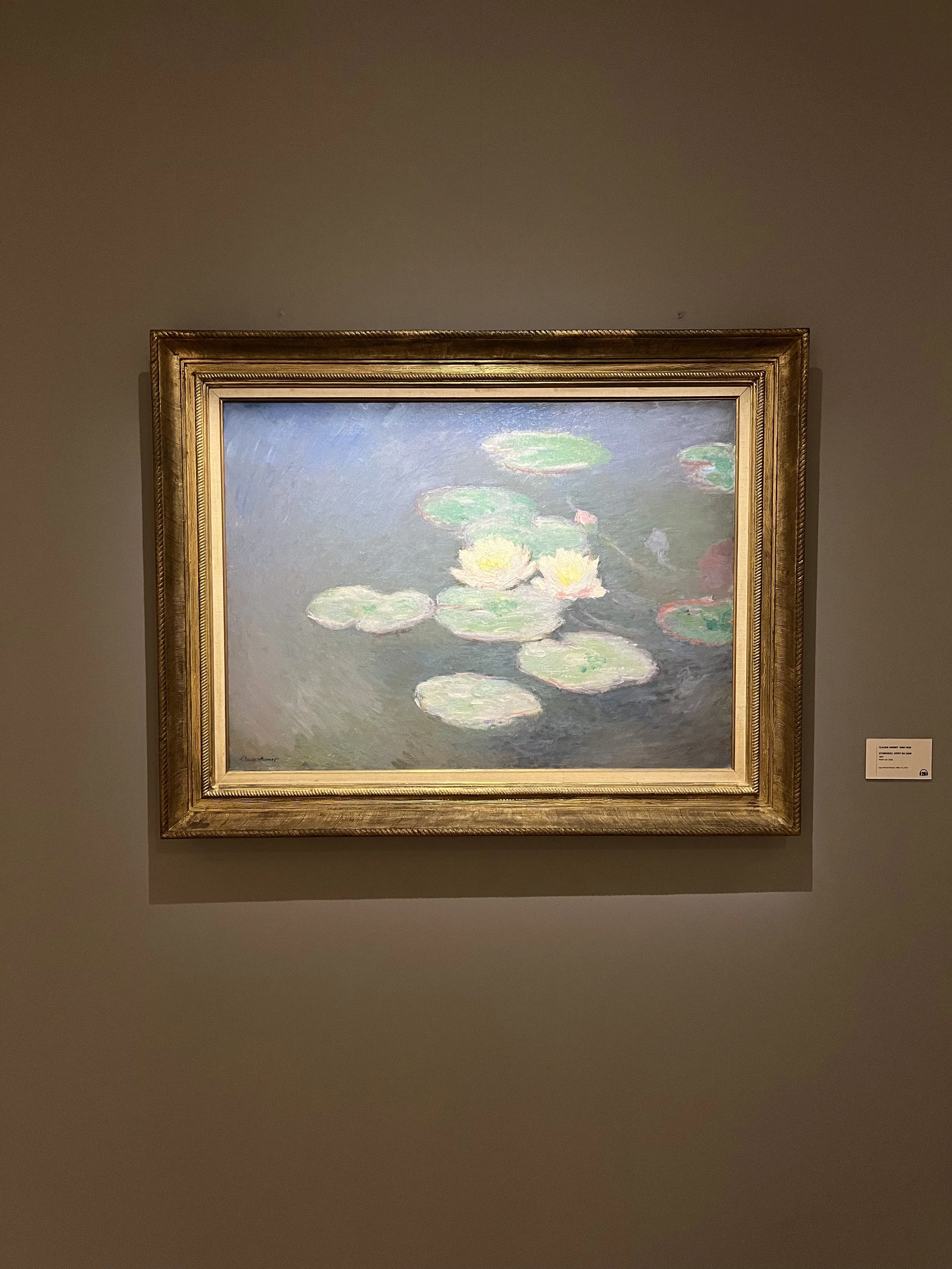
North of Maison Balzac, near the top of the 16th, sits Musée Monet Marmottan. It’s a deceptively large and comparatively unknown wealth of impressionism that houses the bulk of Monet’s Nymphéas (better known as Water Lillies), a series he painted based on a garden at his home in Giverny. During my visit, there was a nicely curated exhibit dedicated to sleep in all its forms: innocence, sleepwalking, dreams, nightmares, the dark, eroticism, and death. I was fortunate enough to sit in front of several astounding pieces—both Monet’s work and otherwise—and enjoy them almost entirely to myself.
Being surrounded so casually by so much astounding art in this city has made me start sketching. Granted, right now I’m mostly sketching on Auggie’s e-ink drawing pad, and drawing pictures of BIG firetrucks and BIG trains and traintracks—which the boy promptly erases at the press of a button, then tells me to do it again. Maybe this is how Monet got started.
I’ve written quite a bit about classic French food, both given what I’m learning and where we are. While the brasseries and cafes and bistros are everywhere, it’s certainly not all we’re eating. In fact, one of the better meals we’ve had recently came at a Filipino place called REYNA. It’s a small spot in the 11th, which is seeing a serious resurgence in interesting food. In my list of “places to eat in Paris,” over a third is in the 11th.
REYNA isn’t strictly Filipino, per se. It’s blended nicely with Parisian influences. The staff are all Filipino, from front of house to the kitchen.
In Indianapolis, we don’t have a strong showing of Filipino restaurants. But for a time, we did have Rook, which was my favorite restaurant in the city. Covid took it away from us, and while Chef Carlos Salazar opened Lil’ Dumplings in The Garage, it’s not the same. You can imagine how excited I was to eat here.
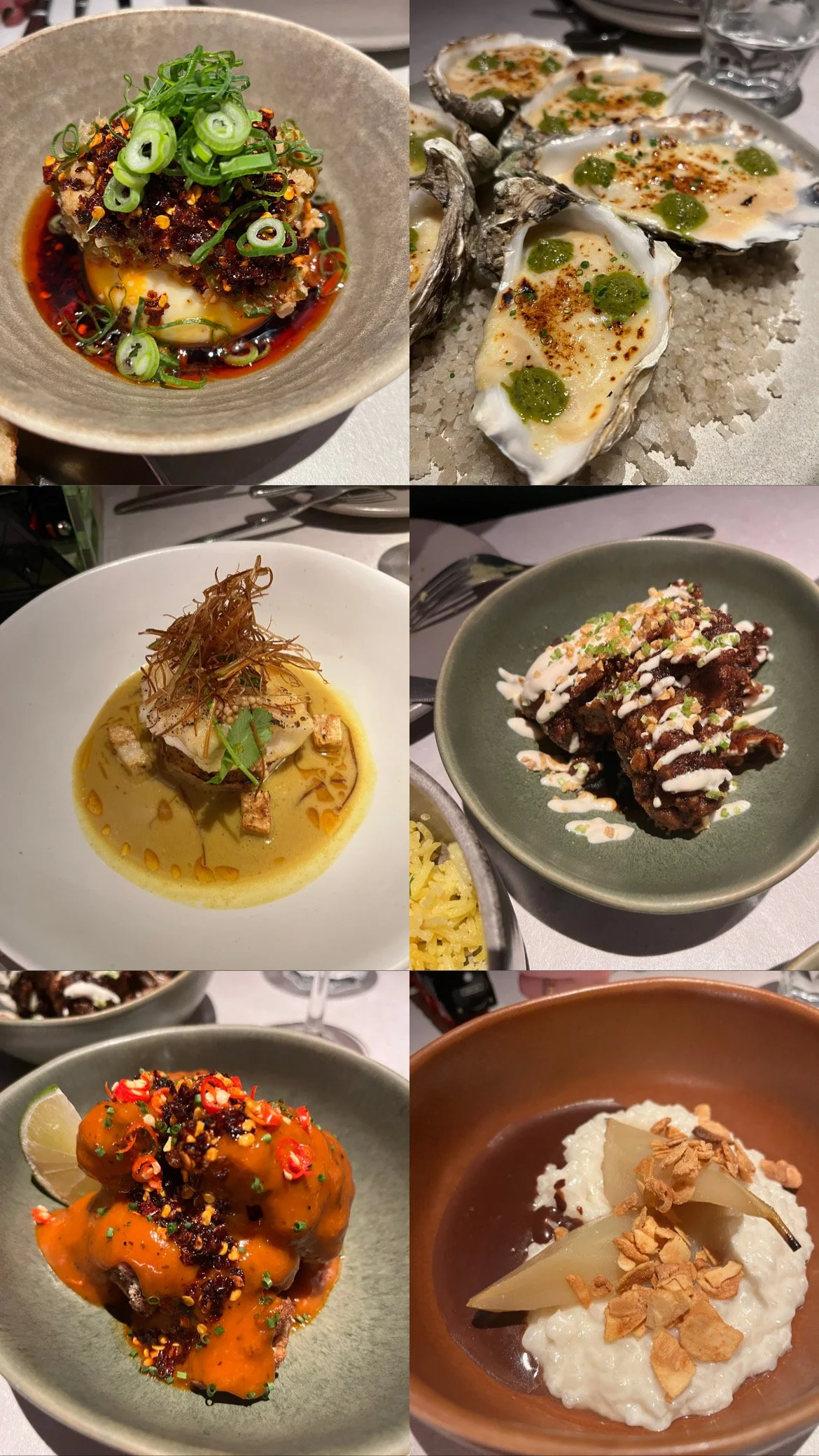
The menu was small and inspired, and meant we were able to try just about everything—and that’s how I like it. We ate: Hainan burrata, absolutely drowning in chili oil (which is how I’d like to leave this planet someday); oysters Rockefeller, made Filipino-style with a tamarind bechamel; monkfish in sauce rendang; two orders of fried wings, one in a sauce adobo for Katy and one in an incredibly hot sauce pinatubo for me; and a rice pudding for dessert. Auggie loved the topping on the oysters, and tried his absolute damndest to eat a whole one. But the texture of it got to him and he gagged three or four times before we finally called it and let him spit it into a napkin.
Auggie keeps talking. In fact, he often won’t stop talking, filling every precious silent void with a smattering of syllables that come out all at once because his mouth moves faster than his sweet little brain. He calls our attention to every single bus, train, piece of construction equipment, motorbike, and big truck he sees. We’re trying to teach him a bit of French, but by and large it’s not catching—yet. We’ve noticed when he hears French, whether people speaking it on the street or the automated voice announcing “la porte est ouverte” at the front of our apartment building, he mimics it by literally saying, “lah blah blab blab blah.”
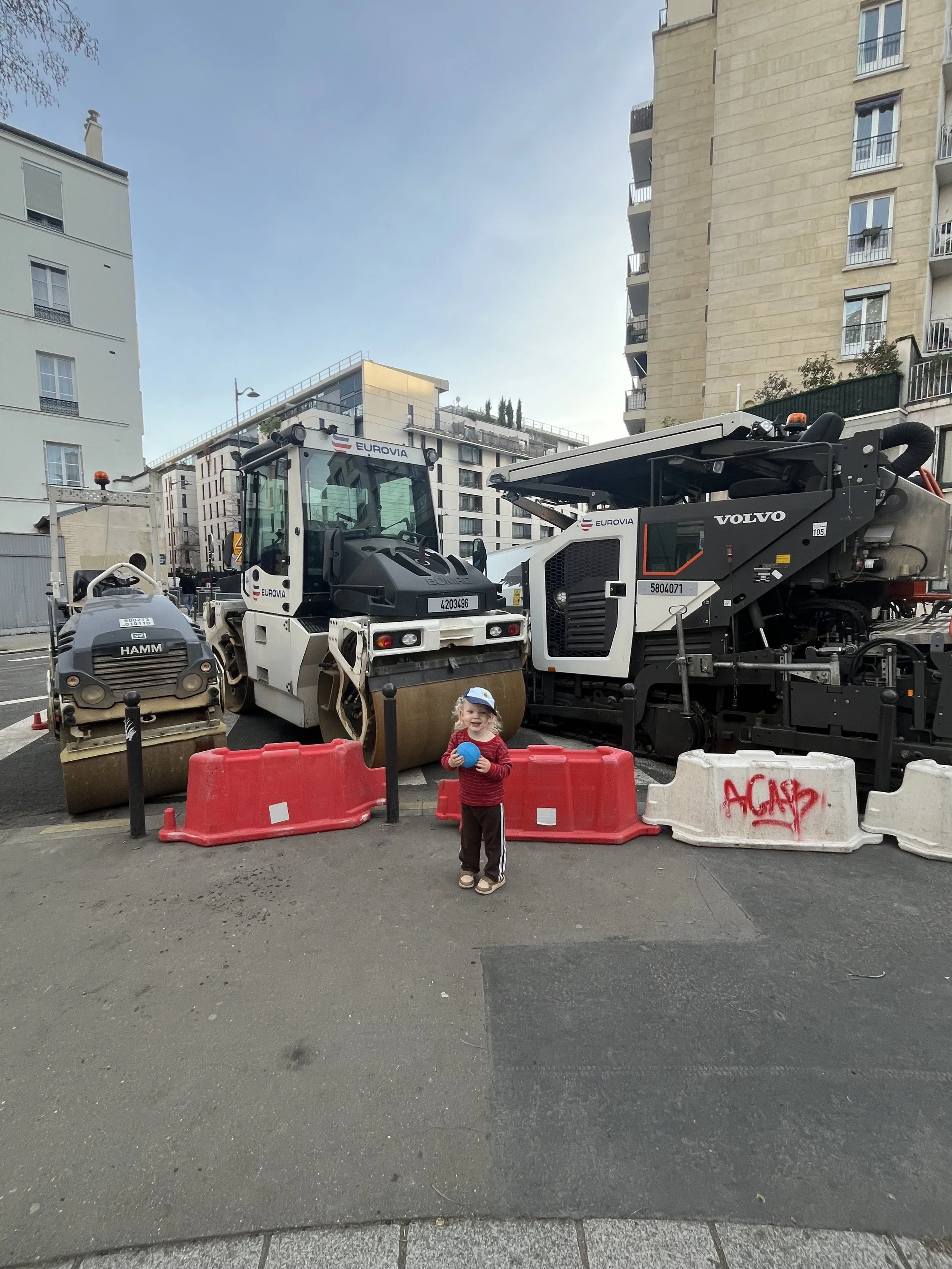
Of course, everything changed after I wrote that paragraph. As we sat at a restaurant earlier today, a server placed a napkin and fork in front of Auggie. “What do you say?” Katy asked Auggie, as we so frequently do to remind him of his manners. “Merci,” Auggie said. Katy and I both did a double take, then looked at each other across the table. Did he really say that? Yes, Auggie said “merci” to the server. The child amazes us so frequently.
Meanwhile, Katy has found a small cadre of mom friends, mostly through sheer force of will and good humor. She also attended an ex-pat women’s “patisserie” night. I put “patisserie” in quotes because they made cookies (later deemed inedible) and brownies, neither of which I’m sure qualifies as patisserie, but what do I know. She was proudly the only one in the group who knew what creaming butter and sugar together means. She was also one of only two not trying to have a career as a content creator (which I hear is the rebranded term for “influencer”). I am thankful for that. And in a surprise to no one, she has finally found a series of French Goodwill-esque stores. She has visited frequently.
Basic Cuisine is nearly finished. On what was our fifth or sixth practical two months ago, several of my classmates and I waited outside our kitchen. We stood quiet and serious, bounced on our toes, nervous energy spiking through us. Meanwhile, we watched the Intermediate and Superior groups standing near us joking, laughing, yawning. We wondered—when do we get there? A scant two months later, we’ve made it. With only three cooks left, the growth we’ve experienced is incredible. A third of the way through. And already, we’re faster, cleaner, more efficient, and can cook so much better.
The three of us have been here a full two months now, and suddenly it doesn’t feel like long enough. The conversations about how we spend our time, where we intend to go, the restaurants we plan to eat at, are all starting to happen more frequently. I’ve started a list of other places outside Paris to visit: Giverny, Brittany, Beaune/Dijon/Lyon, and Reims/Epernay in Champagne. That’s just the beginning. There will be more.
I understand very well now how Bill Buford’s stay here—if you remember my reference in my first newsletter to his incredible book Dirt—which was supposed to be only about a year quickly and easily became four. We probably won’t have that luxury. Our visas have expiration dates.
With that said, if you’re planning to visit Paris and would like to see us while we’re here, please share your plans with us as soon as you can. We’re going to start scheduling time away from Paris, and want to be respectful of everyone’s travels.
As always, thank you for reading. You can respond to this email, if you want—it goes to my inbox, and I love hearing from you. Otherwise, you can catch up on previous notes by clicking here.