“Maison” - Home
Across the street from Le Cordon Bleu, they’re building a new high rise. It was mostly girders when I started in January. Almost every day I’ve walked by construction workers sitting on our steps, smoking cigarettes and drinking espressos from the LCB cafe. In the nine months I’ve been here, it’s gotten a little more done, day by day. The glass façade went in. Balconies were finished. Greenery was planted. They’re cleaning up the base of it now, getting the entrance ready. There’s still plenty going on inside—it’s not done yet. But it looks so much different than it did.
Is this metaphor too on the nose? Too bad. You’re getting it anyway.
I’m writing this on Tuesday, my last day of culinary school, the day of my final exam. This morning, I walked to Le Cordon Bleu. I took the path I’ve taken frequently over the last nine months, listening to the new Interpol album and taking in all of the sights in the early morning light. For the first time in all the weeks I’ve been here, I felt a calmness—that I know what I’m doing, and can do this, and will do this well. I walked up the steps, into the locker room, and put on my uniform for the last time: buttoned my vest, put on my hairnet and cap, wrapped my apron tight, and hung my torchon from it. I cooked in the kitchen where nine months ago we started by just cutting vegetables—that felt poetic. I made a dish of my own creation, a sweet potato croquette with shrimp ceviche, and a dish dictated by the school, a sea bream saté. It went well. The whole thing. That’s the whole thing.
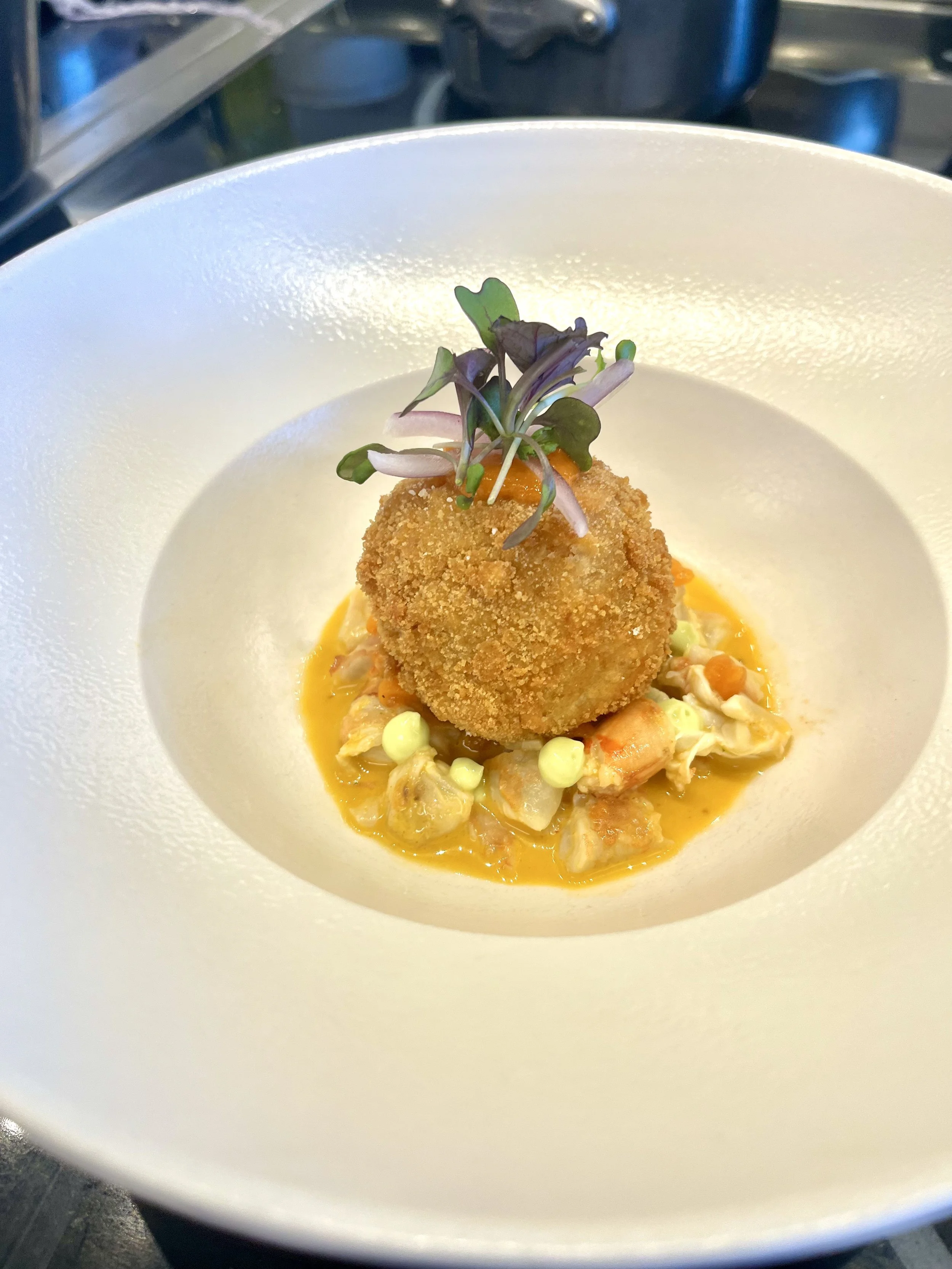
I've finished culinary school at Le Cordon Bleu in Paris. I’m going to graduate, and do so with distinction, with honors. I did what I came here to do and more. I graduate a week from today.
As I took off my uniform, I remembered getting fitted for it on orientation day—which feels like so long and like no time at all. I was so nervous. The whole experience laid out before me, a long way away with a lot to learn.
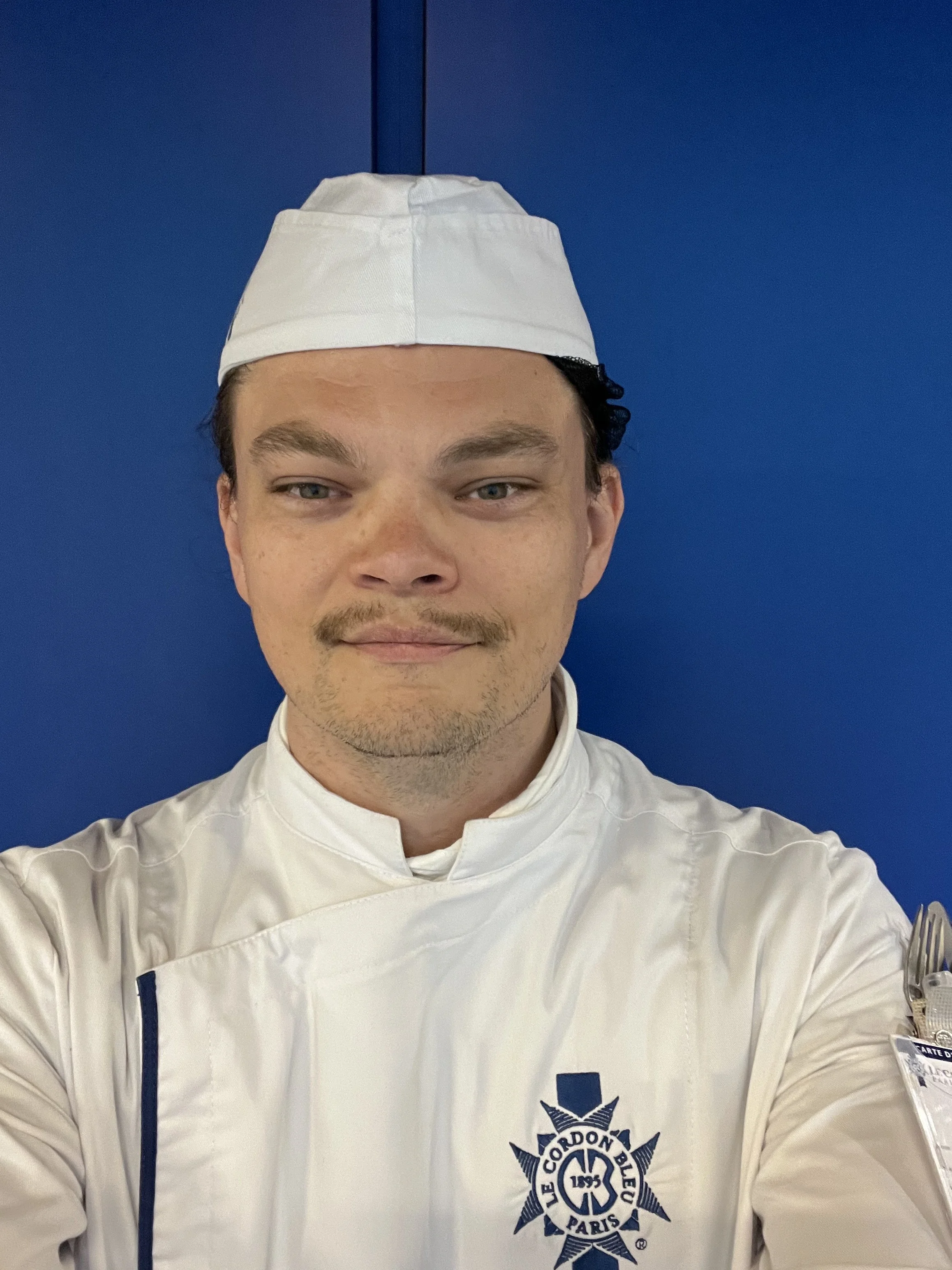
I arrived at LCB in January with some general knowledge I picked up from books and watching videos—just the basic structure. Today, I’m much more filled in. There’s a nice façade, moustache and all. There’s still plenty of learning to be done. That will come in time. But today, for now, I think we should celebrate.
Here’s some whimsy for you. It was our last practical, our final time cooking before the final exam. When I approached the room, I saw the chef inside and sighed. He’s the chef who’s over the majority of the cuisine department, and who deals particularly with Basic. In general, he isn’t very well-liked, not because he’s mean necessarily, but because he has a tendency to play some head games with us. (He moonlights as a therapist.) When we approach him with a plate, he always asks us, “How did today go for you, Chef?” If you answer anything positive, he usually says, “Really? It doesn’t look like it went well,” and starts picking out the little things that are wrong on your plate. If you answer in the negative, he says, “Why no confidence, Chef? You have to have confidence in what you’re presenting.” He has put me in a bad mood on more than one occasion. This time, I was going to mess with him right back.
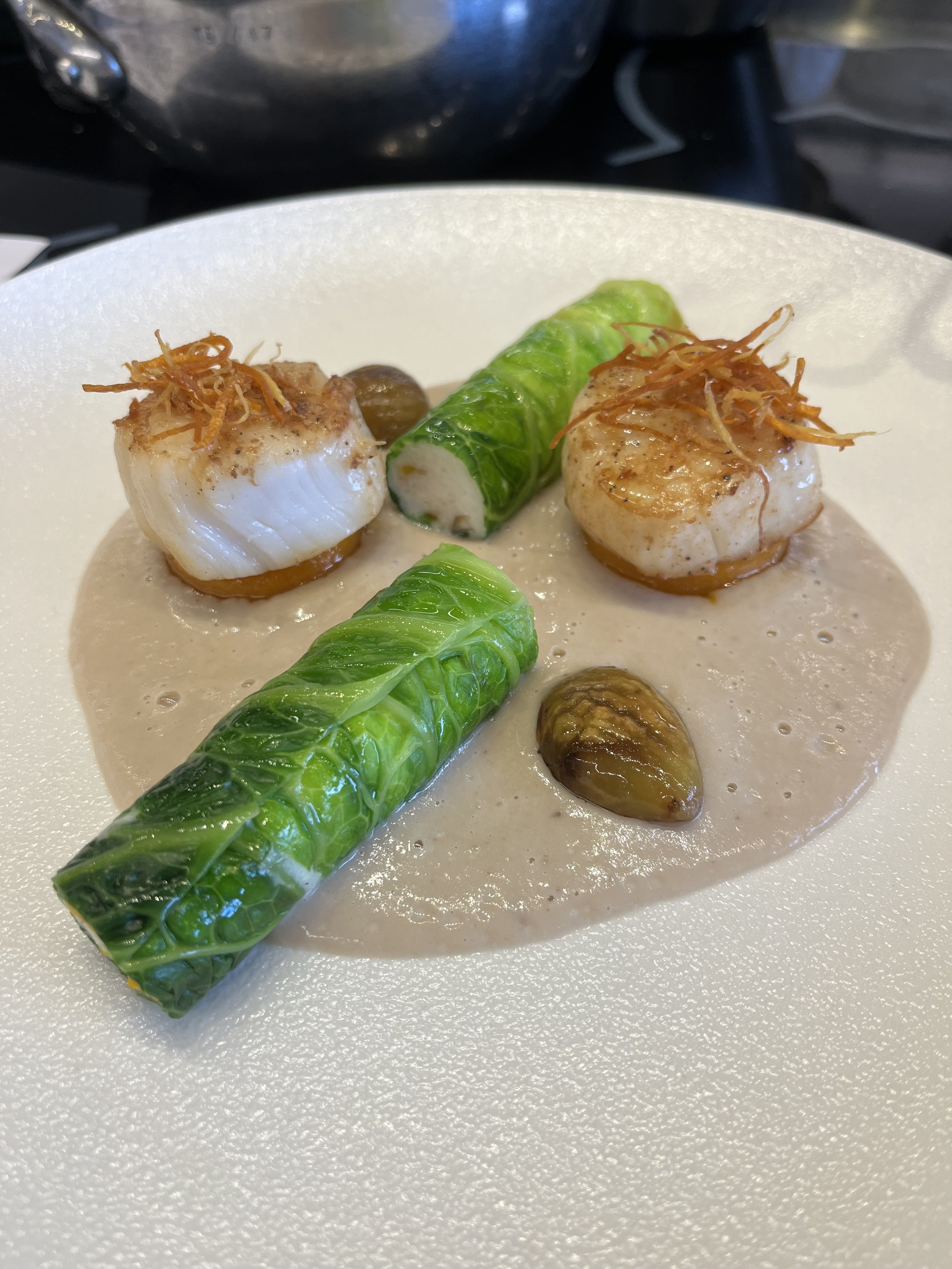
We cooked scallops two ways, one traditionally pan-fried and the other as a mousselline, rolled into a cabbage leaf as a kind of cannelloni. For me, the day went pretty well. I was done pretty easily, it felt fine. It wasn’t a challenging recipe. But I could hear him admonishing my classmates as they took their dishes to him. With mine plated, and with its flaws in mind, I presented my dish. It went like this:
Chef: Comment ça s'est passé ? (How did it go?)
Me: Pas mal, Chef. (Not bad, Chef.)
Chef: Quoi? Pas mal? Ou bien? (What? Not bad, or good?)
Me: C’est le meme chose, Chef. Pas mal, bien, le meme chose. (It’s the same thing, Chef. Not bad, good, the same thing.)
Chef: MAIS NON CHEF! Ce n’est pas le meme chose! Not at all! (But no, Chef! It’s not the same thing. [He switched to English here.])
Me: Mais oui. C’est pas mal. C’est bien. C’est le meme. (But yes. It’s not bad. It’s good. It’s the same.)
Chef: No no no. Tell me, is it “not bad at all,” chef? Or was it good?
Me: Chef, it’s the same thing. If it’s not bad at all, it’s good. If it’s good, it’s not bad at all.
Chef: Well, you have to tell me. Is it not bad, or is it good?
Me: C’est pas mal, Chef. (It’s not bad, Chef.)
Chef: Huh. Well, I think it looks good.
Me: I think so too, Chef. (Me, smiling.)
Chef: (thinking for a beat about whether to dive back into this…) (sighing) What do you think you could have improved?
I walked through a handful of things I could have done better, and which I knew and understood already. He agreed with them, but also said they weren’t as big of a deal as what I even thought they were, which wasn’t a big deal at all. He scored me a 23/25, the second-highest score I’ve gotten from him.
In general, the French will rarely say something is “bien.” There’s always an influence of the negative underlying everything, easily slipped in. So “pas mal” usually means it’s pretty damn good. Like Chef said: is it not bad at all? If it lacks badness, one can assume there’s a good amount of goodness.
As we were cleaning up, my station mate looked over at me casually and said, “Have you ever seen Key & Peele, the comedy show? You know how a lot of their comedy is arguing over absolutely stupid, asinine things and neither one backs down? That’s what I just saw between you and Chef.” Ça marche pour moi.
The 11th arrondissement is probably the most food-forward neighborhood in the city right now. Katy and I have had a lot of incredible meals out there. It’s young, it’s vibey, and you’ll find everything from fine dining to American-style fried chicken. We shared what might be our final date out there as a little celebration of my finishing culinary school, and if it’s the last, we went out with a bang.
Maison is a restaurant by Sota Atsumi. It, like many modern fine-ish dining restaurants, is in an unassuming building. But when you heft open the door and walk inside, it’s unlike anything I’ve seen since I’ve been here. It’s open, airy, with an A-shape loft where all of the tables sit. The walls are red tile, the floors are red tile. It’s minimalist and gorgeous. You sit facing a very open kitchen—almost more like a stage than a stove. Chef Sota stands at the back, overseeing his line cooks with a calm yet stern demeanor. He checks sauces and grills meats. Near him is a blazing wood-fired oven.
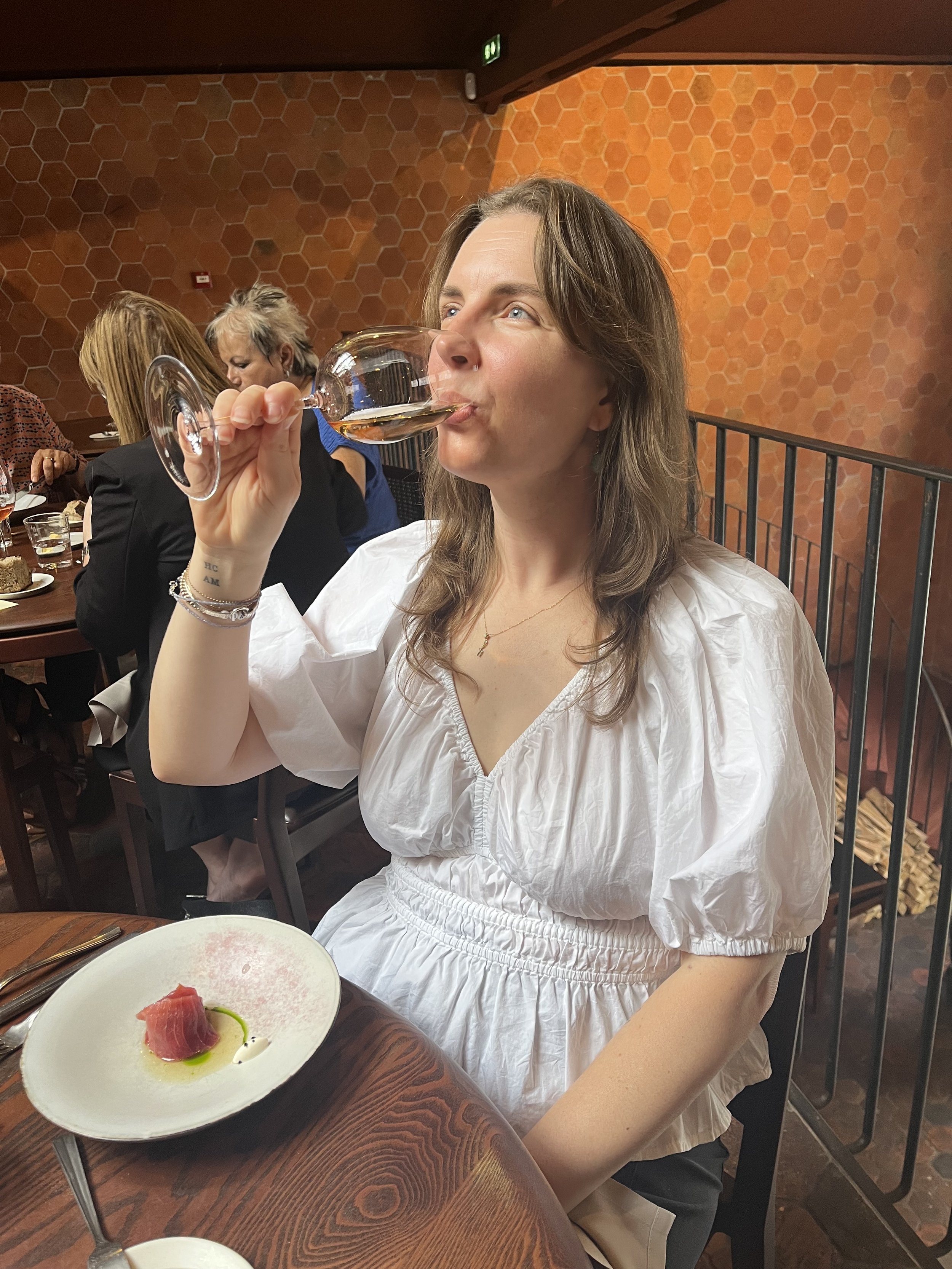
La Maison, c'est là où tu es.
The only option is a five course tasting menu, with an optional lobster course add-on, which ended up at about nine courses after a couple amuse and the mignardise at the end. While we finished, Katy asked me which meal has been my favorite since we’ve been here. How can I answer that? From Restaurant AT, to Vaisseau, to La Mere Braziere, to Reyna, to the boatload of oysters we just had in Brittany—I’ve eaten so much remarkably good food in this country that I don’t know how to compare. Maison ranks right up there. It’s not as creative-for-creativity’s-sake as AT or Vaisseau, but it’s more forward-thinking than La Mere. Let me walk you through the eats:
Juice of celery and apple
Raw sardine with sauce of nettle
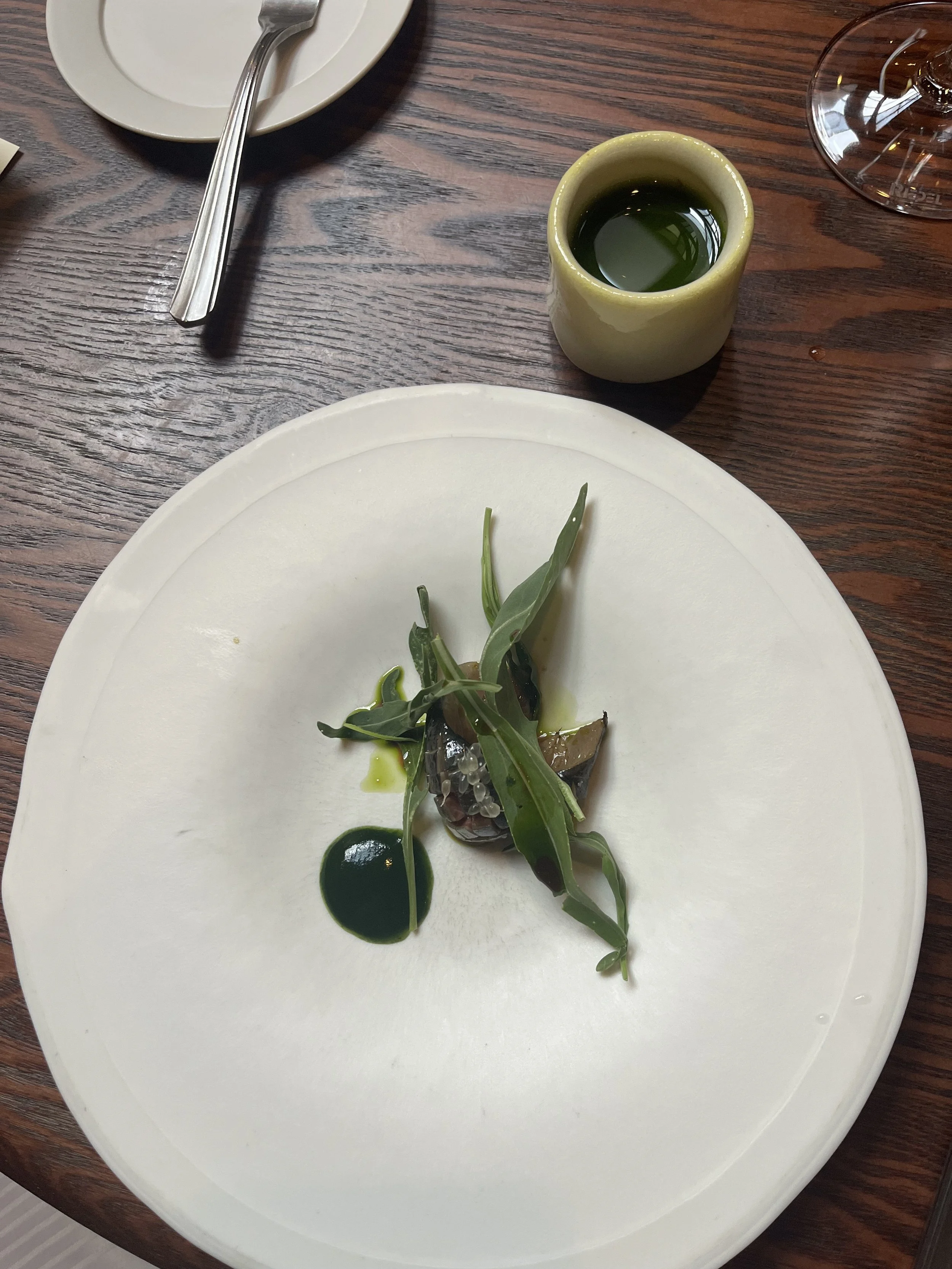
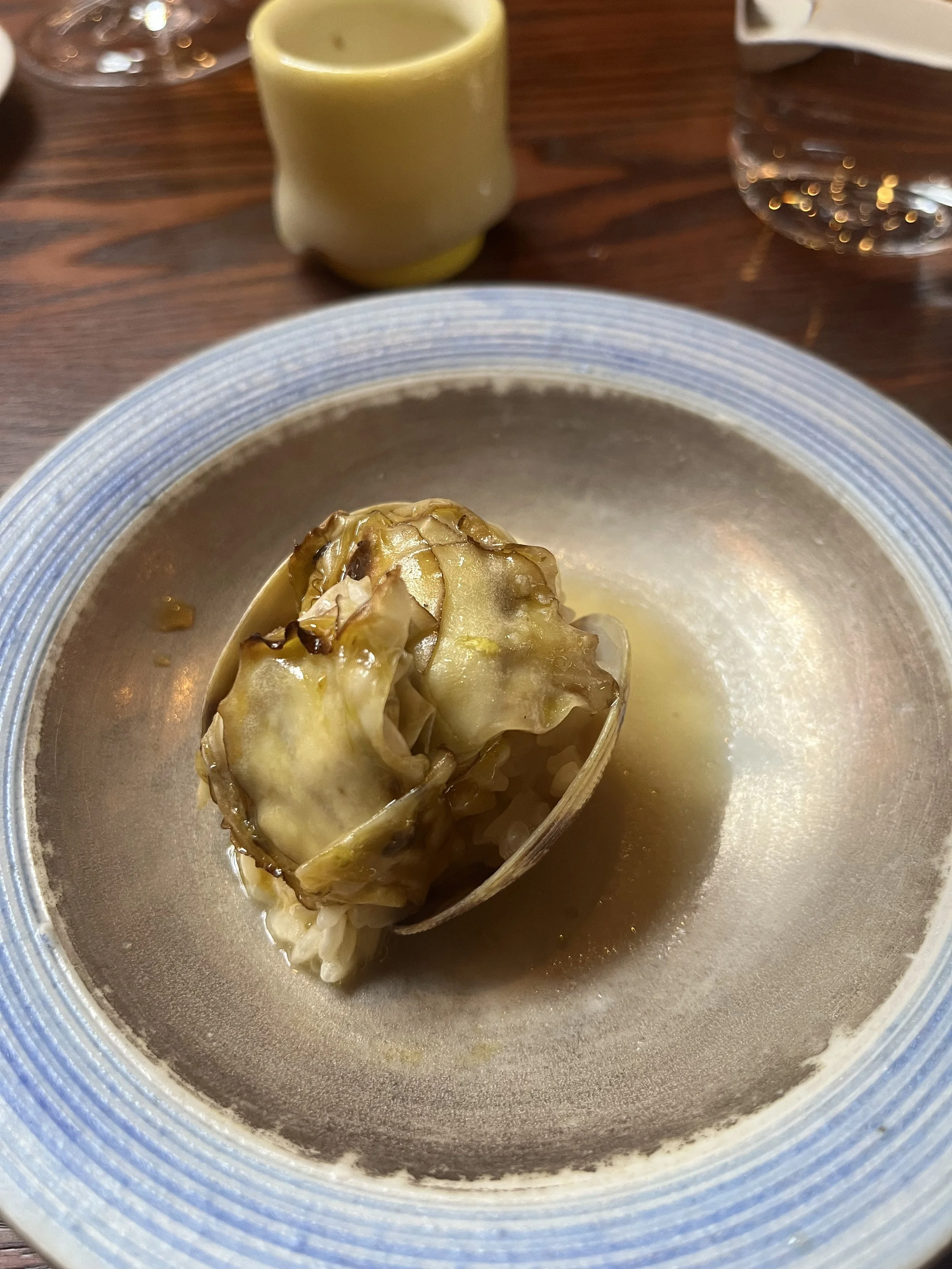
Koji rice, clam, mushroom - these three were the first amuse bouches. The sardine had remarkably detailed scoring on it to allow it to be folded, but also exposed the flesh in a lovely pattern. The rice/clam/mushroom was remarkable in that it was so pure. The mushroom tasted like unadulterated mushroom and it was so pronounced.
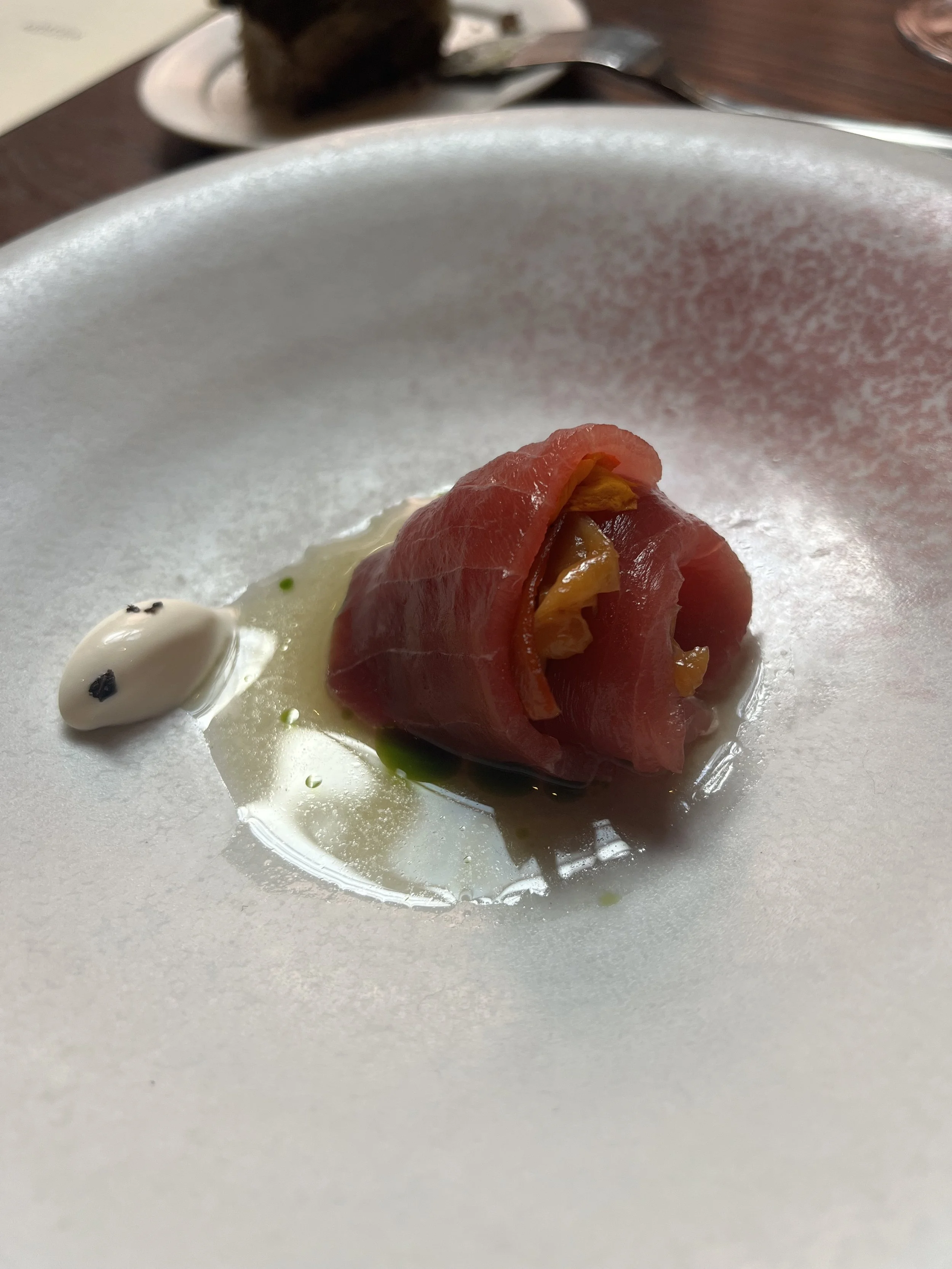
Red tuna sashimi, smoked sweet pepper, marigold
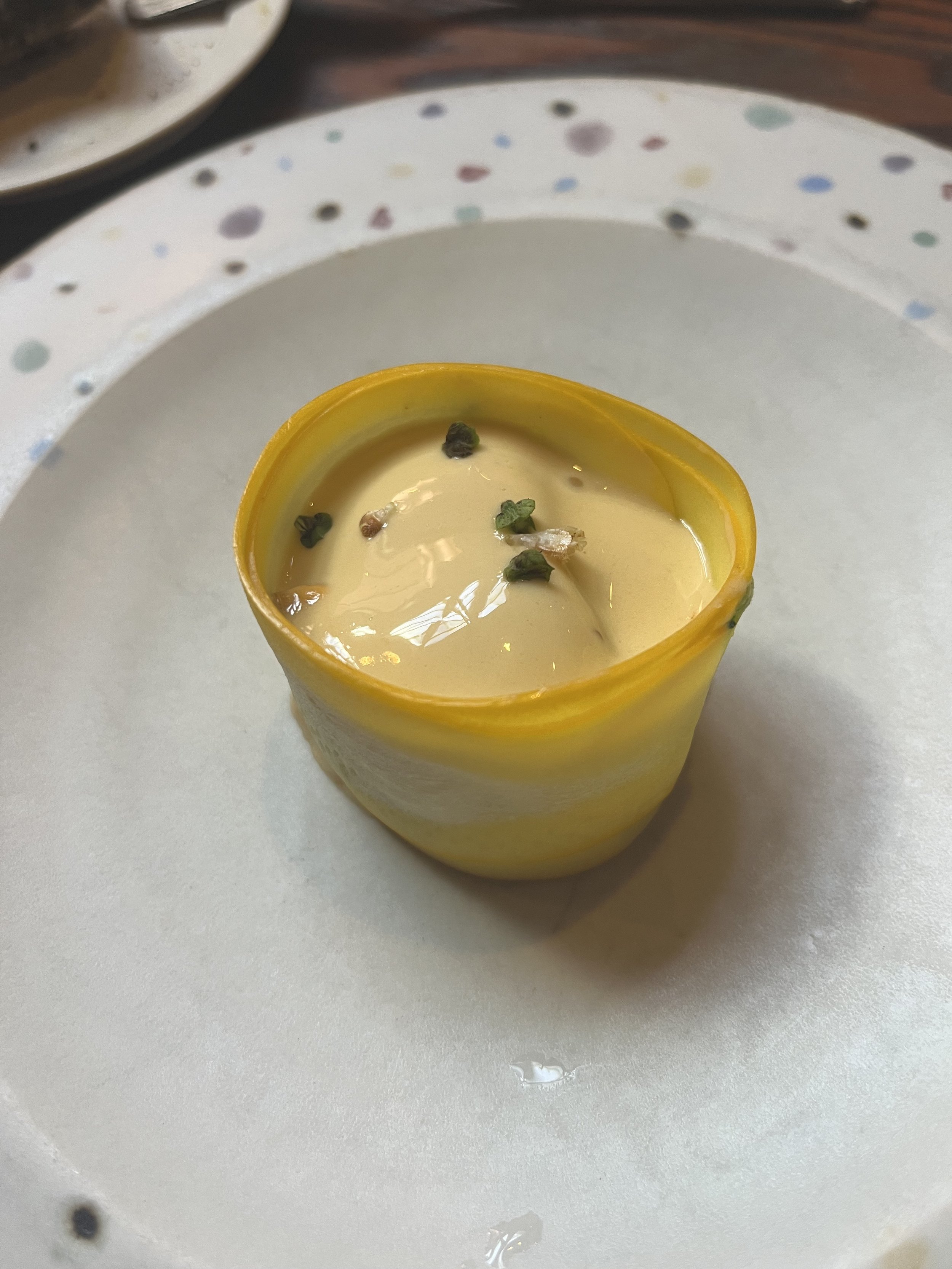
Mussels, sabayon of vin jaune, dehydrated potato rehydrated in mussel bisque, raw zucchini - Vin Jaune (literally “yellow wine”) comes from the Jura wine region of France and is similar to sherry—it tastes slightly oxidized and dry. Katy asked about it and we got to try a small pour of it (she didn’t care for it, and I did, but I love sherry). The raw zucchini (which we would have called yellow squash at home) had a bit of natural bitterness to it, and the whole bite worked really well. I mopped up the sabayon with bread.
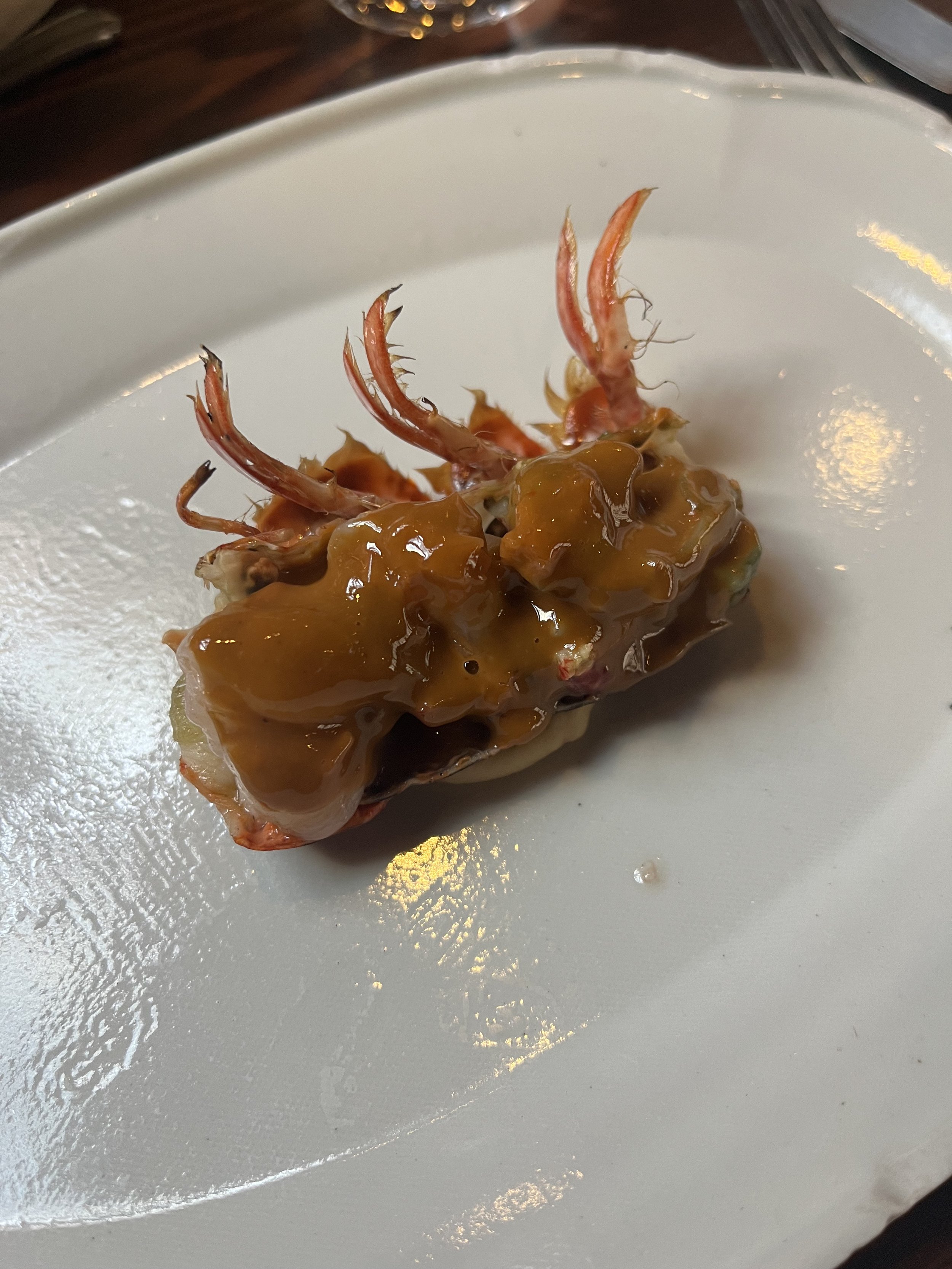
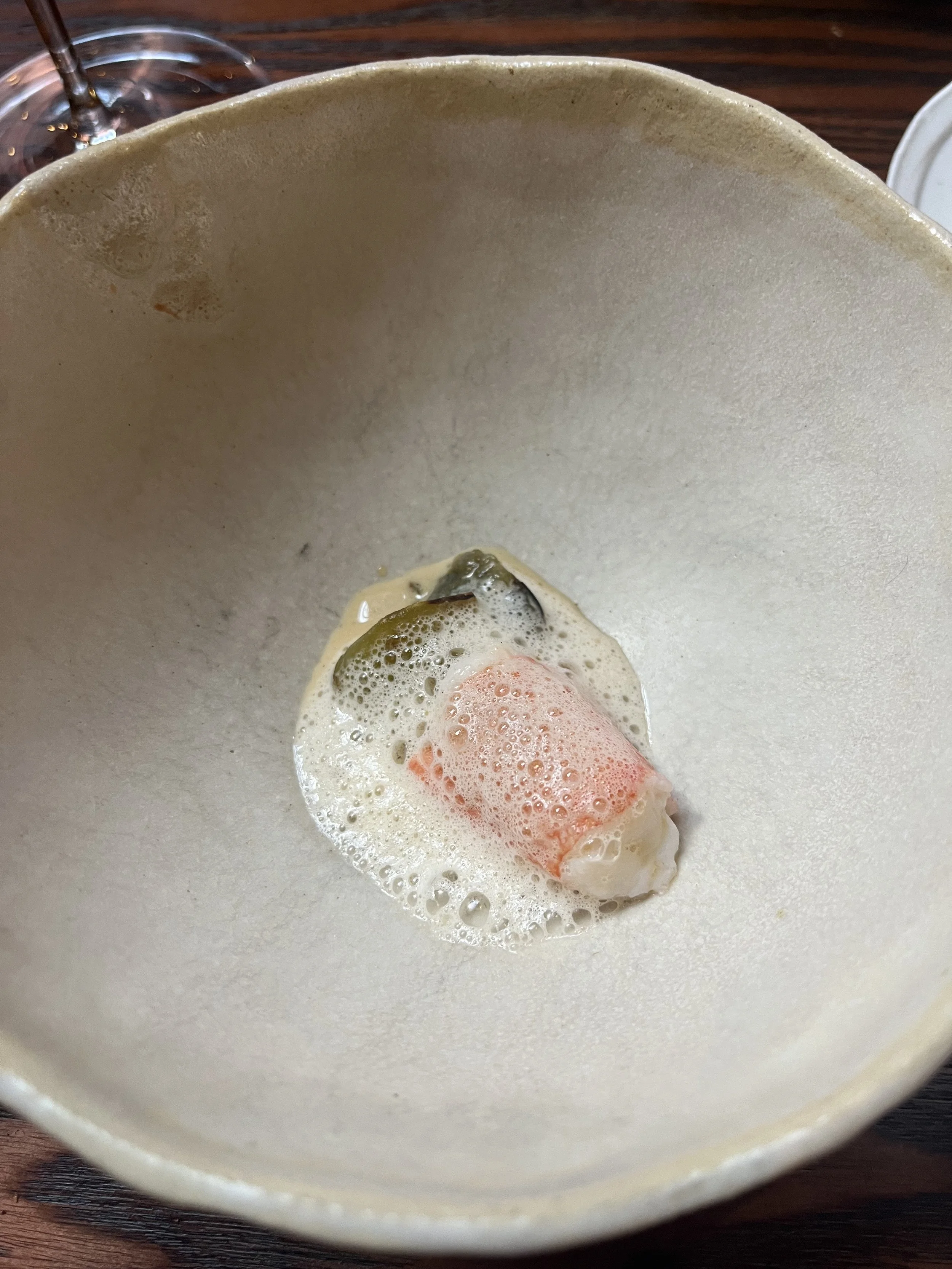
Lobster with sauce Americaine (made with head and coral), arm with lobster bisque and roasted melon - the latter, the arm, was Katy’s favorite bite. I don’t know why I’ve never thought to roast melon, but I certainly will in the future.
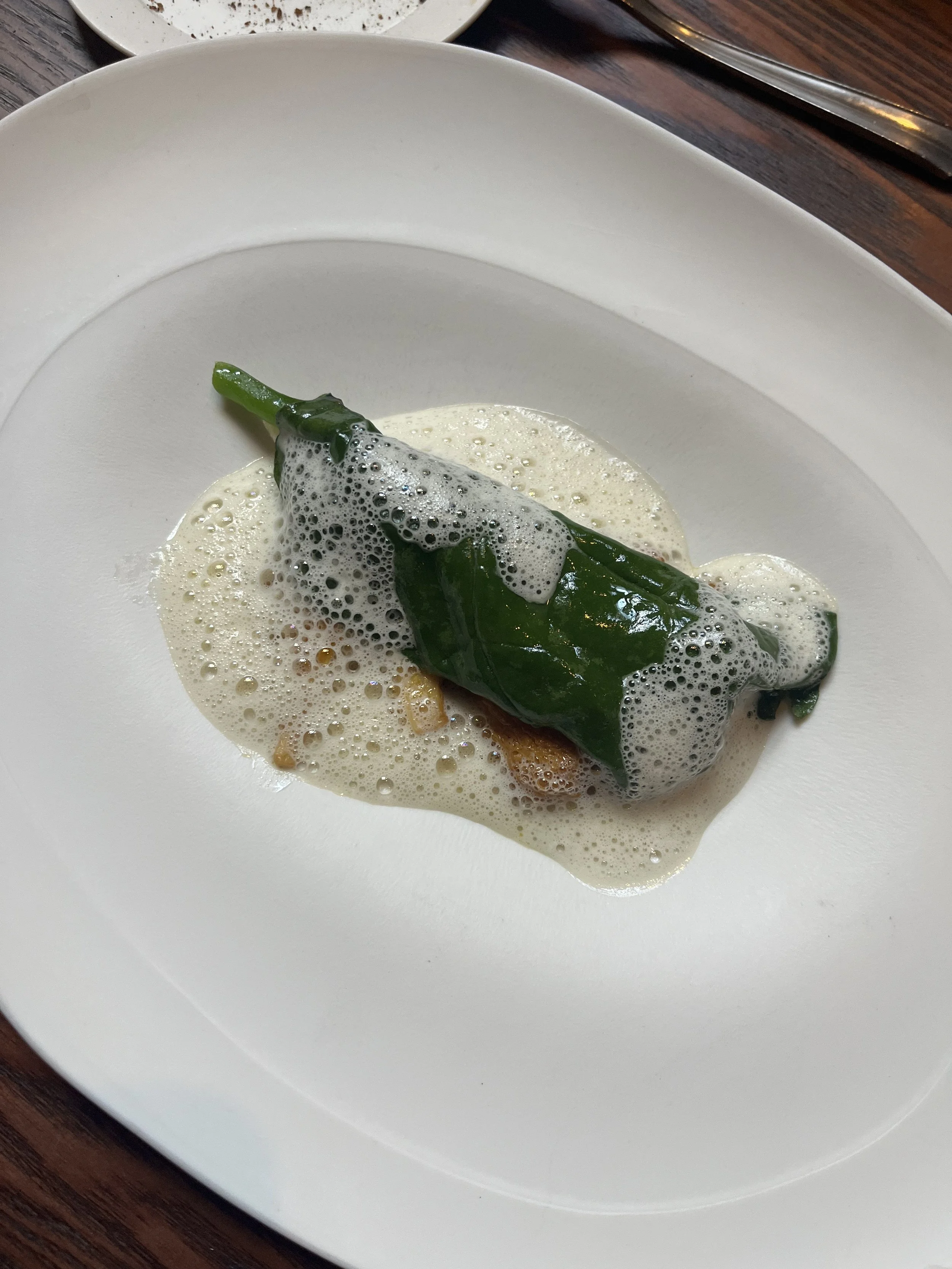
John Dory wrapped in orach leaf, chanterelles, sauce of celeriac - the waiter described the orach as a “kind of French spinach…kind of…kind of.” Either way, the cooking on the fish was lightly smokey from the wood fire, and it was done perfectly.
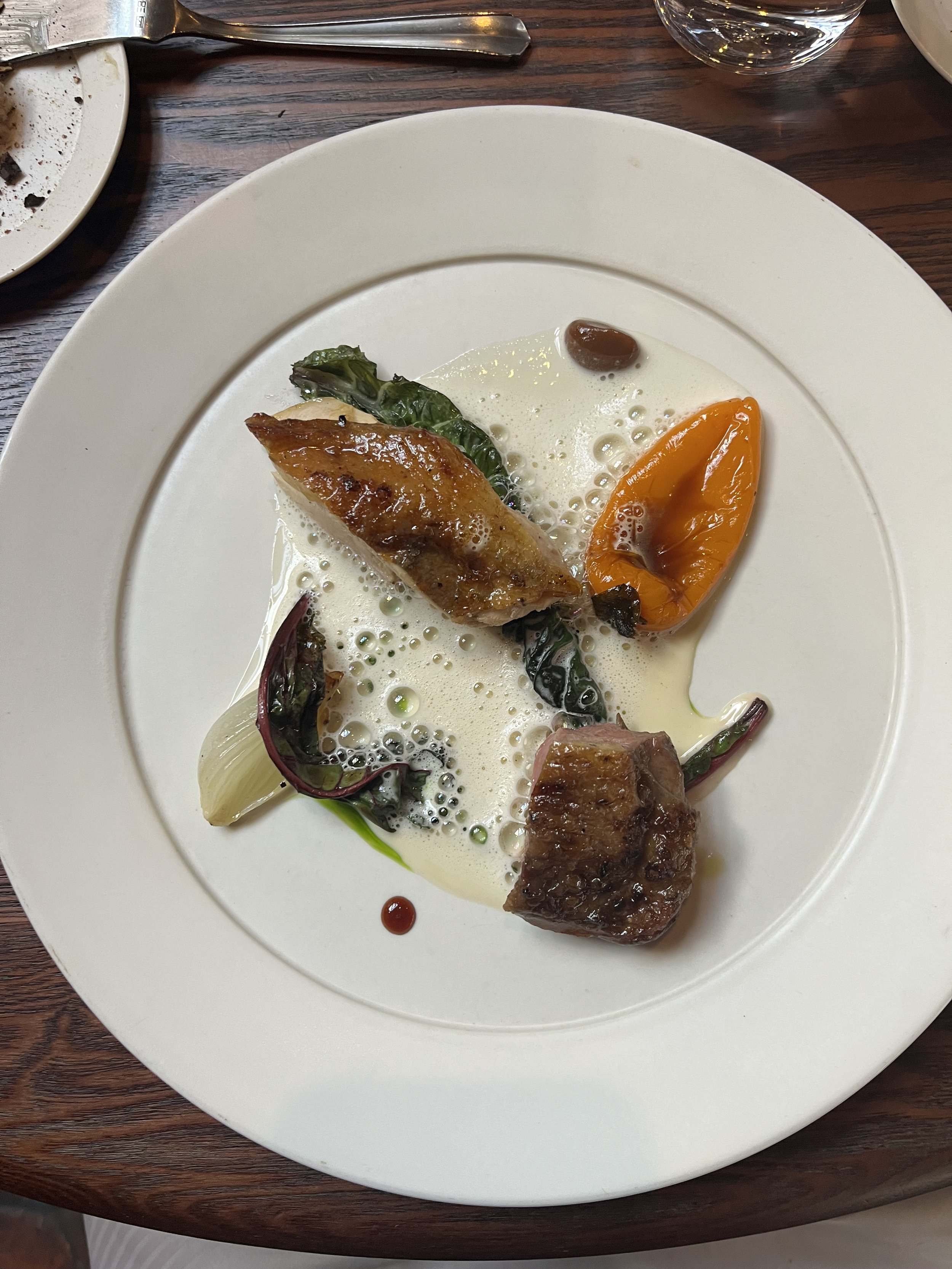
Breast and back of guinea fowl baked in salt crust, sauce of fermented jalapeño juice and foie gras, gelee of fermented mirabelle plum - this was my favorite course of the meal. The guinea was so tender and juicy, the sauce had just a light heat and incredible unctuousness from the foie.
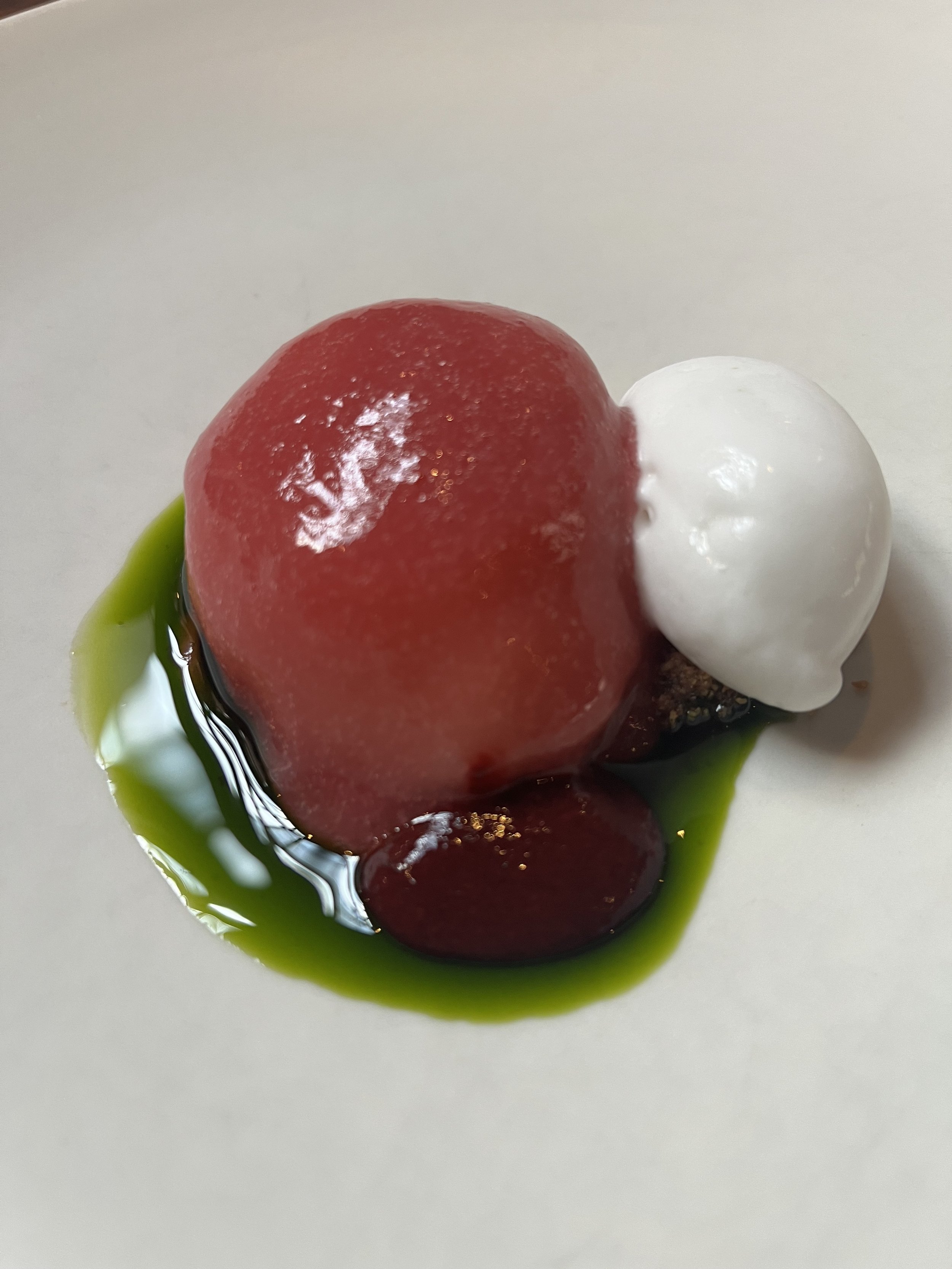
Peach Melba, coconut ice cream, basil oil, shiso and fig
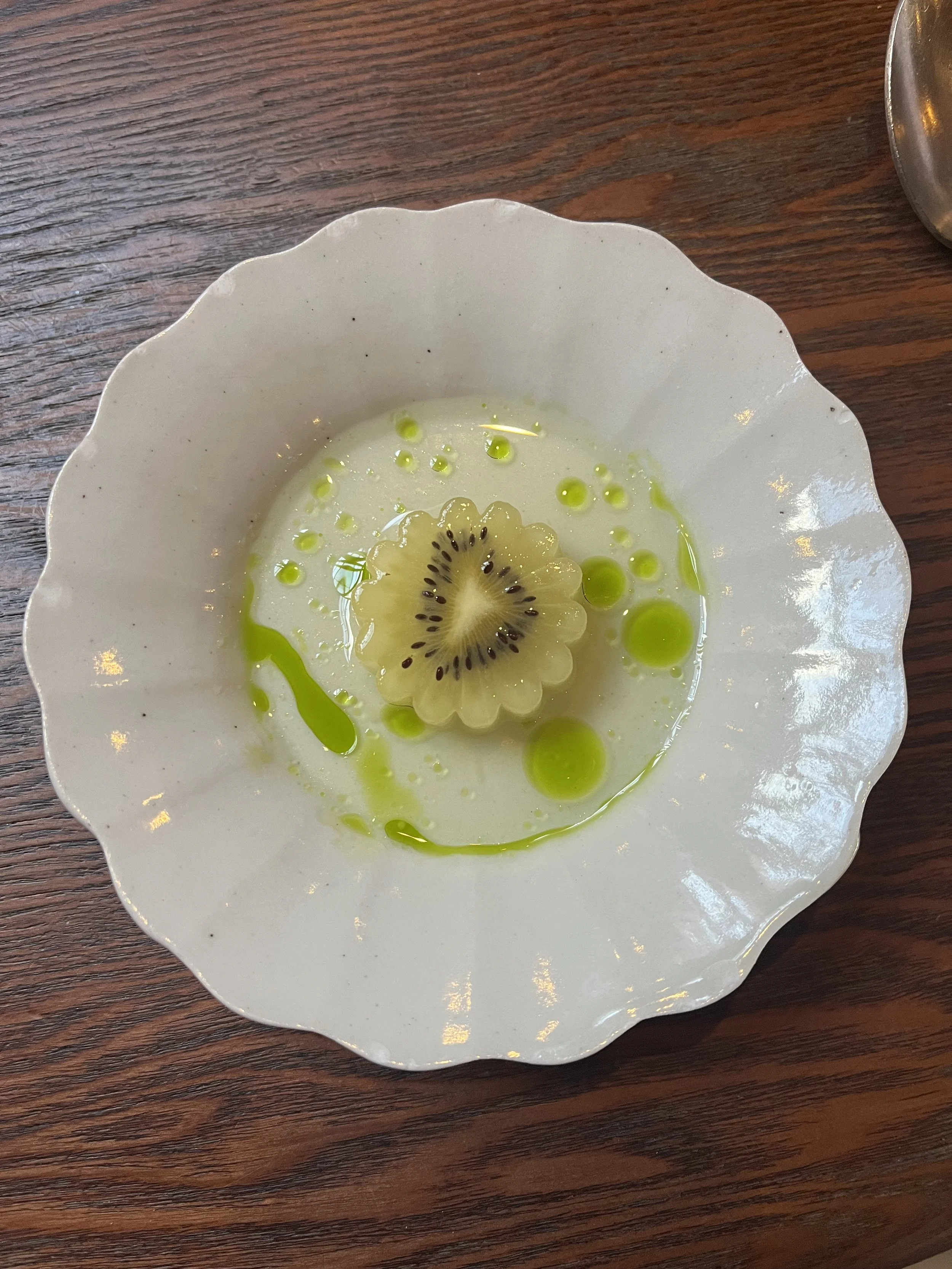
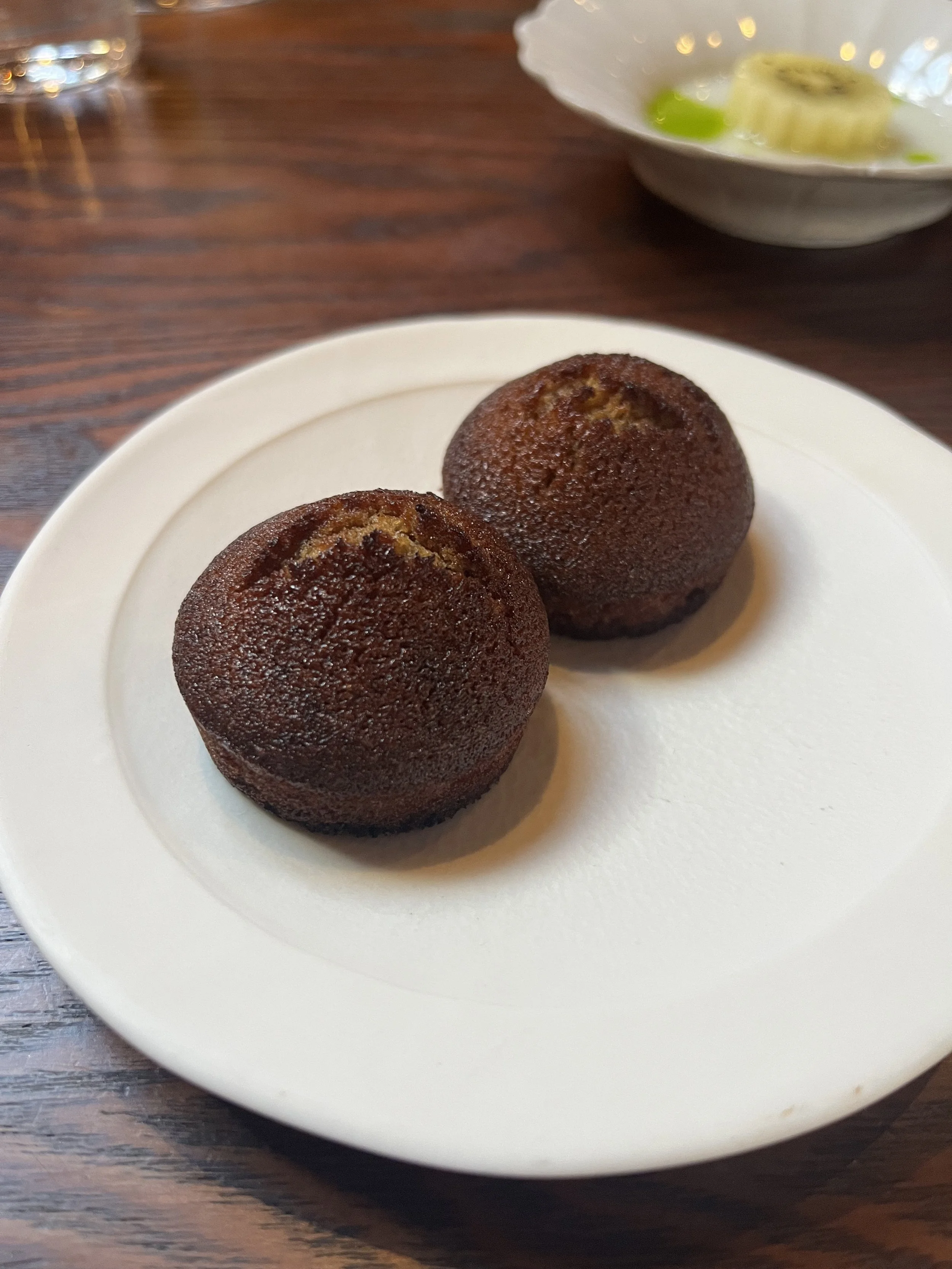
Kiwi marinated in kiwi juice and pastis, buckwheat madeleine - the French love their buckwheat, and so does Katy. She adored the madeleine so much that I gave her the last quarter of mine.
The thing about meals like this is that, even though you eat plenty of food—you never come away hungry—some of them feel incomplete. This was one of the most whole, thoughtful, and interesting meals we’ve had. I wish we would have eaten here sooner, mainly so that we could have come back to experience it again.
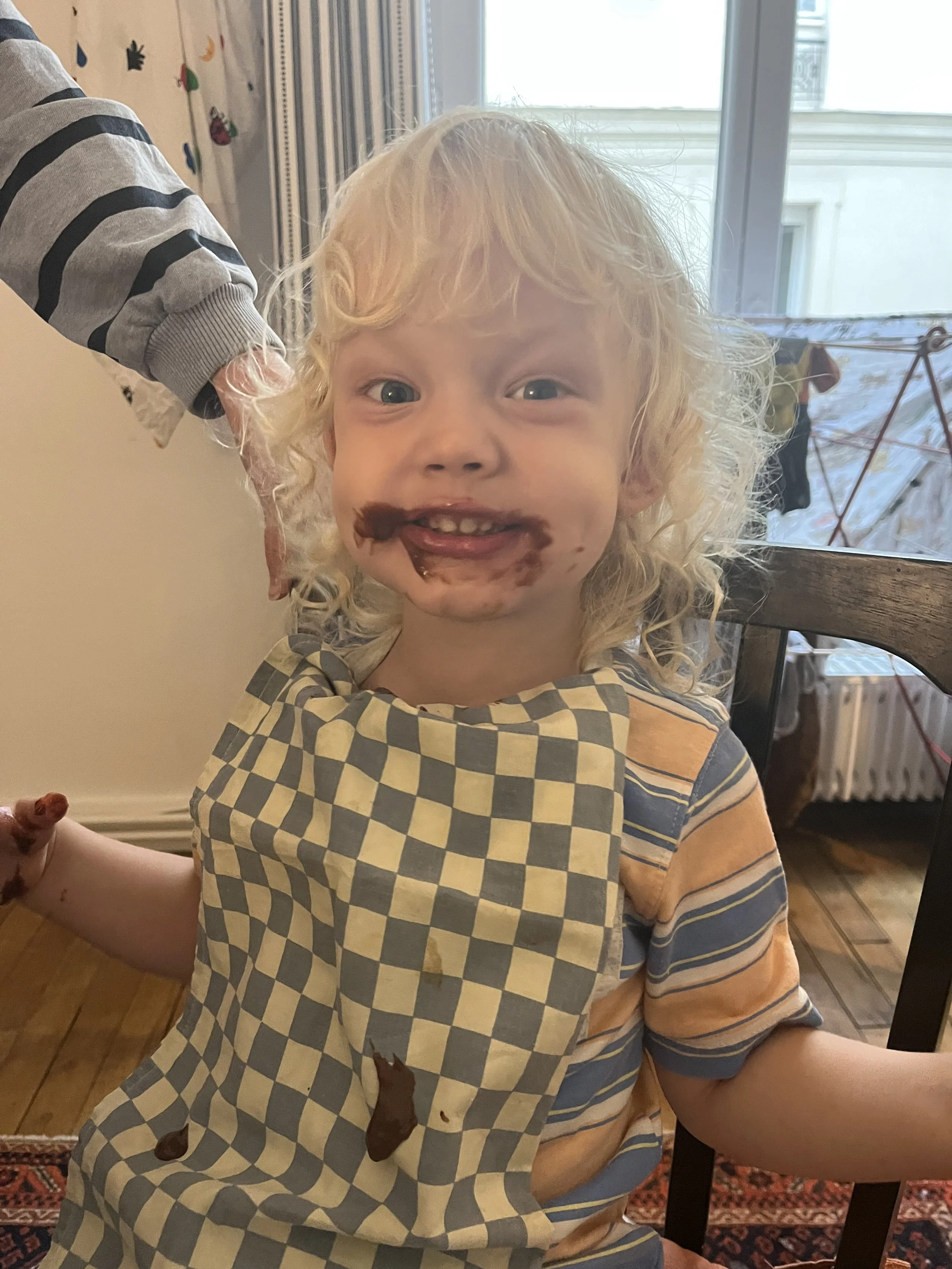
The other day, Katy and I were discussing logistics for the move home. Auggie asked what we were talking about, and we tried to explain that soon we will be back in Indiana—a place he doesn’t really remember. I was so afraid all those months ago that Auggie would look to me and say, “I want to go home.” Instead, what he said was, “We should stay here. We should stay in Paris.” Why wouldn’t he want that? He loves his parks, actually asks to go to restaurants now, appreciates his little Parisian apartment. He’ll come to love home again, too, once we’re there and settled. Home is, after all, where all of us are together. But what an incredible adventure this little boy has had so early in his life, which we can all hope will be full of many more.