“Vie” - Life
When Harrison died, I had no appetite—not for food, not for life. I barely ate, picking at the lasagnas and pastas and soups and other things very caring and loving people sent to nourish us and keep us fed. I remember that I drank water. What my body didn’t crave in food, the sense that keeps me alive told me to keep drinking water. We moved in with Katy’s parents, unable to stomach being in our home, Harrison’s house, where he and his toys and signs of his interrupted life were still abound. I filled and refilled my glass with water from the refrigerator. Otherwise, I kept my face buried in a book of crossword puzzles to keep my mind busy. I would wake, walk downstairs, make coffee, and sit in the kitchen with a mechanical pencil and giant book of LA Times puzzles.
I don’t remember how many days passed without my having really eaten anything. But I do remember one morning, sitting at the kitchen island with coffee next to me and a crossword in front of me. My father in law was awake in the kitchen behind me. If he asked if I wanted anything, I probably told him no. A bit later, he walked up behind me, and set a plate of venison steak and fried eggs next to me. He said, “I don’t think you’ve eaten in a while. You should.” And he walked outside with his own plate to have breakfast in the cool morning air.
Maybe I picked at that plate, dragged a slice of meat through the egg yolk. Maybe I chewed it, swallowed. I don’t remember eating. But I remember that moment. We cook for those we love. Because food is nourishing. Food, somehow, gets us through. Especially when we share it, pass around the basket of bread, eat and laugh and tell stories. Food is community, the world over. Food—and for me, the cooking of it—is healing. Some things cannot be healed, like the loss of Harrison. But getting into a state that allows me to focus wholly on cutting, chopping, slicing, searing, braising, baking…it gets me closer.
We moved here so that I could chase a wild dream, to remember what life could feel like when you can see opportunity ahead of you. We came to the place we fell in love with on our first international family vacation. We said “à bientot” to all of you, our family and friends, and packed up our lives to move across the ocean.
After only my fourth demo, where Chef cooked eggs over a dozen different ways, I pulled out my phone to take pictures and saw a text from Katy telling me my dad had died. She didn’t want me to worry about her or August after seeing so many missed calls from both her and my mom. I called my mom on the walk home from class, and she said, “He’s gone, honey.” Later, she wouldn’t remember talking to me, wouldn’t remember telling me there was no reason to come home, and she would get frustrated that I didn’t. Things at home, in that regard, would not get better over the next nine months. But that’s not a story for here, not right now.
I said goodbye to my dad before we left, and I said goodbye to him again from France, and I imagine I will say goodbye to him one last time when I get back home. In doing so, I will cook, both for his memory and for those around me.
Coming to culinary school—coming to Paris—was always about life. It was a reminder to myself that life is here to be lived, that this entire go-round we get is meant to be some kind of adventure. Every single experience adds to who we become, who we are. I am here because we are not guaranteed any amount of time (a lesson learned in the worst way) and that it is our responsibility to do with it what we can. It was a way to make myself keep going. In the kitchen, I laughed, joked, and had fun with new friends from around the world. I am still not the version of myself I was before Harrison died, but I am the best version of myself since. I am dreaming again, smiling again, happy again. And perhaps most importantly, I have my appetite back.
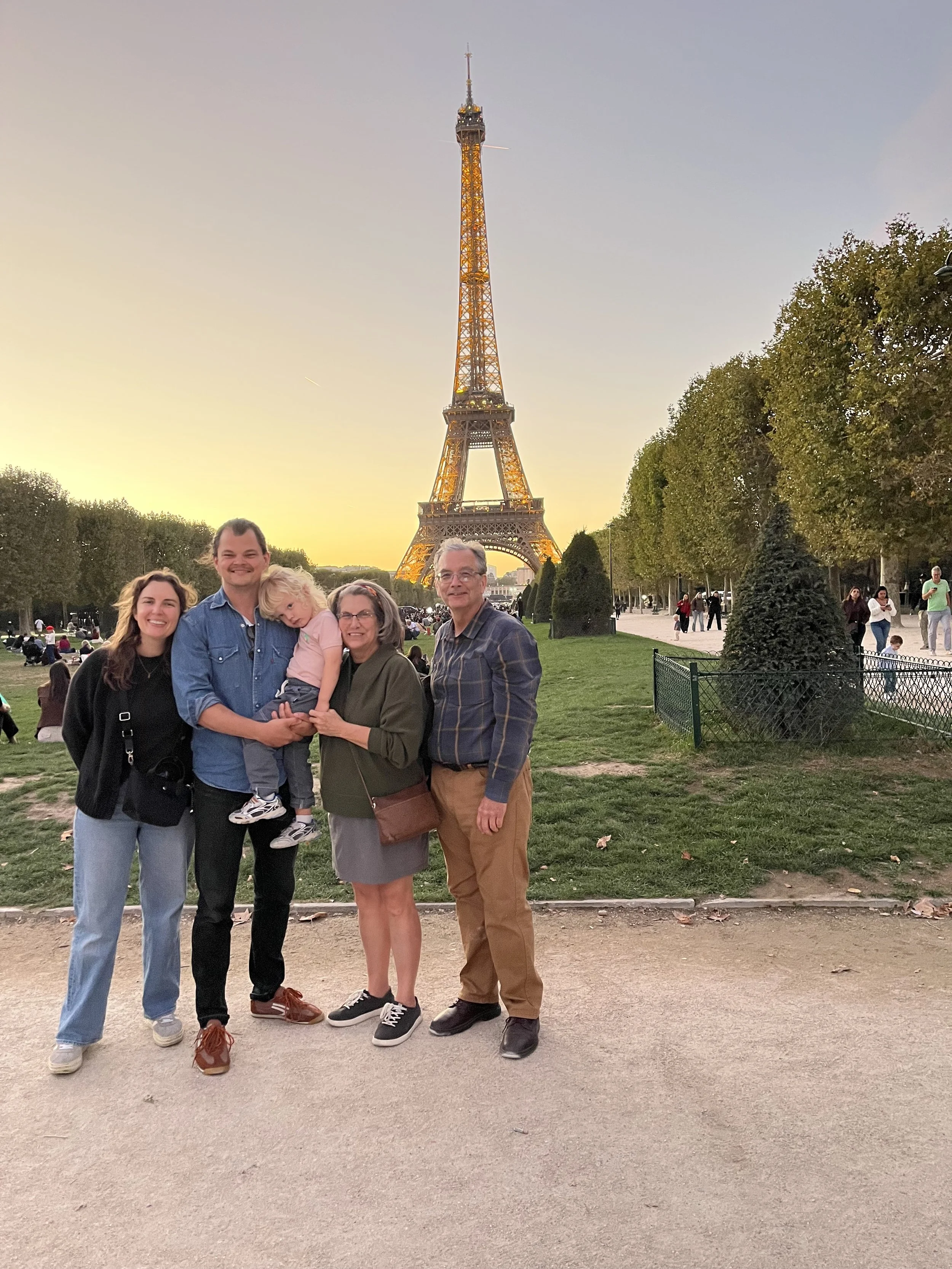
My aunt and uncle are here from Wisconsin, my dad’s younger brother and his wife. They’re the first and only of my family to visit, and it’s so nice to see them. It’s their first real time in Paris, and it’s been one of my favorite things to see it through the eyes of people who have never been here. We’ve visited Notre Dame, we sat on the lawn of the Eiffel Tower and had a picnic. They’re both foodies and cheese people (Wisconsonites, am I right?), so we walked into a fromagerie and we ordered four types: an aged chevre, a Brillat-Savarin, a Rochefort, and an Ossau-Iraty. Auggie ran around like the semi-unhinged toddler he is. He’s so comfortable here.
Katy’s one regret is that she had yet to eat a quintessential steak frites in Paris. I took my former creative director and his son to Bistrot Paul Bert earlier this year where I had their famous filet au poivre, but try as we might there was simply no way to get in there during our schedule for the last week here. We racked our brains trying to think of where we could go, but nothing sounded right. Finally, I suggested that I cook it. If a chef cannot cook a steak, what is the chef good for?
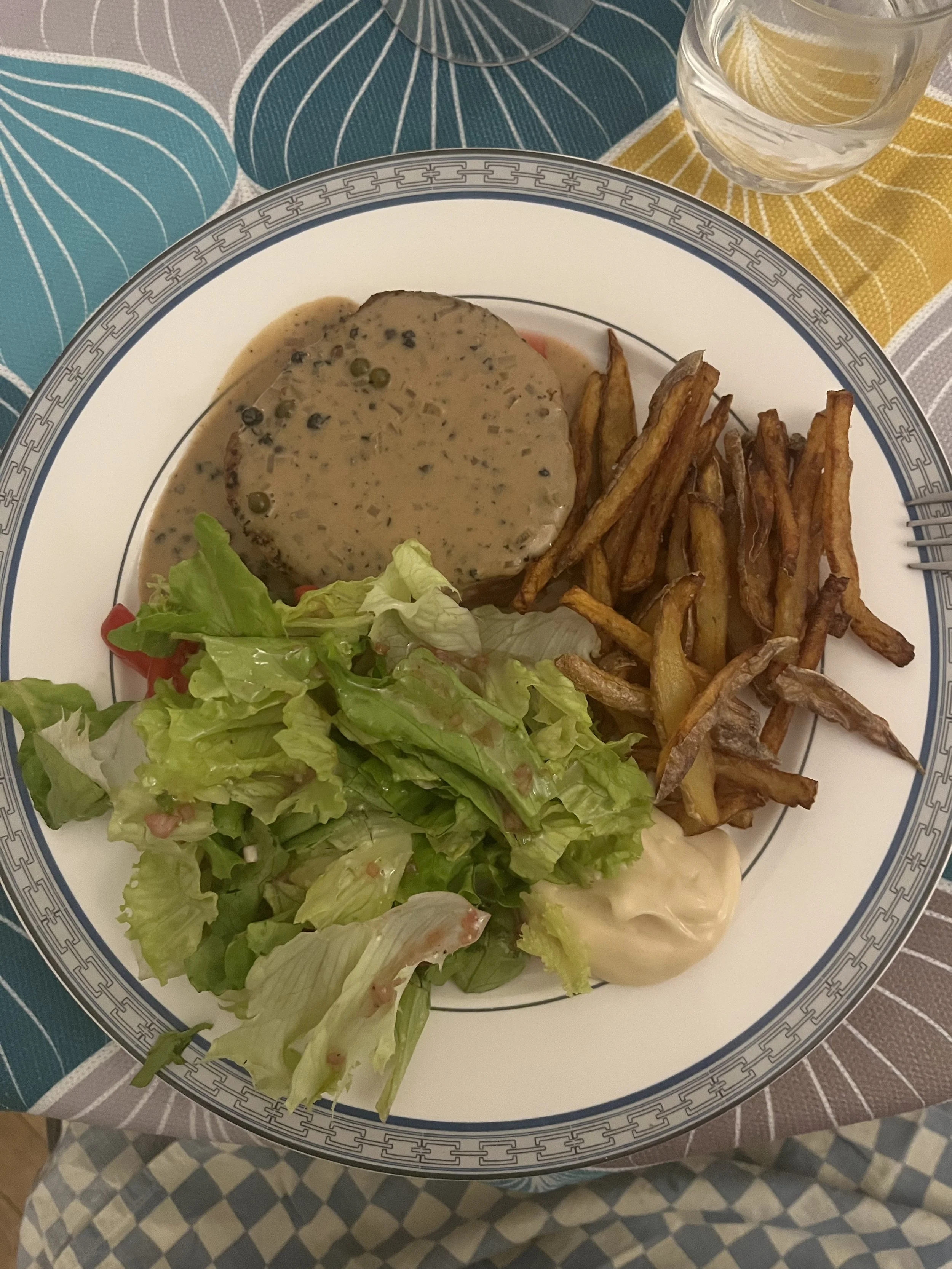
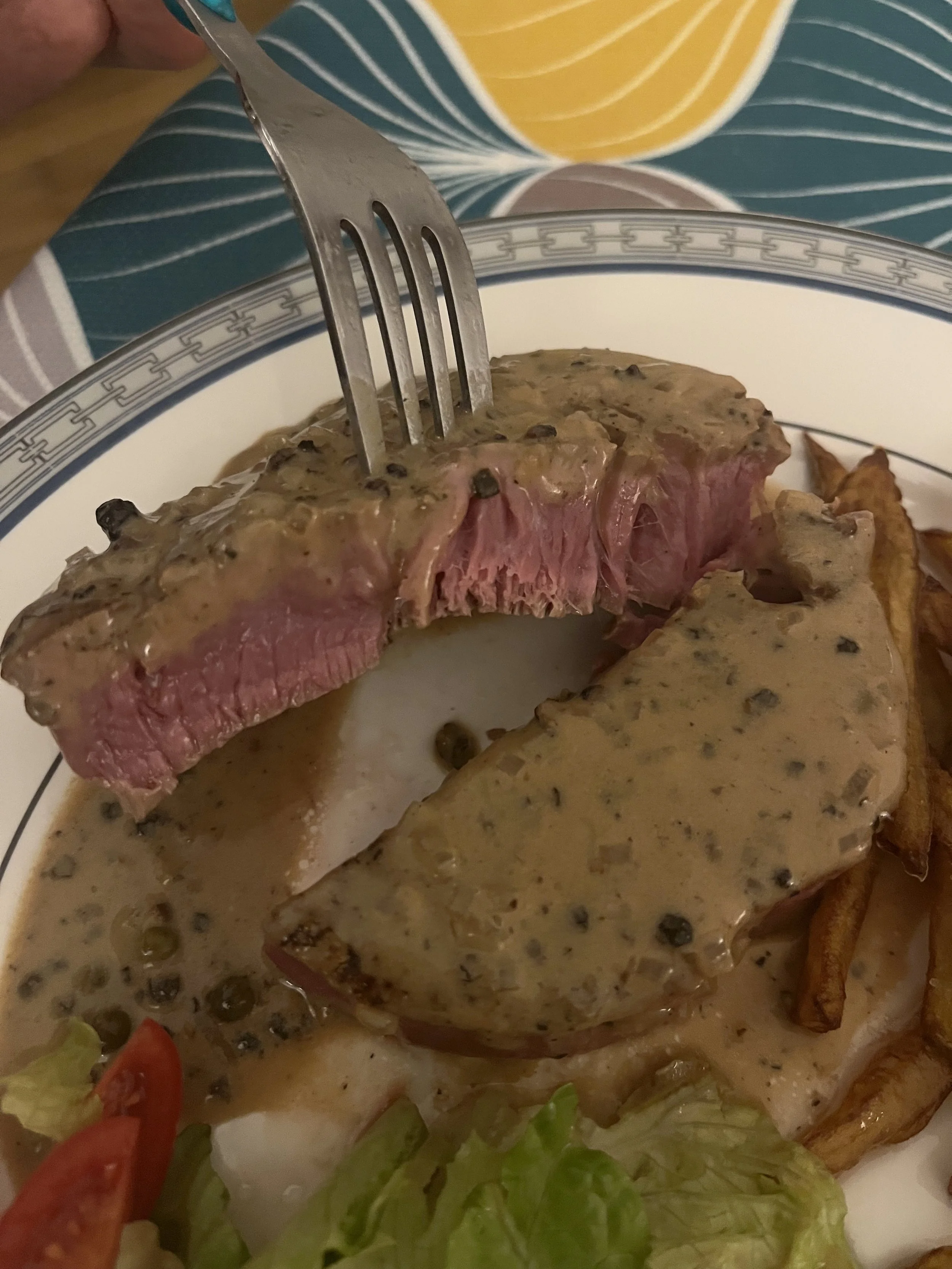
With my aunt and uncle in charge of wine, I visited my favorite boucherie and bought four beautiful pieces of filet de bœuf (beef tenderloin), then stopped at a grocery store for potatoes and butter. Back at home, I cut the potatoes by hand like I did in Basic, then par-fried them until they were just cooked and pulled them to drain and cool. I made a red wine vinaigrette for the simple green salad, and whisked together a sauce mayonnaise for the frites. Then, with a little oil in the pan, I seared the steaks hard on one side, flipped them, tossed in a chunk of butter, and basted them to high heavens. Meanwhile, I cooked the frites again at a higher temperature to crisp and color them. I pressed each steak to feel its doneness, then let them rest as long as I cooked them: about eight minutes. Finally, I added shallot and butter to a pan, then tossed in a handful of hand-crushed black peppercorns, followed by veal stock and flambéed Calvados (I didn’t have Cognac and didn’t want to buy a bottle). These reduced before I added creme fraiche, whisked well, and added green peppercorns off heat. The steaks were a perfect à point (or medium rare). I asked Katy if the meal scratched the steak-frites itch. “No notes,” she said. Let me tell you: that’s rare.
I told Katy several months ago that after I graduated, I wanted to eat at a three-Michelin-star restaurant. We’ve eaten at several one-stars, and had a great meal at the two-star La Mere Braziere in Lyon earlier this year. I wanted to add a three-star, to experience it, before we went home. To paraphrase Katy: “twist my arm.”
Le Gabriel is a place I’ve watched on social media for years. It earned its three stars in 2024, under Chef Jérôme Banctel. He’s from Brittany and spends a lot of time in Japan, and you can see both of those influences in the food they offer. We opted for lunch rather than dinner, because you can get one hell of a deal on a crazy large meal, comparatively. My aunt and uncle wanted to join, which I am so glad for.
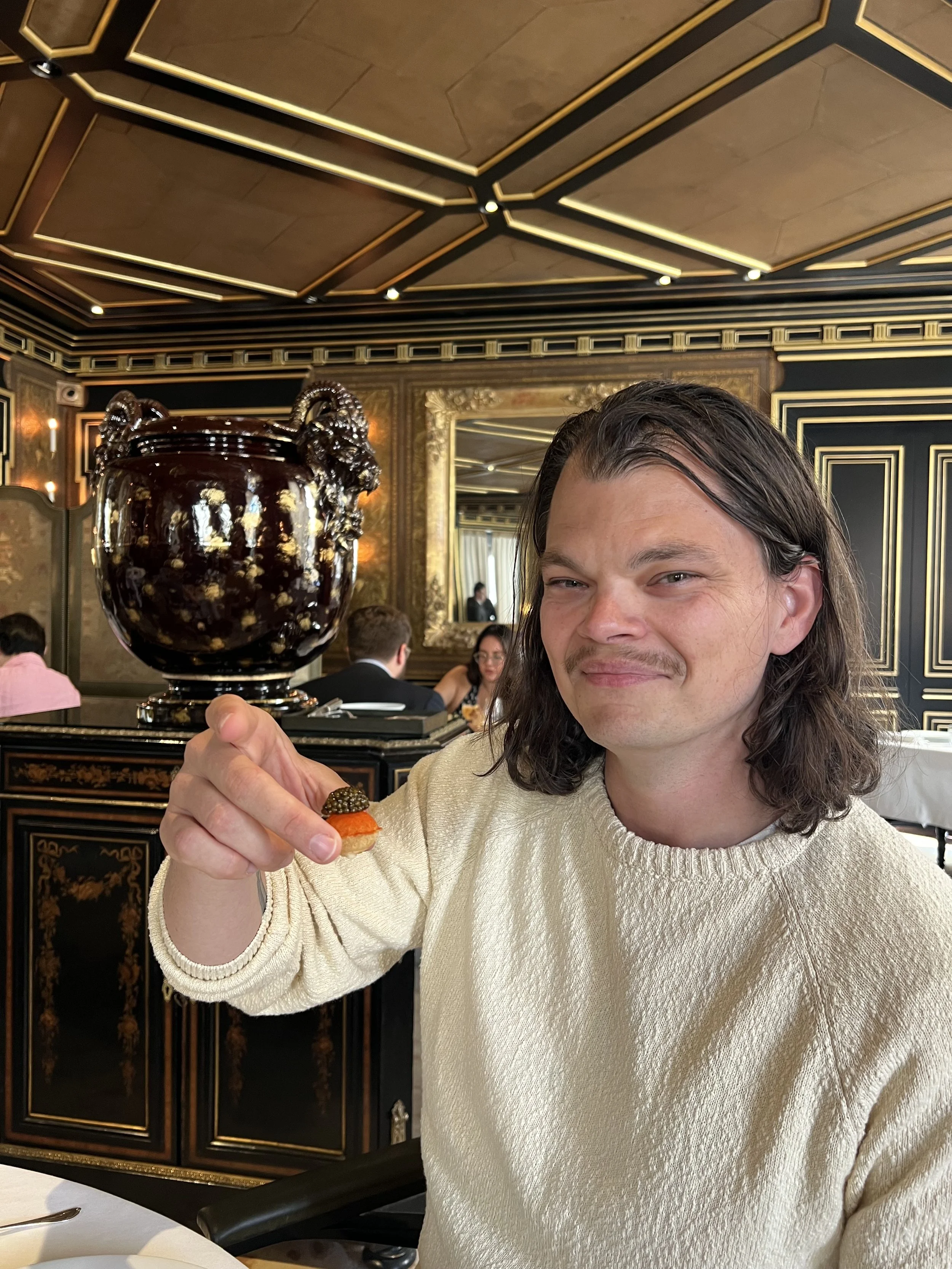
The restaurant is inside Le Residence hotel, a glowing spot just off the Champs-Elysees—the road to the Arc de Triomphe. We arrived and were ushered into a quaint dining room with heavy chairs, white tablecloths, large paintings on the wall, and gilded vases stuffed with flowers. We started the meal with a glass of champagne, because we’re celebrating.
While there were options to order a la carte or for a full eight-course meal, that’s heavy for lunch and we had a babysitter to get back to, so we opted for the smaller and still perfectly interesting four-course lunch because we knew it was going to be much more than just four courses.
The difference in one, two, and three star restaurants isn’t only in the food. The service matters just as much, if not more. It’s the main interaction the diner has with the restaurant. And watching this team work was fun. They were choreographed and also constantly aware of one another. Plates were placed two by two, at the same time, on the table in front of us. Cloches were lifted in sync. When they removed plates they did so together. It was a bit like a ballet with fewer tutus and more spices.
Tart of chèvre, avocado, wasabi
Puffed potato, smoked paprika, caviar
Oyster, citrus gelee, hazelnut
Tempura fried shrimp, Thai “condiment”
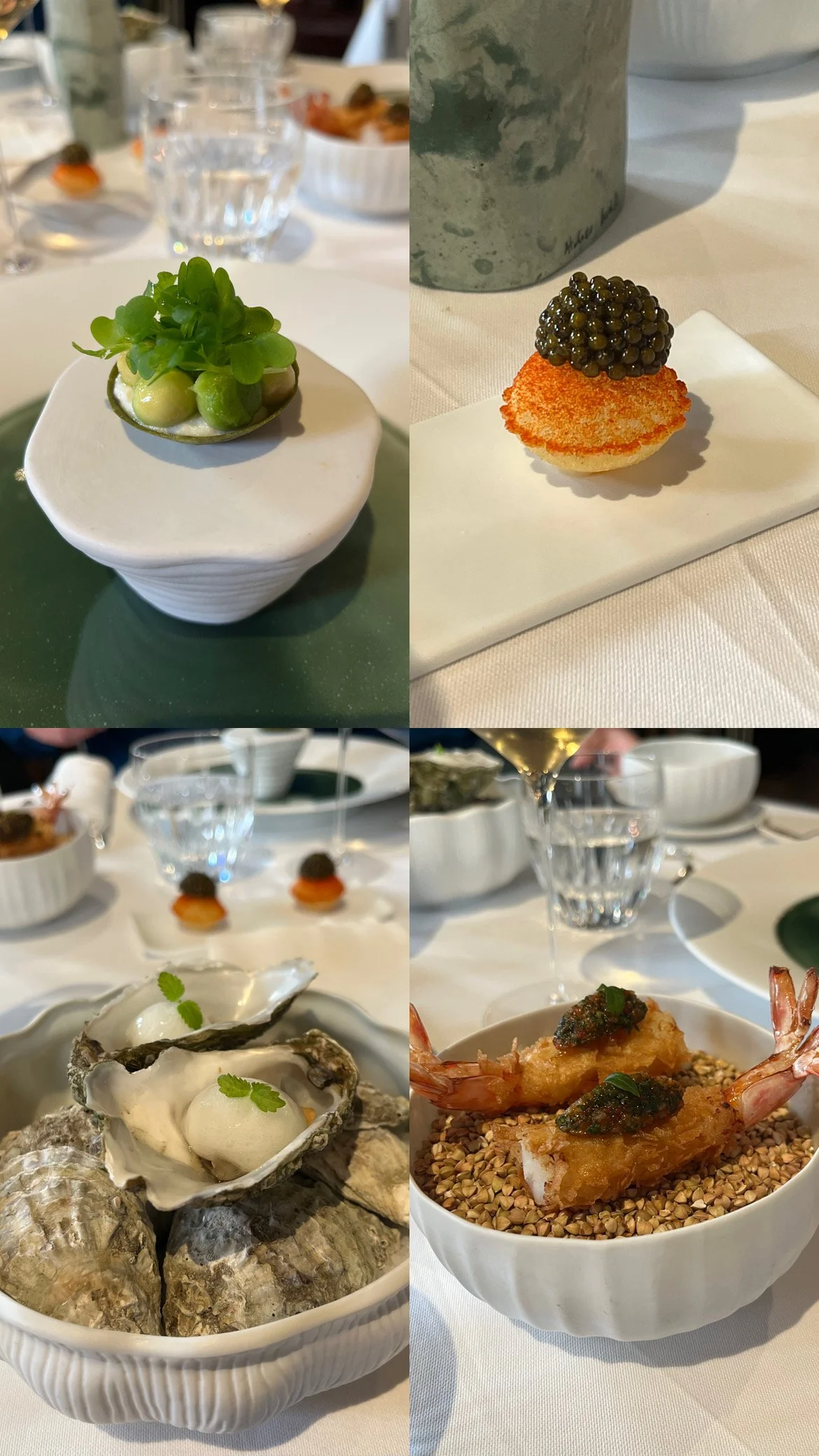
We were instructed to eat these amuse in this order. The tart was a perfectly fine bite, though the wasabi had been tamed presumably for both French and fine dining palates. The puffed potato, on the other hand? The single most delicious potato chip I have ever eaten. If I’m really bad about any snack foods, it’s chips. Find a way to keep the caviar on top, and I’ll demolish bag after bag of these. My aunt called it the best chip dip ever. The oyster worked fine—the crunch from the hazelnut added texture usually (and hopefully) unseen in oysters. Through the first three bites, the shrimp sat to my right, looking at me alluringly. The fry was—how else can I say it?—perfect. The condiment, which I think was made of mild chili, fish sauce, and several finely chopped herbs, sat delicately on top. The real detail was the tail. It was fanned out and snipped so as to be identical across all four on the table. I appreciated how painstaking this prep work was. This is not some traiteur chinoise tempura shrimp. The sheen on the tail made this shrimp beautiful. And the bite? Pretty damn good.
Carrot cooked on limestone, filled with carrot kimchi, sauce of reduced carrot juice, carrot kombucha, and fermented ginger (holy SAUCE), shokupan roll
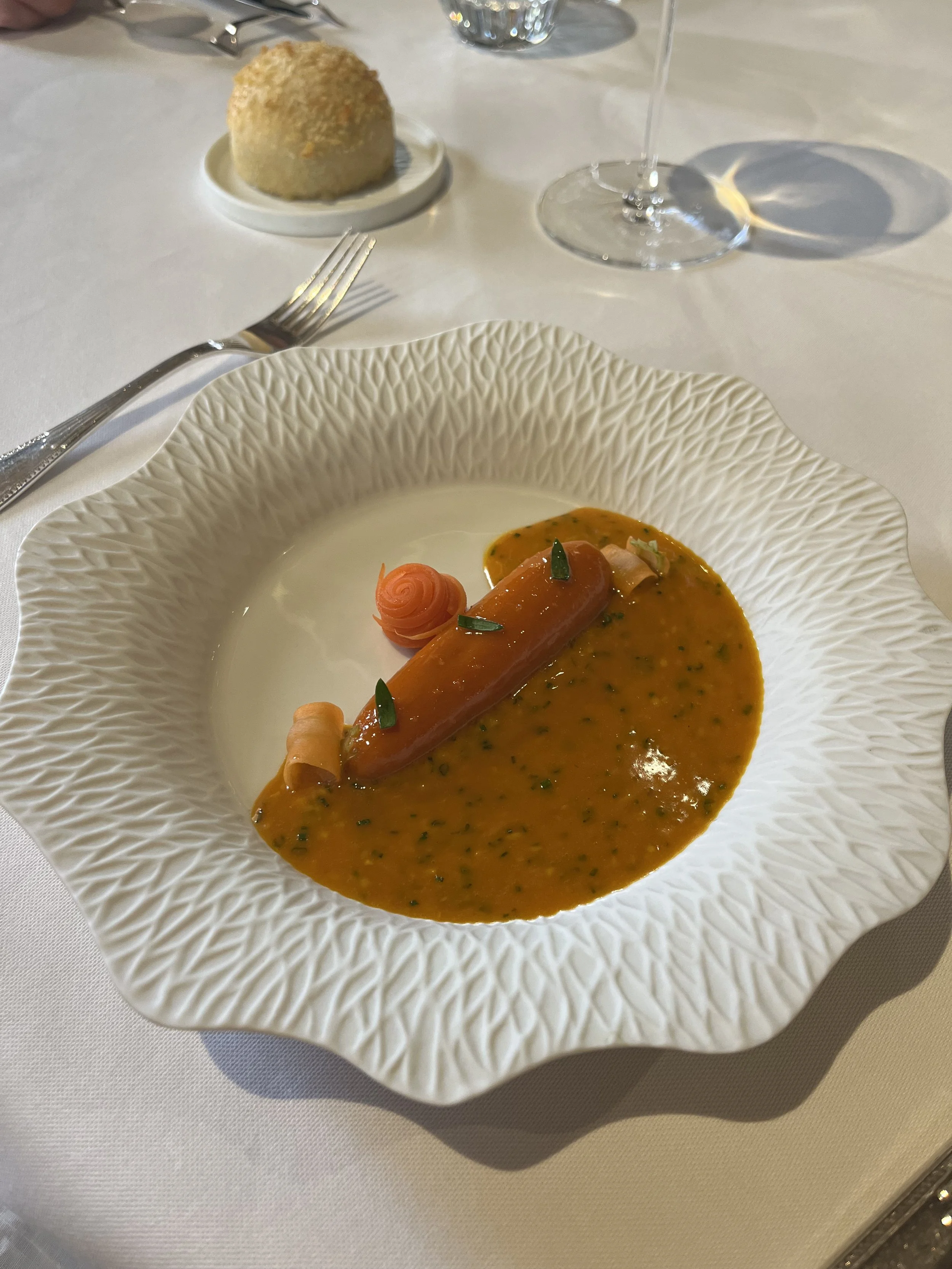
I’m writing this two solid days after this dinner and I am still thinking about this course. In fact, I told Katy it’s probably in my top three dishes I’ve had in France. The carrot is cooked on limestone, which creates some kind of reaction, which in turn alters the texture of the carrot. It’s soft, yet firm, but not tender-crisp. This carrot could have been some kind of trompe l’œil carrot cake entremet and it would’ve worked. Instead, the inside had been delicately hollowed out and stuffed with a puree of carrot kimchi.
That alone: already an incredible bite. But the sauce. I can’t write enough about the sauce. It was made with a reduction of carrot juice, carrot kombucha, and fermented ginger, with Thai scallions added. I kept dipping my spoon into it and savoring it by itself. I would drink this sauce like water. Bathe in it. Drown in it. If the carrot gods wanted me to perform ritualistic zucchini sacrifices to honor this sauce, lead me to the altar. Obviously, I mopped up the remainder with the shokupan (Japanese milk bread) roll served alongside.
Pollock aged for 10 days, seared on its skin, cockles, white beans, and seaweed, sauce of reduced fish stock and bean liquid, sourdough bread with butter
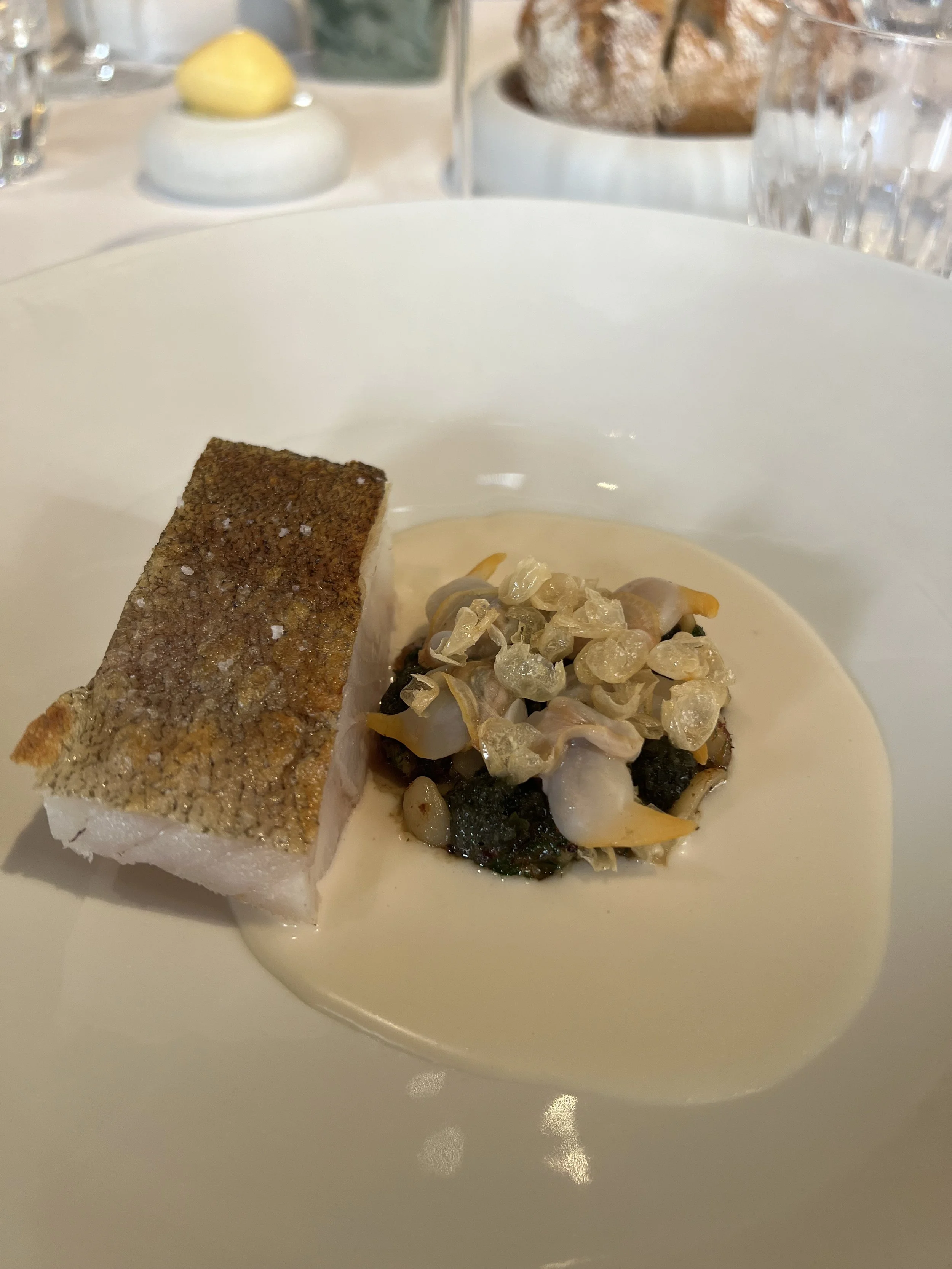
If I have a regret over this meal, it’s that I didn’t ask how the chef ages his fish. The server explained it’s a method the chef has used during his career, but didn’t elaborate. Usually, the only method for preserving or aging fish is salting it. But salt leaves taste in the fish, and this pollock filet was still light and delicate. I wonder if it was maybe wrapped in kombu (seaweed) or something similar. Either way, the cook on the skin side was crispy and even—remarkably so.
The garnish of seaweed, cockles, and beans which are native to the chef’s hometown, was a fun, even semi-spicy bite to add some zip to the fish. And I love the idea of thickening a sauce with the cooking liquid from the beans.
The bread service was a small loaf of sourdough and classic French butter. My aunt, who is visiting France for the first time, said, “I don’t usually butter my bread, but this…this is…this is incredible.”
Quail, black rice crisped tableside with black garlic, pickled chanterelles, deglazed with quail jus, sauce of quail jus and mushroom, fresh tarragon and chervil; quail leg cooked over a konro grill and glazed with reduced jus
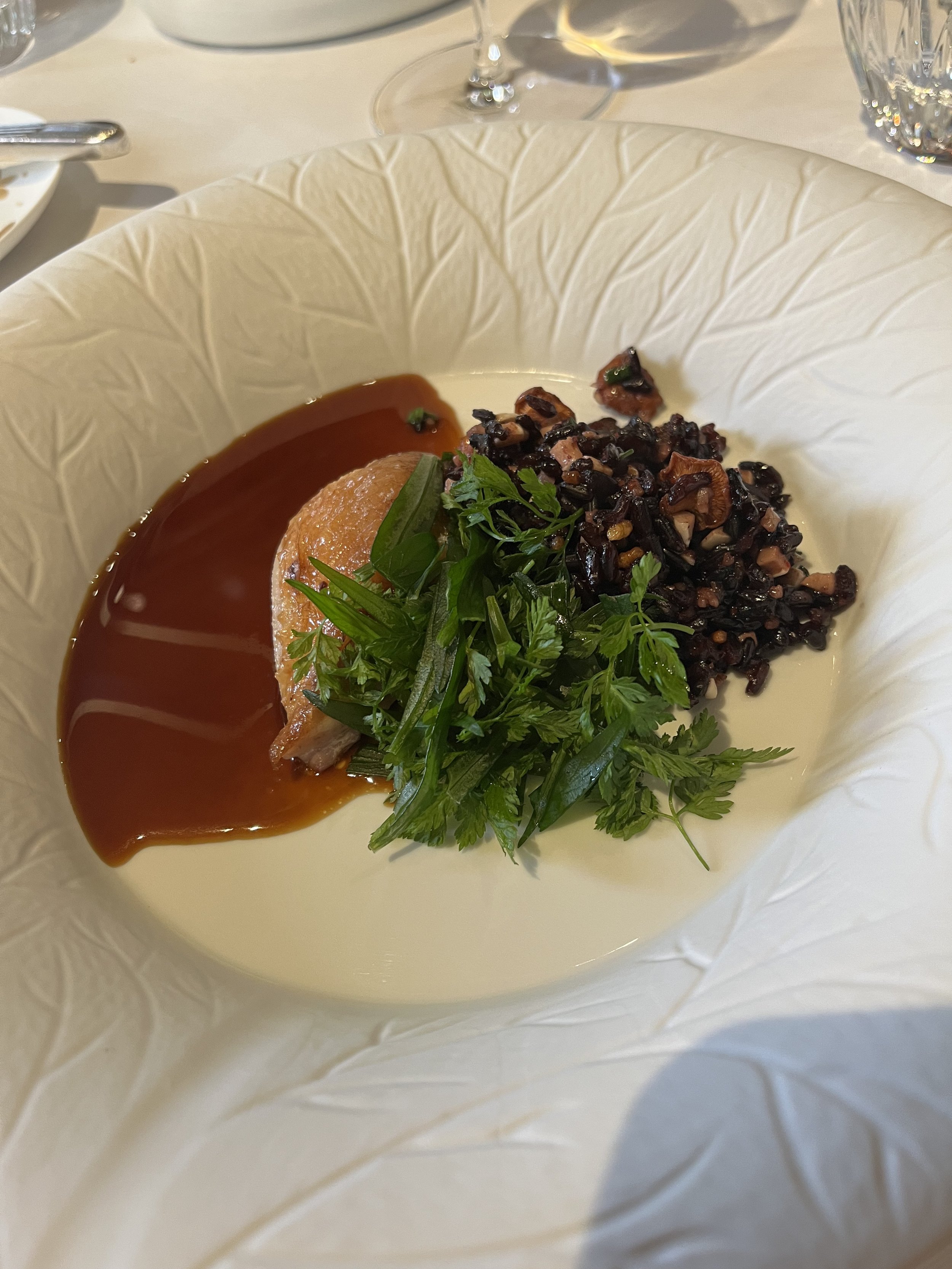
In fine dining restaurants, it’s not uncommon for servers to get involved in the cooking. They do it in the dining room, wheeling out large tables and lighting small burners. In Rouen, we watched the pressed duck prepared like so, but also common is the flambéed crepes Suzette. Here, the server was warming and crisping some black rice, studded with black garlic and pickled chanterelle mushrooms. He cooked it until it just stuck to the bottom of the pan, forming a kind of sacarrat (the delicious, crispy rice that comes from the bottom of the pan in paella) before deglazing with quail jus. It was spooned onto a plate with quail breast and an herb salad before being sauced with a simple jus of quail and mushrooms.
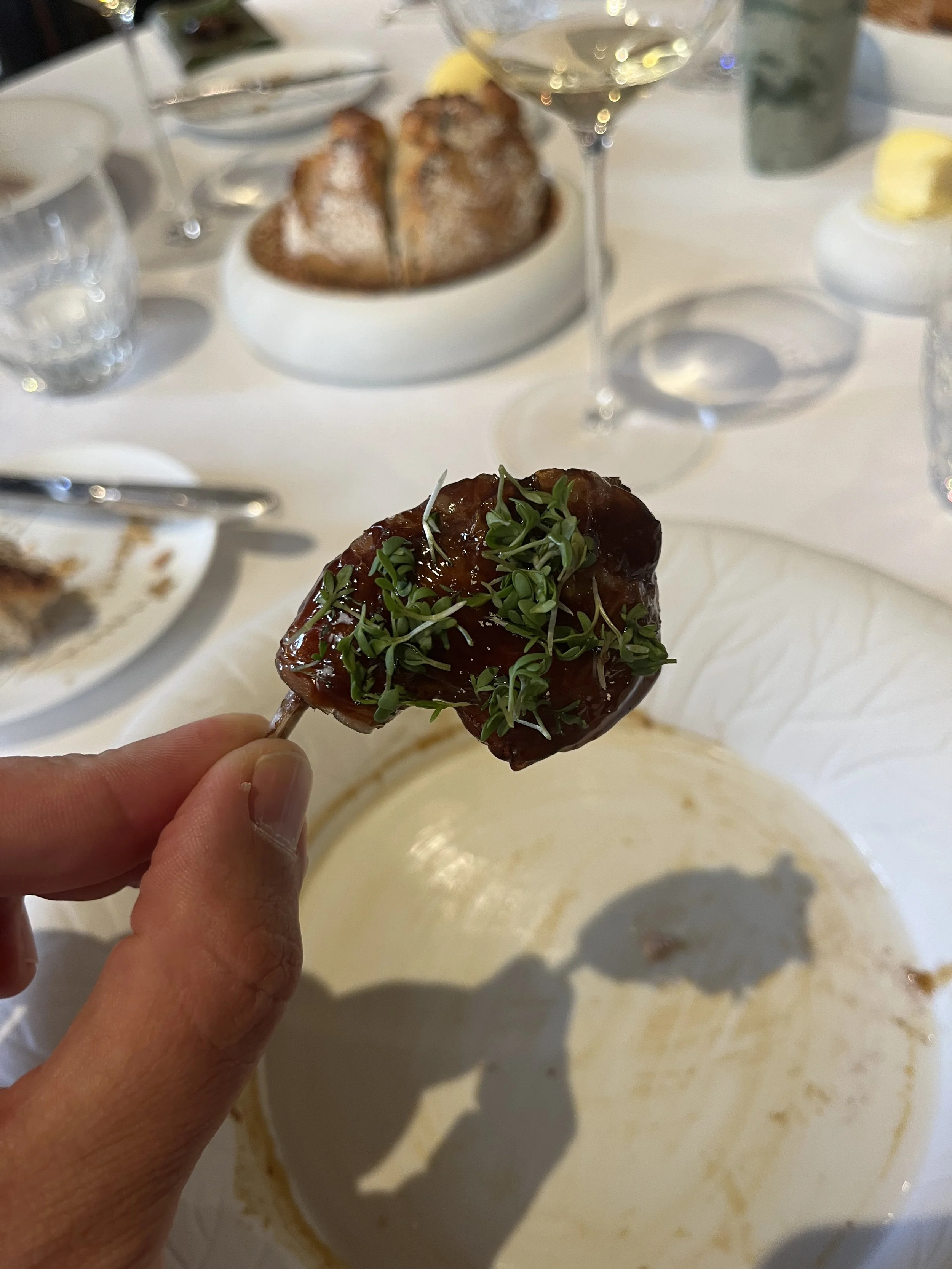
Served alongside was a deboned quail leg—cute, tiny little thing—which had been grilled over a Japanese konro grill and glazed by a lacquer of quail jus. I love chicken wings, and eat them at home more often than I should. I would give them up for quail legs.
Citrus dacquoise, almond biscuit, hazelnut, Menton lemon, Szechuan pepper, white chocolate
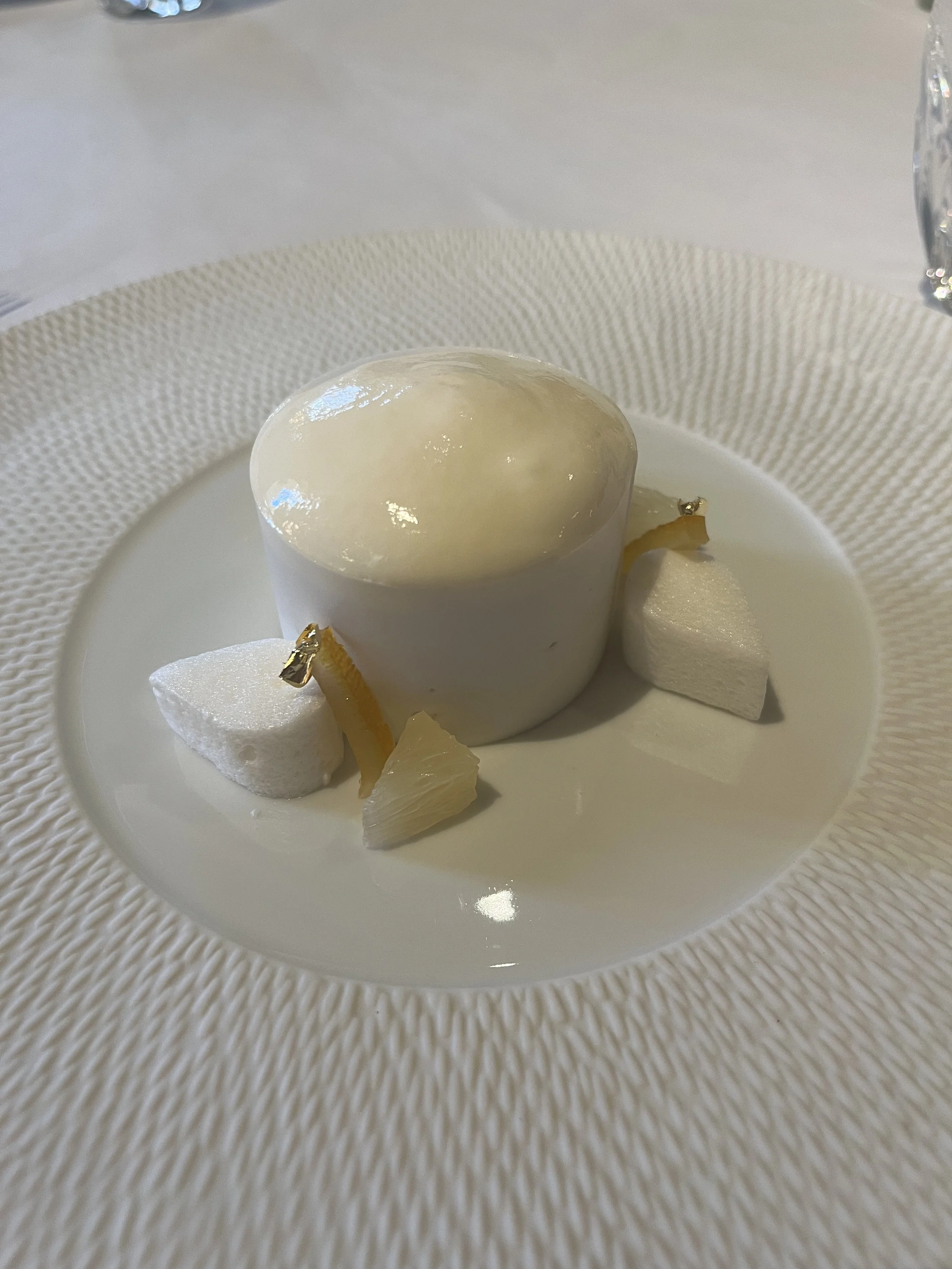
The dessert was a classic French dacquoise, with almond biscuit, hazelnut, and an intensely citrusy pastry cream. As is tradition, the dessert wasn’t overly sweet—borderline not sweet at all. The lemon dominated, but that’s also a characteristic of Menton lemons, from the south of France: big and bold acid. It was collared in white chocolate which made eating it feel a little clumsy. Inside, there was just a hint of numbing Szechuan pepper which kept the whole thing interesting.
Mignardises: red currant tartlet, chocolate/cocoa nib/salt/caramel, grapes
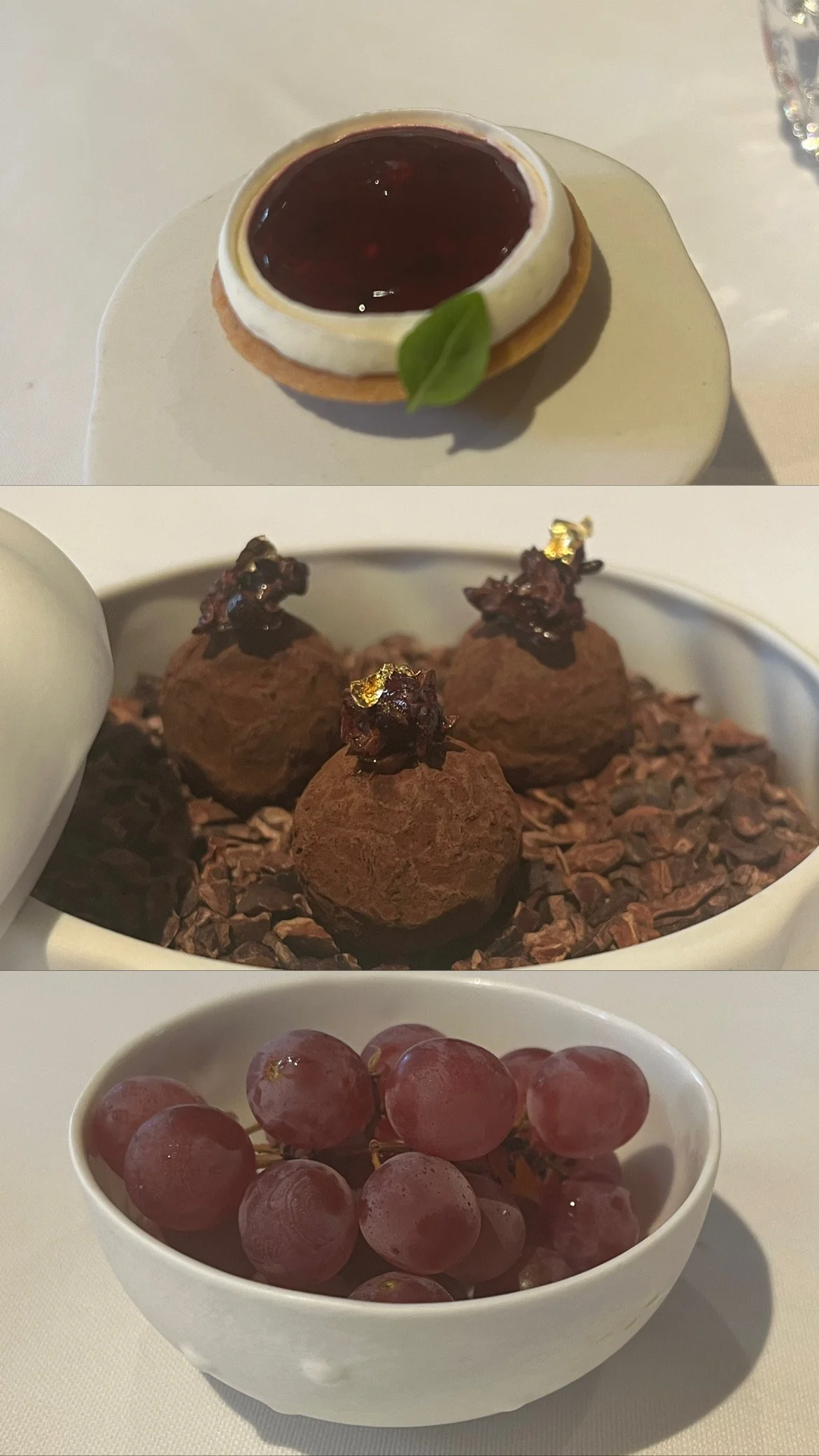
These little sweets are meant to round out a meal. One last sweet bite before handing you a check and whisking you away. The chocolate bonbon could whisk me away any time it wanted.
Bonus: Biscuit, passionfruit
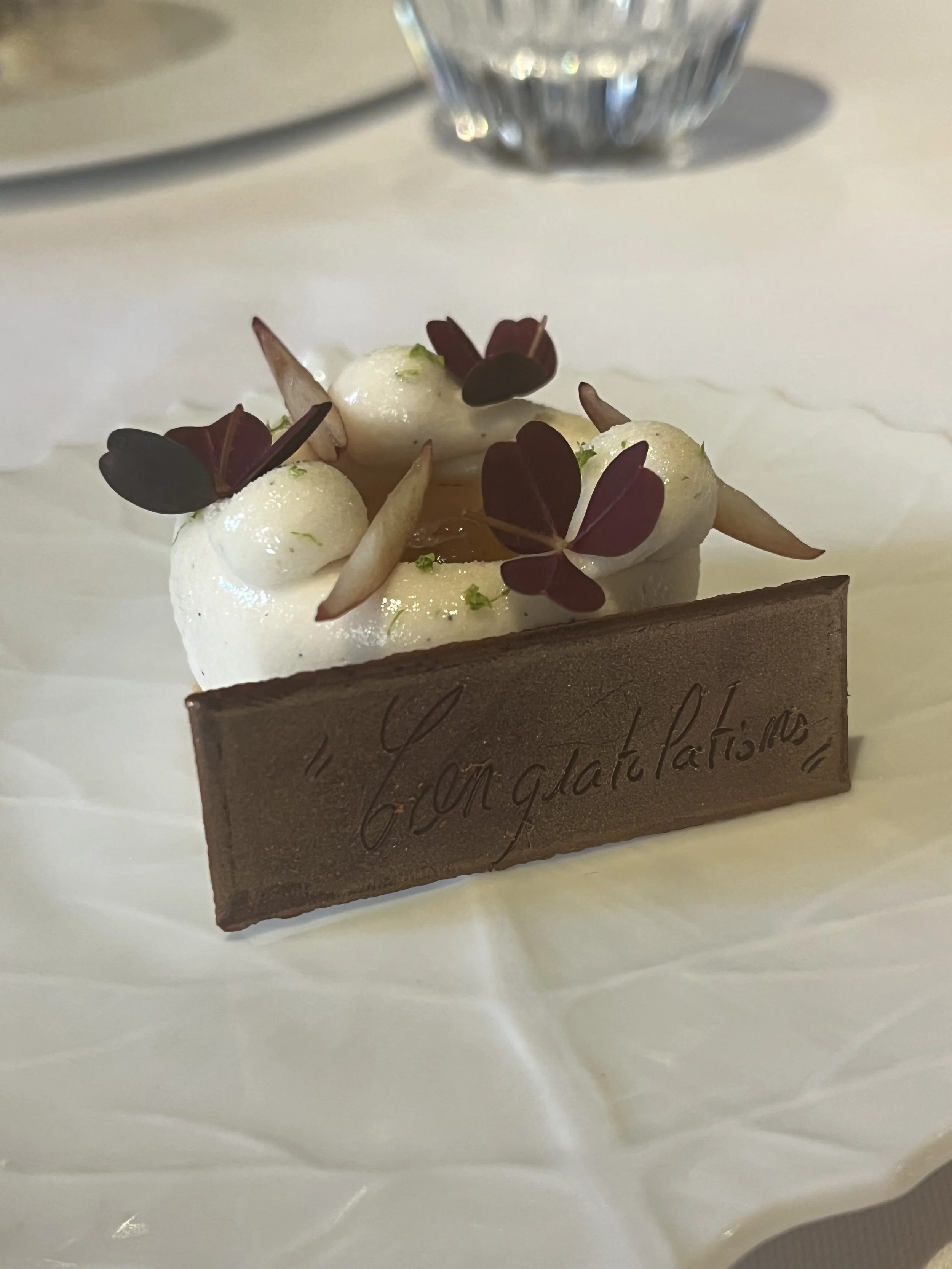
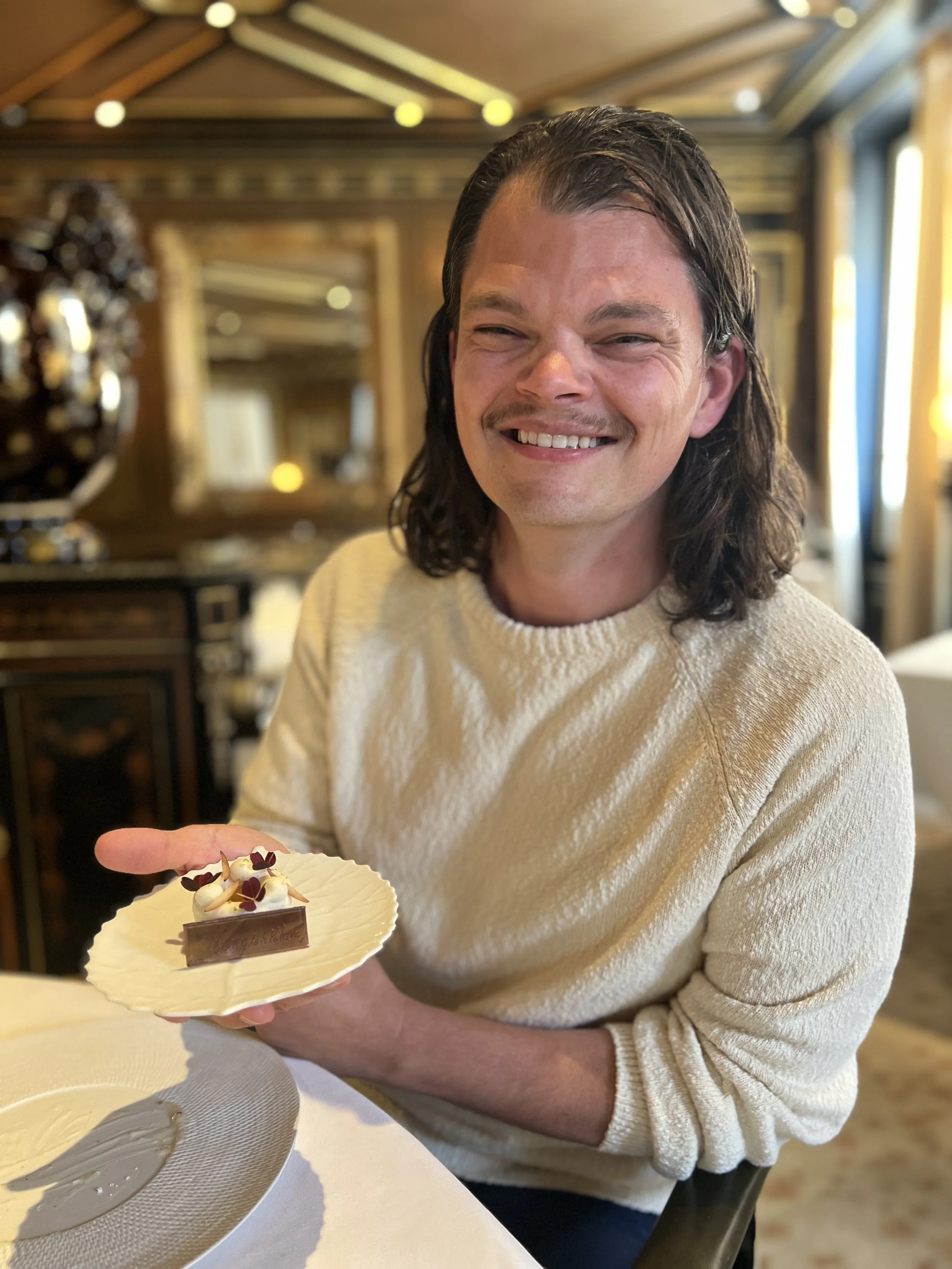
Because restaurants like this are so often a place of celebration, they get very good at doing little things that mean a lot. This was my lunch to celebrate finishing culinary school, an undertaking that all-told took nearly two years’ worth of work. With dessert, they delivered a small biscuit, with a passionfruit pastry cream and a chocolate plaque which read: Congratulations. It was a kind, lovely touch, and I’m thankful for it.
I wrote in my final dossier that while the bulk of my education came from Le Cordon Bleu, the access to many of the world’s finest restaurants—and thereby some of the most creative chefs—has further shaped me as a cook. With AT, Vaisseau, Septime, La Mere Braziere, and now Le Gabriel, I’ve collected a total of eight stars during this stay. Two vegetable dishes—a braised endive with sauce Diane at Septime and the aforementioned carrot dish at Le Gabriel—are among the most memorable things I’ve ever eaten. I came here hoping to learn how to better cook fish. Now, I need to tackle vegetables.
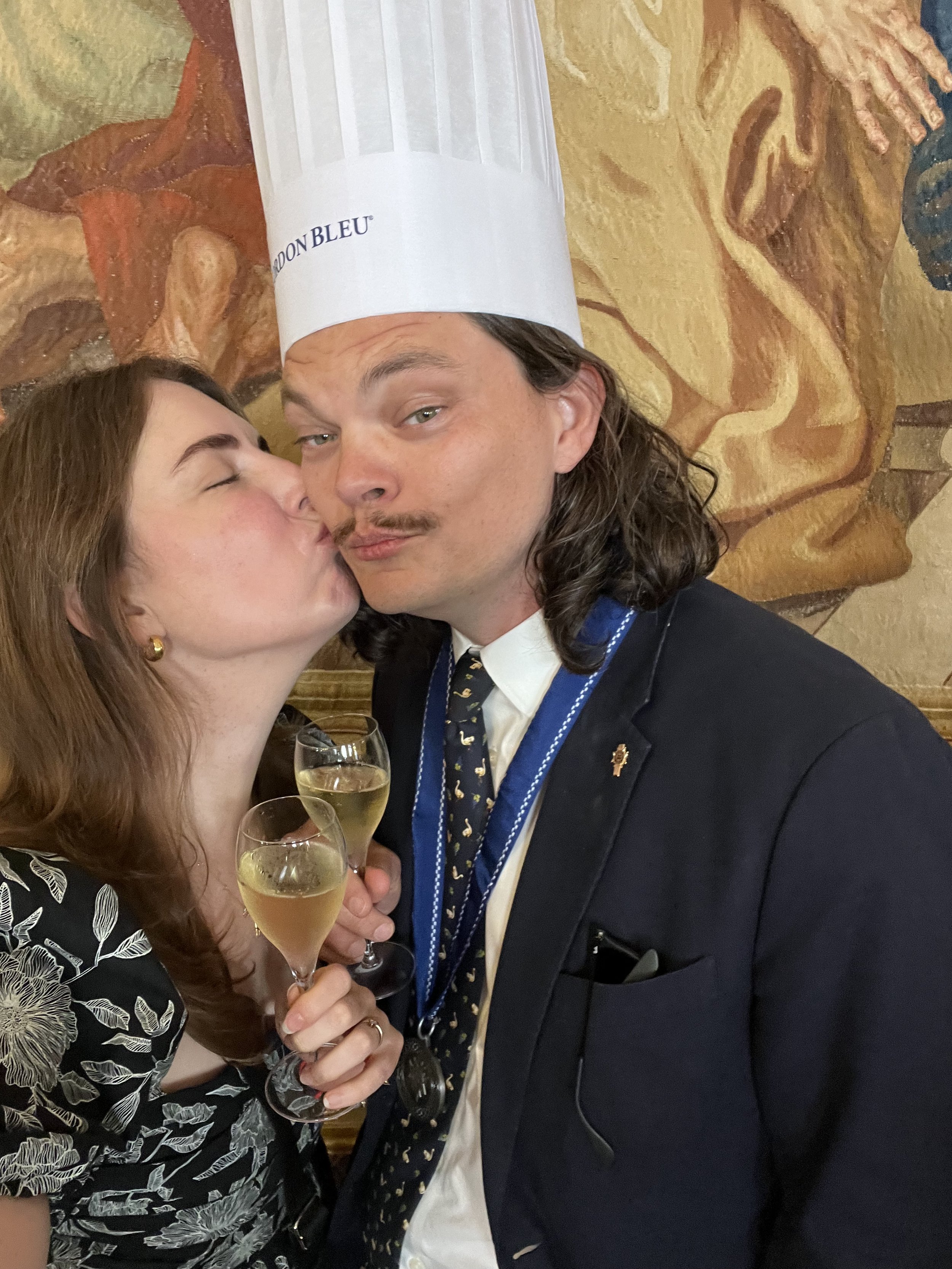
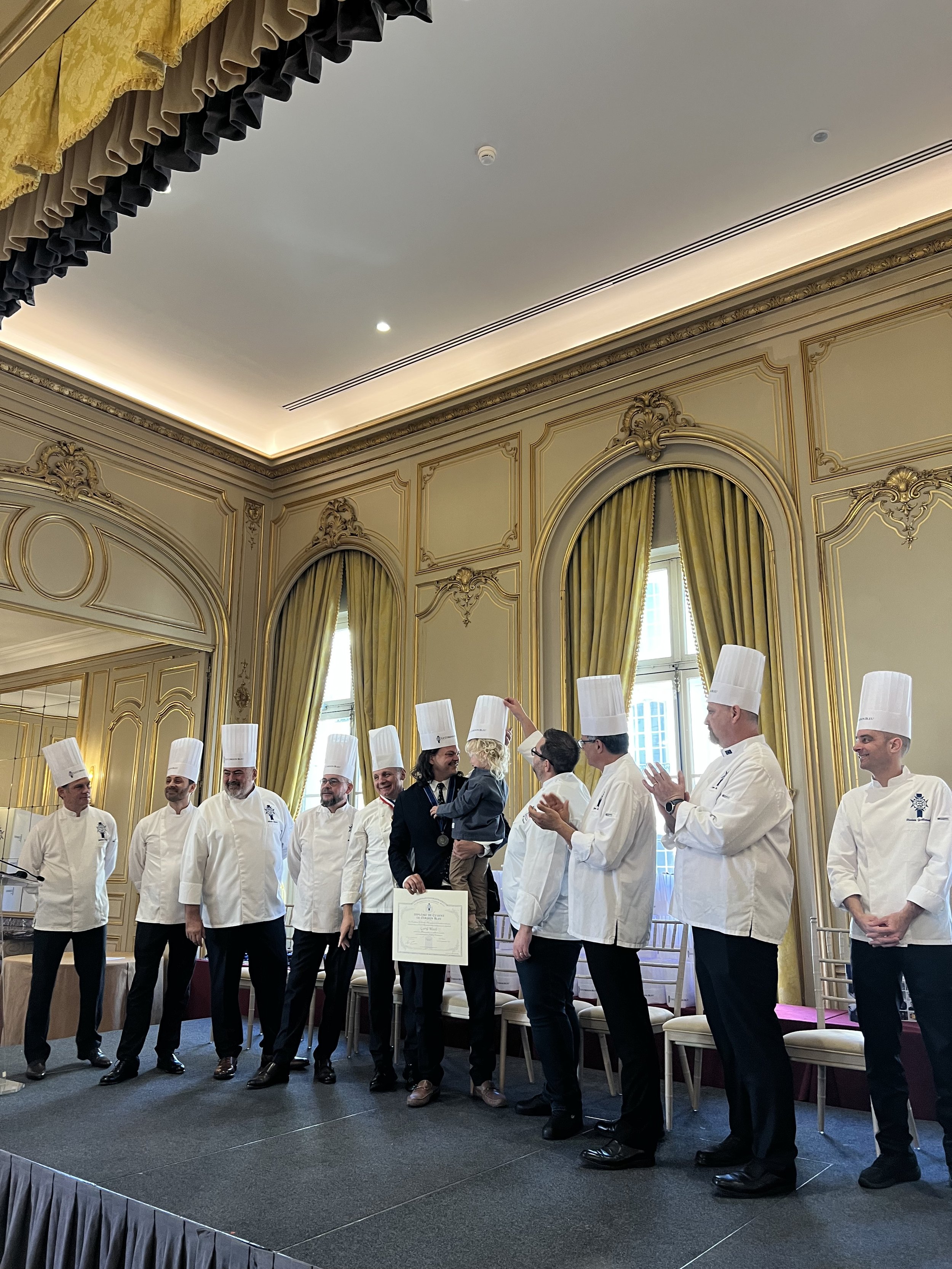
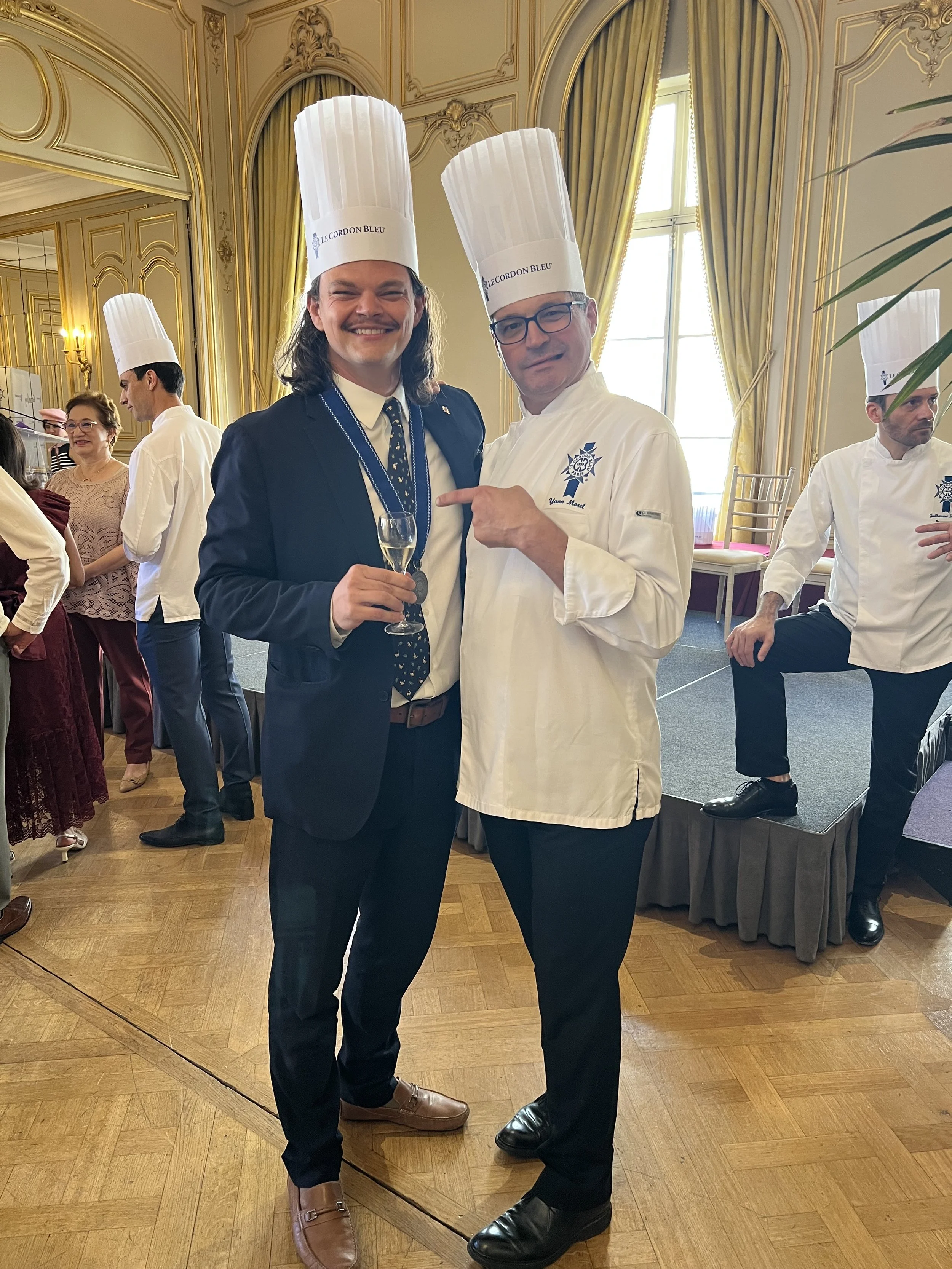
Today, Friday 25 September, I graduated from Le Cordon Bleu in Paris. I walked up on stage and had a medal put around my neck by a chef who challenged me from the start. I had my toque placed on my head by a chef who intimidated me in Basic but who I soon realized would do anything for any of us. This same chef began waving to Katy and Auggie immediately after the hat was on my head, signaling Auggie to come up. So many of the chefs loved that I am a dad, and that my boy was here with me, on this adventure. In our one-on-ones earlier in the year, Chef told me that because I am a father, he can see my sense of responsibility in the kitchen, my paternal instincts, my willingness and ability to guide others.
Auggie walked up on stage, stood at the edge and waved at us, and then didn’t know what to do. I whisked him up into my arms and held him while my chefs smiled and clapped. The crowd starting cooing and awwing. Chef Eric Briffard, the executive chef of Le Cordon Bleu and a MOF, grabbed another toque from behind the stage and placed it on Auggie’s head. My boy’s eyes lit up. He was so incredibly happy and proud to be up on that stage with me. All these months of August asking me if I’m going to class, visiting me at school with Katy, and calling me Chef Daddy. What an incredible honor for both of us. I graduated, but Auggie stole the show.
After I sat again, Harrison was heavy on my mind. I’m here, after all, because of him—because of the lack of him. So I let my eyes well up and held Wubs’ hand tattooed on my chest.
I have often felt that graduations are anticlimactic. Like after all that, we only get this? Where we sit and listen and walk and shake hands and then just go on with our lives like…what next? I felt it after high school, and after college. Katy said she felt it after law school. But today, I didn’t feel that. Today was different. I can’t explain why—the build up itself being so momentous, or the whole experience happening in a foreign place, or having a plan for what’s next. Or maybe it’s that for the first time, I feel like I’ve grown. I don’t want to leave Paris. I love it here. Auggie and Katy love it here. But for now, it’s time to go home.
Thank you all so much for reading these newsletters. I decided to do this as a means to catalog some of our experiences, so maybe they’ll turn into a memoir someday. But it has meant so much to hear from all of you as you’ve read, responded, or texted us after reading. I think in some way, because I knew I would be recording so many of the things we’ve done to share with you, it’s helped me savor this time in France even more. I have relished every moment. Even if none of you were reading, I would still be richer for having written them. But that all of you engaged so much and so frequently with them means all the more.
Many of you have told me you’ll miss these newsletters. The feeling, of course, is mutual. I may still send one, on occasion, if Katy and I have a kind of experience that feels worth documenting. After all, the story isn’t over yet, is it?
Now that we’re nearly home, we look forward to seeing all of you again, here or there, on purpose or accidentally. Let’s all get together over something delicious, at a farmers’ market, or a glass of wine. Don’t hesitate to reach out. You know where to find us.
With that, this is Cy, Katy, and Auggie signing off, from Paris, with love. Like I said when we started this so many months ago: À bientôt.