“Presque” - Almost
As I write this, we are in Bretagne (anglicized as Brittany), the northwestern-most region of France. This is our last hurrah, of sorts. One more go before we finish our time in Paris and head home.
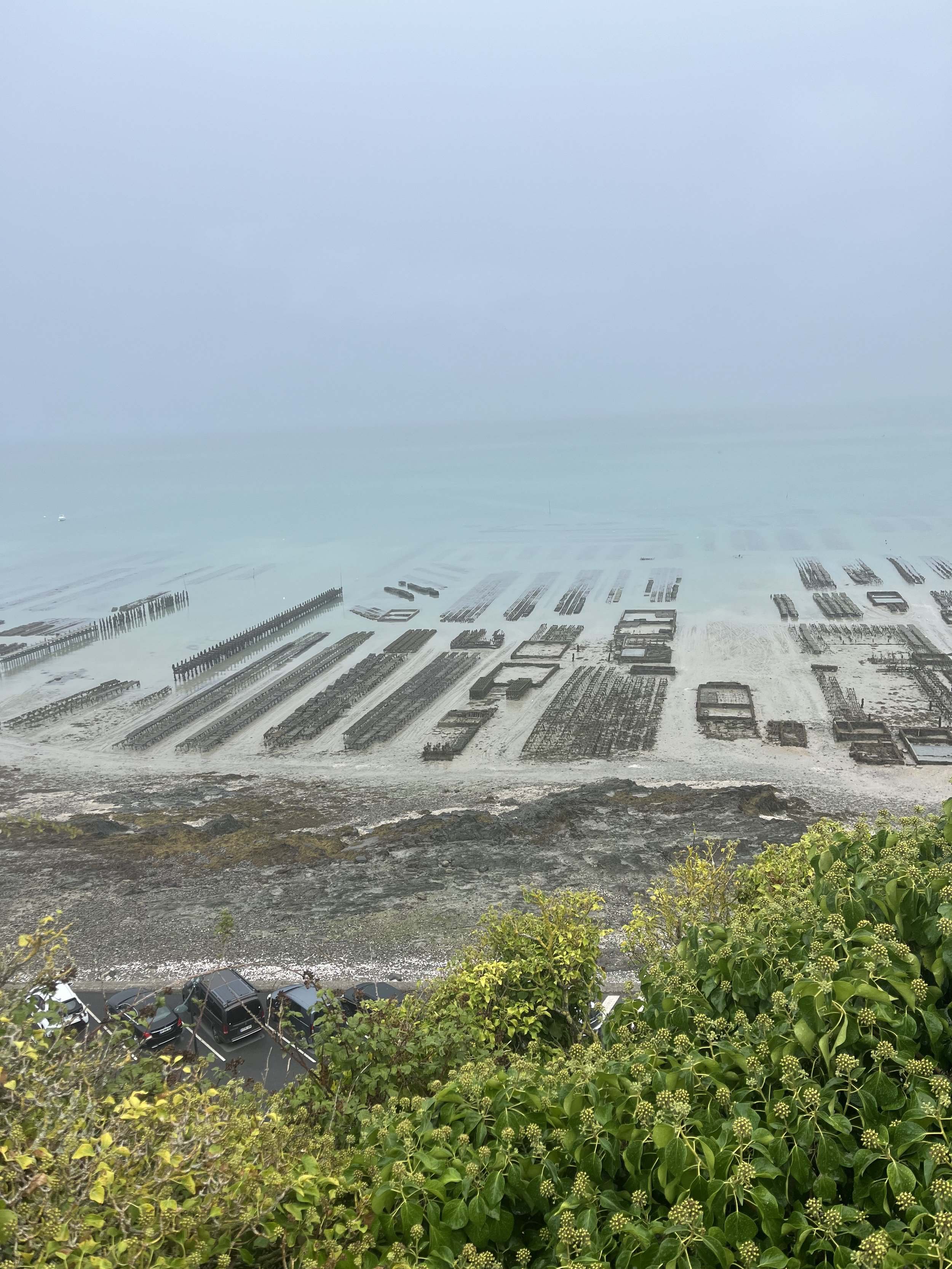
Our base for this long weekend is Cancale. It’s an idyllic little sea town on the English Channel. It’s where nearly all of France’s oysters are farmed. It is, to me, heaven. The smell of the sea and the breeze. The easy going lifestyle. The plates and plates and plates of oysters. Quelle beauté.
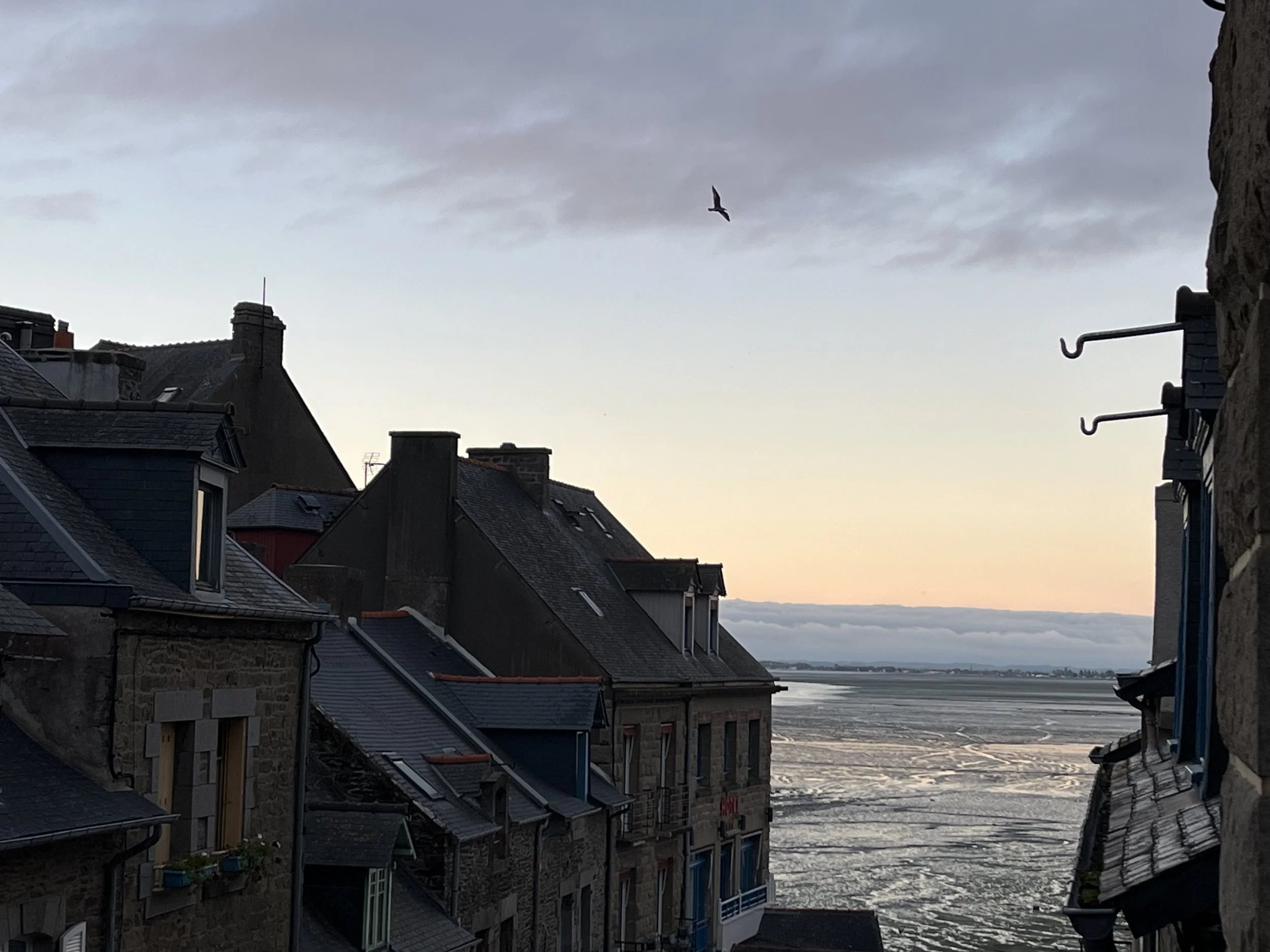
We took the train to Rennes, where we rented a car and drove to Cancale. We wanted to get around easier than public transit would let us. A bit reminiscent of Etretat, in Normandie, a bit east of here and where we visited earlier this year.
Cancale is not large. It feels a bit like Michigan, or Maine. Yes there’s tourism, the town square is your typical town square, blocked off from vehicle traffic and with a selection of art galleries (though not as pervasive as in Éze, down south). The difference here is that down off the port, there's a small market of about eight stands selling nothing but fresh oysters for roughly €1 (or less) each.
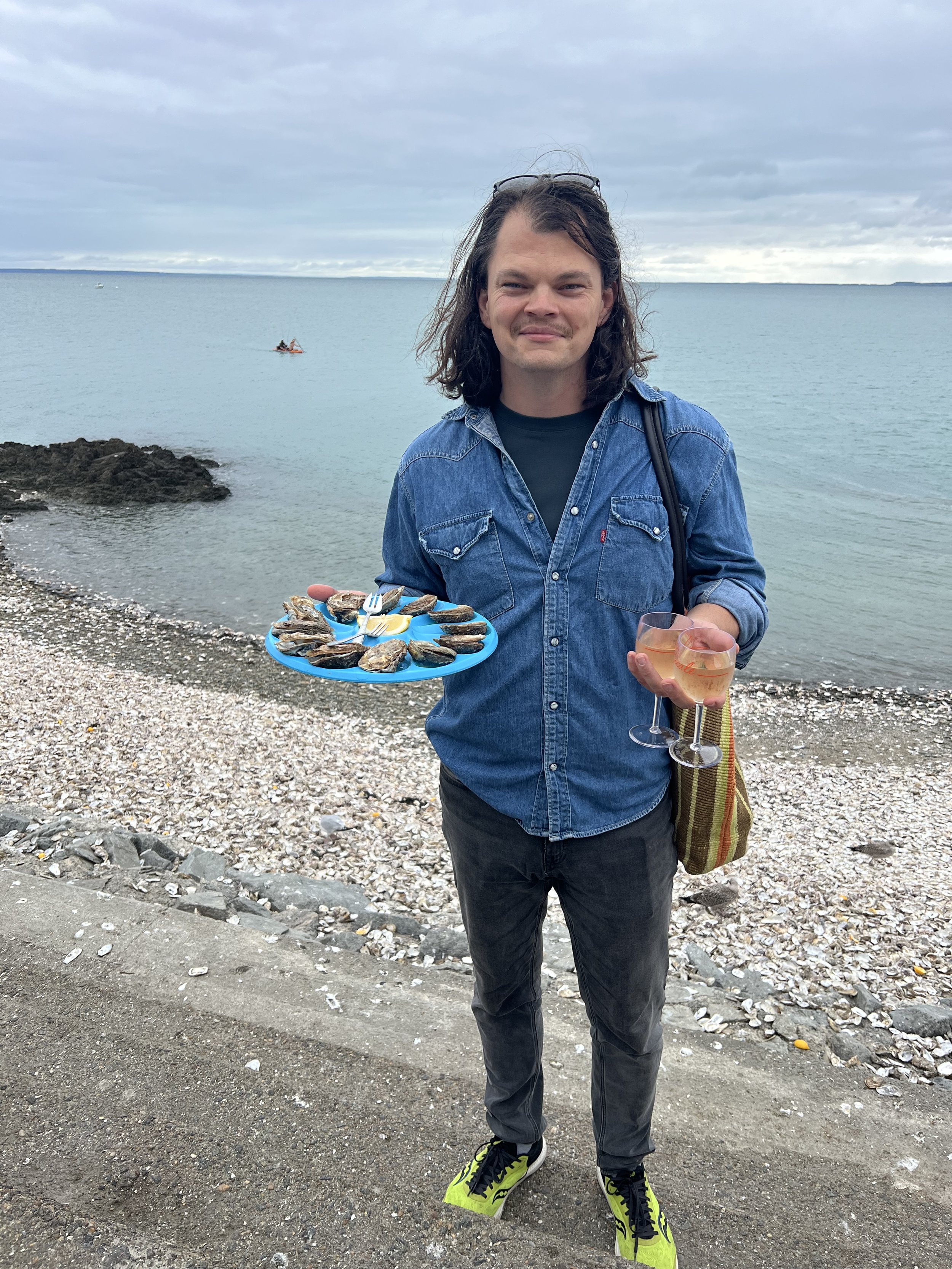
On a clear day, at the top of the cliff overlooking both the town of Cancale and the ocean the other way, you can see Mont Saint-Michel off in the distance: a gothic sentinel set out in the ocean, seemingly a thousand kilometers away but in reality it’s just massive. More on that later.
Our first day in Cancale, we wandered into the town center where we tracked down the classic Breton pastry: the kouign amann (pronounced “queen ah-mahn”). This thing is a damn delight. It’s laminated pastry dough (like a croissant, flaky and buttery) flipped on its side and rolled, and baked with caramelized sugar. We’ve eaten them elsewhere but none were better than at Le Grain de Vanille. After several more visits over the next days, I’m ready to declare Le Grain de Vanille the best bakery and patissiere that I’ve enjoyed in France.
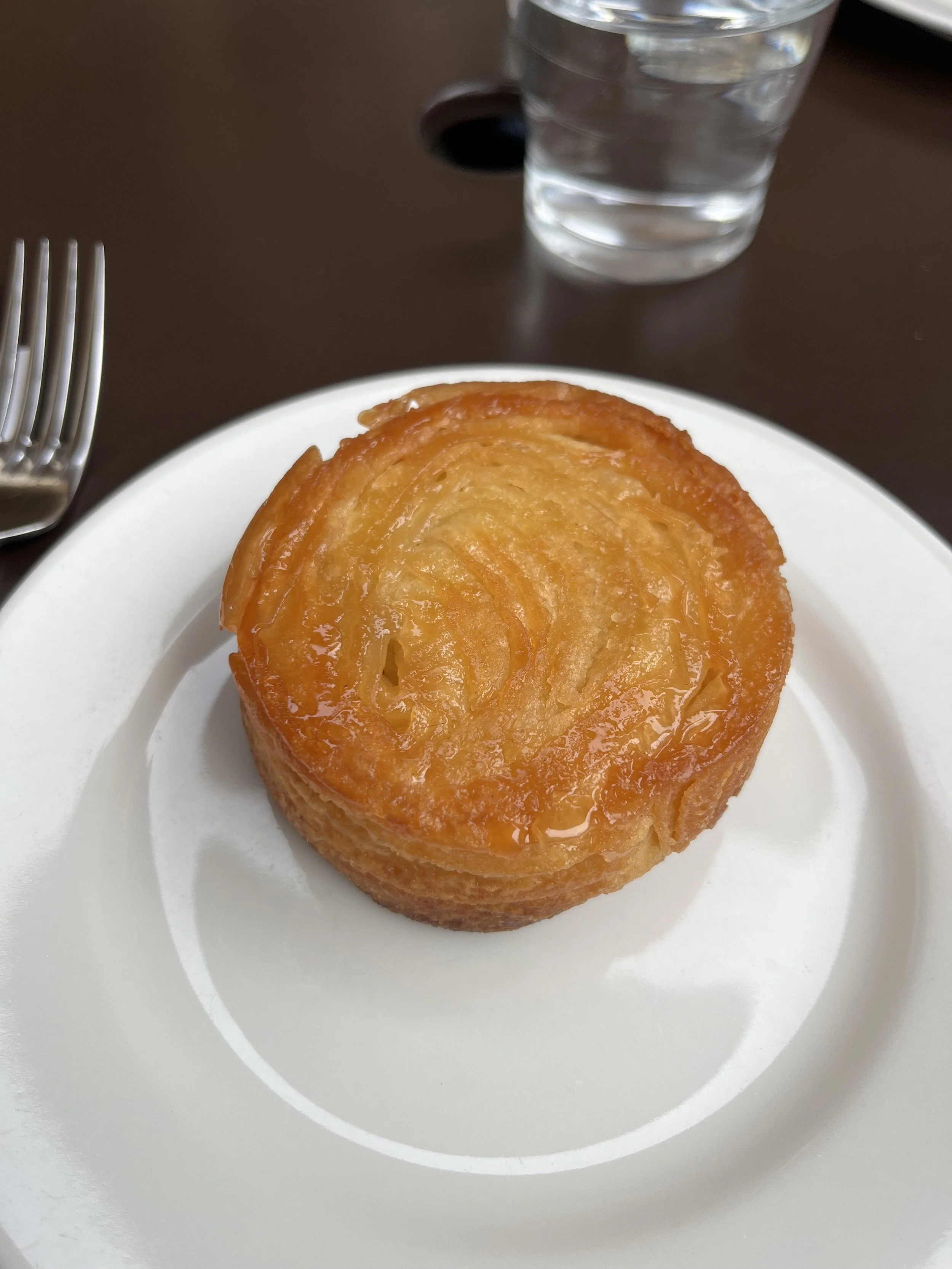
(If you’re at all curious why the thing is called that not-very-French name, it’s because it’s not technically French. It’s Breton, which is much more closely associated with Welsh or Celtic. Happens from being just across the pond.)
After walking on the pier and begging, pleading, and borderline threatening Auggie to not run so as to not accidentally launch himself into the ocean, I walked into the marché aux huitres where I ordered a dozen, six rock oysters and six flat—both specialties of Cancale. We ate them on the stairs of a rocky coast with two glasses of Chablis. The tradition is to finish the oyster and chuck the shell down onto the beach where the gulls pick at any remains. As you can imagine, the shell-throwing became Auggie’s new favorite game, throwing one and asking for a reload before we could finish.
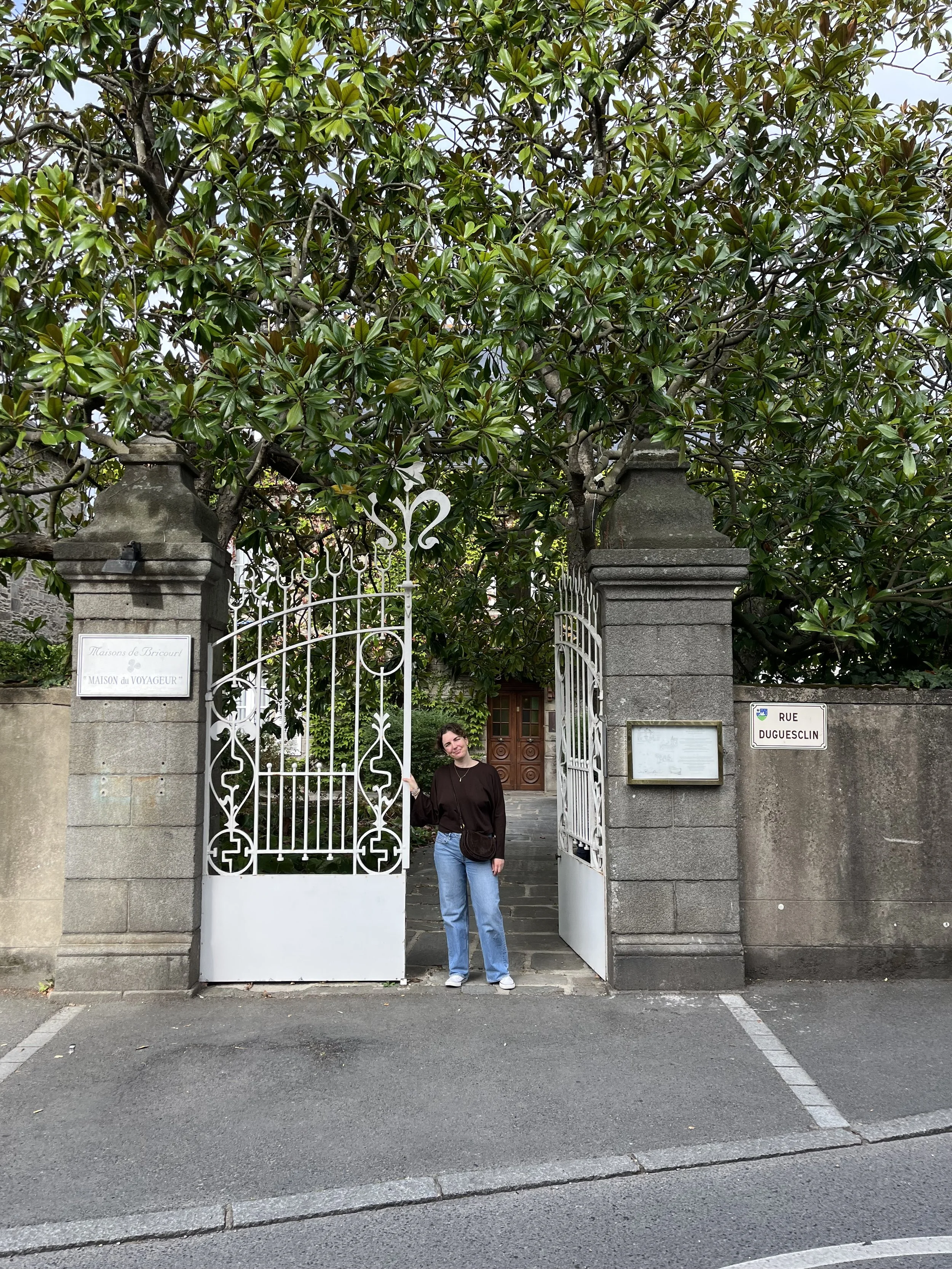
A group of older people sat next to us and got a great kick out of Auggie throwing shells. The man asked me (in English) if Auggie had ever tried one. I said yes, a couple of times, once raw back home and again cooked in Paris. It prompted us to ask Aug if he wanted one and he said yes. And he knocked it right back. Then asked for another. Our French friends loved it—watching a little American boy so casually eat a raw oyster. Honestly, I did too. So much of the joy I find in traveling is eating. It’s how you really get to know a culture. And to have a kid that is open to that—who even asks without prompting if he can try something—means we’re doing something right as parents.
We had lunch down the street and still on the coast, at L’Atelier de L’Huitre (Oyster Workshop, roughly), where we had another dozen oysters, along with fat shrimp, baby shrimp, a tuna rillette (think of it almost as tuna salad), and bulots—otherwise known as a whelk or a sea snail. These are different than escargot, which are snails cooked in a metric tonne of butter and parsley. These bulots were maybe the best bite of the day, enough so that I asked how they were prepared. They’re quickly “blanchi,” which Katy very graciously translated as “blanched” for me, her husband who is about to graduate from a French cooking school which is taught entirely in French. Then they’re cooked in a highly spiced water again. They were peppery and beautiful. I would have eaten an entire plate by myself. Auggie also loved them—as well as everything else on the tray. He loved it all.
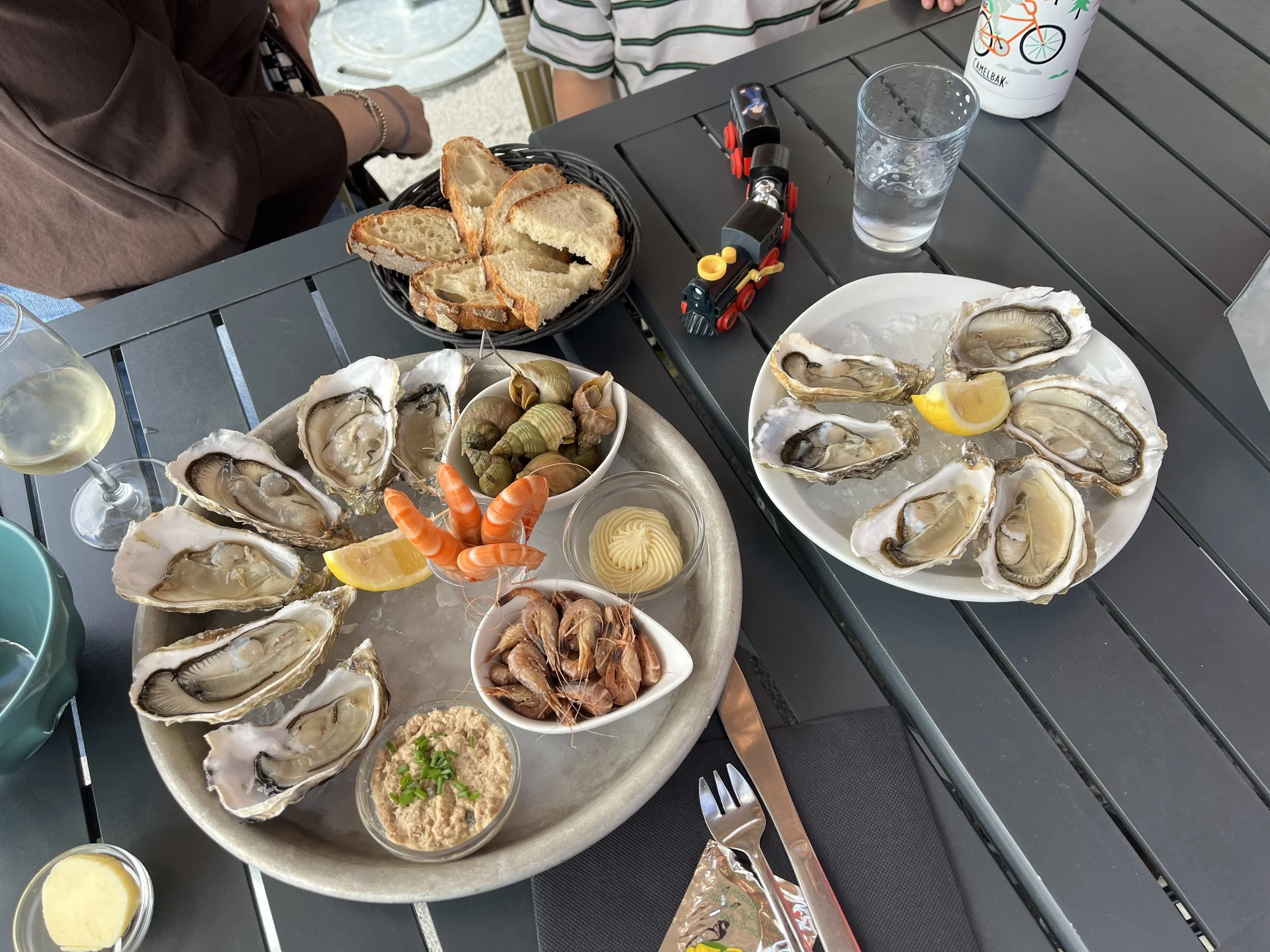
After a nap, we hiked a trail down to the ocean, where the tide was out. Auggie picked up shells and then threw rocks into a tidal pool. We had dinner reservations at a spot on the coast, and made our way there, where we shared moules à la creme avec frites (mussels in cream and fries) and a nigh-unbelievable seafood tower with six oysters, four langoustine (like, small lobster), four shrimp, a bowl of bulots, a bowl of periwinkles (a smaller sea snail), and an entire spider crab. That plate cost €36. Seriously, are you kidding me? What is this place? Anywhere in the United States, even on the coast, there’s almost no way that’s less than $80, probably closer to $100, and you’re tipping on top of that.
Saturday, we drove to Saint Malo. It’s a medieval walled city that juts out into the English Channel. It’s the main port in Brittany, and as such, has a very serious history in both war and piracy. The granite walls stretch way up, and (replica) cannons line the ramparts. Privateers used it as a home base. It was also bombed heavily in World War II.
Katy’s version of small talk is digging into traumas. She asked me as we were driving to Saint Malo the next day if I had been thinking of my dad. I have been. That man loved seafood. He told me stories of massive seafood boils he and his buddies would throw when he was stationed, lived, and worked in New England. Maybe, part of my love of the sea—the food and the water—comes from him. It’s hard not to imagine his eyes lighting up if that tower of shellfish had been set in front of him.
Likewise, I’m thankful he taught me to drive a stick shift. The majority of the cars you find in Europe are standard transmissions. Being able to navigate the hills and curves of Europe’s roads while also handling a clutch—it’s opened up experiences. (Katy can drive one too, so it’s not like we’d be up a proverbial river, but still.)
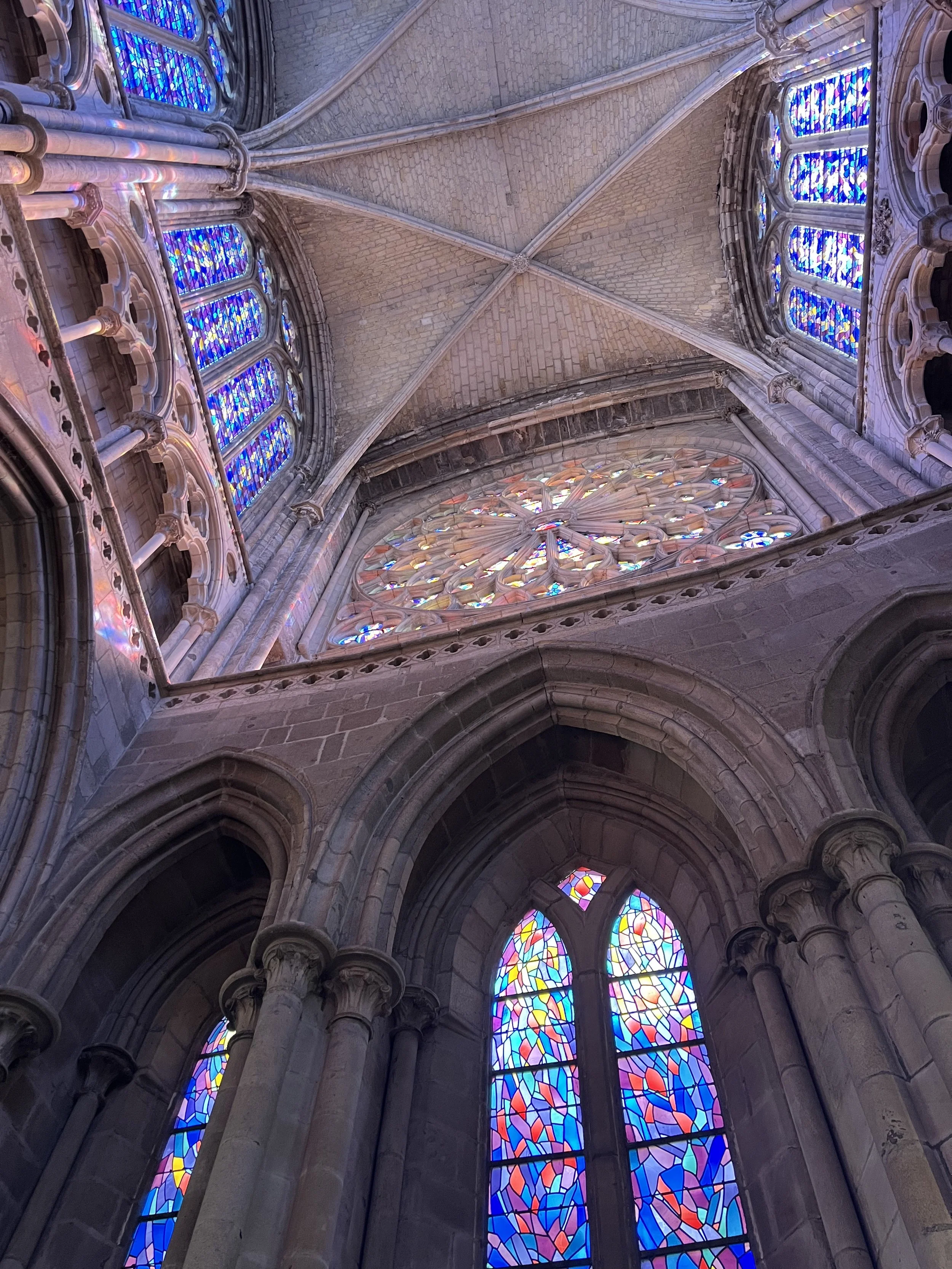
We walked the city. Their cathedral was built in the 1100s and has a giant pastel stain glass window which casts light across all the white stone. It’s the resting place of Jacques Cartier, the navigator who discovered Canada. We took in the sea from the high points on the wall before maneuvering down to the beach, which August so desperately wanted to see. There, we watched windsurfers load their boards into the water and skate off, and a group of young kids go on a very serious ocean swim. Auggie, naturally, threw rocks into the water.
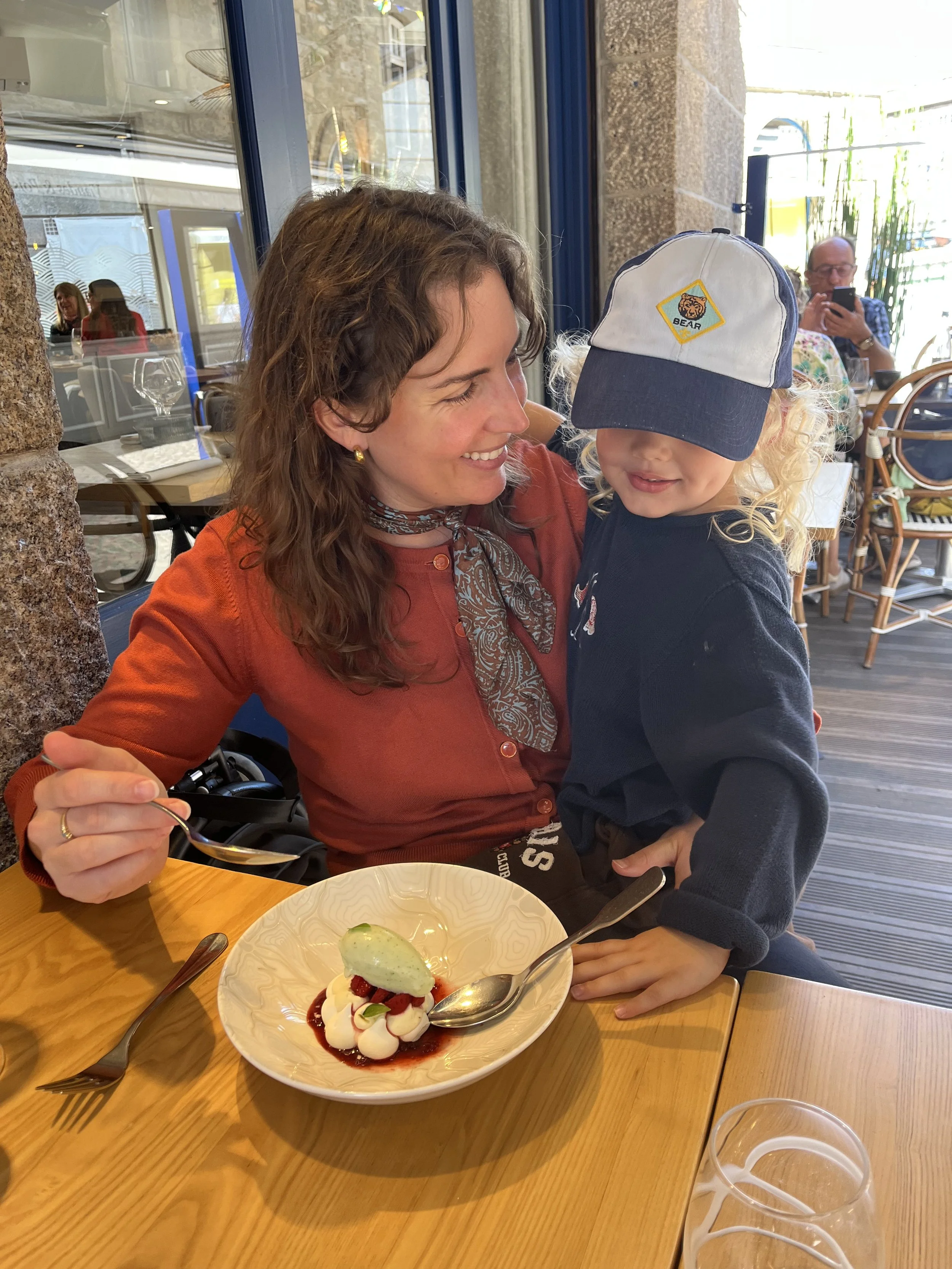
We ate lunch at Fidelis, just inside the walls. Of course we ordered another dozen oysters, and each had their formule lunch—Katy, a pea gazpacho (that’s a cold soup), I, a set of three tuna rillette “tacos” with some kind of deep fried flour shell which I enjoyed very much; the two of us had hake for our plat, on a bed of cooked fennel, and in a foamy broth of crab velouté; and for dessert we split both a rhubarb cheesecake and strawberry pavlova. At the end, we sat back and realized we were both very full. And happy.
We drove another twenty minutes to a small town called Dinard, which turns out was a mistake. When researching, I had looked at a town called Dinan, which is pronounced virtually the same way given how the French treat the “-rd” at the end of words. Dinan is an old medieval town with loads of history and ancient buildings. Sitting on the beach, I kept looking around thinking, this doesn’t look very medieval. Especially the very large casino that sits on the shore. Turns out, Dinard is a vacation destination and resort town, full of ritz and glamor, and with both old Naples (Florida) and old Hollywood vibes. Not bad. But not exactly what I was expecting. We didn’t stay terribly long.
You know Mont Saint-Michel, even if you think you don’t. It’s an abbey in Normandie (right next to Bretagne) that sits on a rocky island off the coast. Once upon a time, it was only accessible during low tide. When high tide came in, there was no route other than boat. Now there’s a footbridge. It’s the iconic medieval fantasy castle fortress picture. Though it’s not technically a fantasy or a castle. It acted as a Fortress during the Hundred Years’ War, and also a prison after the French Revolution—their own ancient Alcatraz. The original sanctuary and chapel were built in 708 (yes, that’s just three digits). The Romanesque abbey church began construction in 1023 (where does the time go?) and it was added to gradually over the years from roughly 1100 to 1500. You know: well before the United States existed.
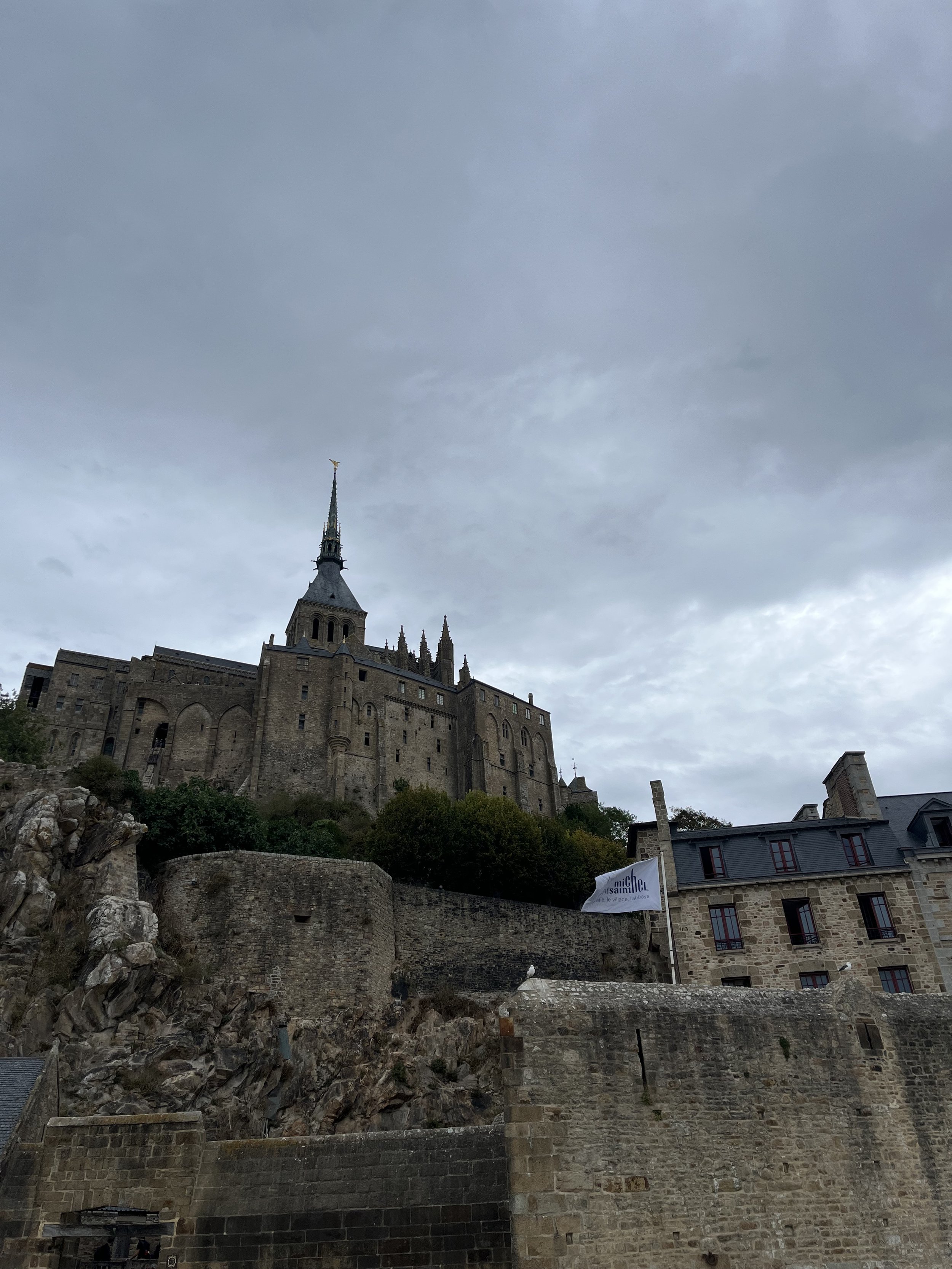
We went on Sunday. For me, the most impressive part is the walk up. This gargantuan, imposing, gothic castle looming over you as you get closer and closer—and somehow it keeps getting larger and higher.
Unfortunately, not long after stepping off the footbridge, you’re affronted by a barrage of selfie-taking tourists, and it only gets worse as you walk inside the walls of the city onto the impossibly narrow medieval roads. It’s about the most commercialized example of a city you can think of, with stores selling postcards and magnets and snow globes and plastic swords, all obviously made in China. It’s a dense uphill climb among a lot of people who don’t do a lot of uphill climbing. My patience grew thin, my claustrophobia grew large. We stopped along a small outcropping, sat, and tried to plan.
The only real option for us was to visit the Abbey itself—at the very top of the already steep mountain. So we climbed, and we climbed, and we entered the ticket office. Then we climbed and climbed and climbed and then we were at the top, looking across the sea and the bay to Cancale. I could breathe again. We wandered through the Abbey Church, where Mont Saint Michel’s monks and nuns still have services. Then through the rest of the monastery. It’s no surprise that it’s as huge inside as it is out. It felt a bit like playing a video game, exploring the ancient rooms. We found most people to be fairly unkind, especially to Auggie. Such is tourism, I suppose.
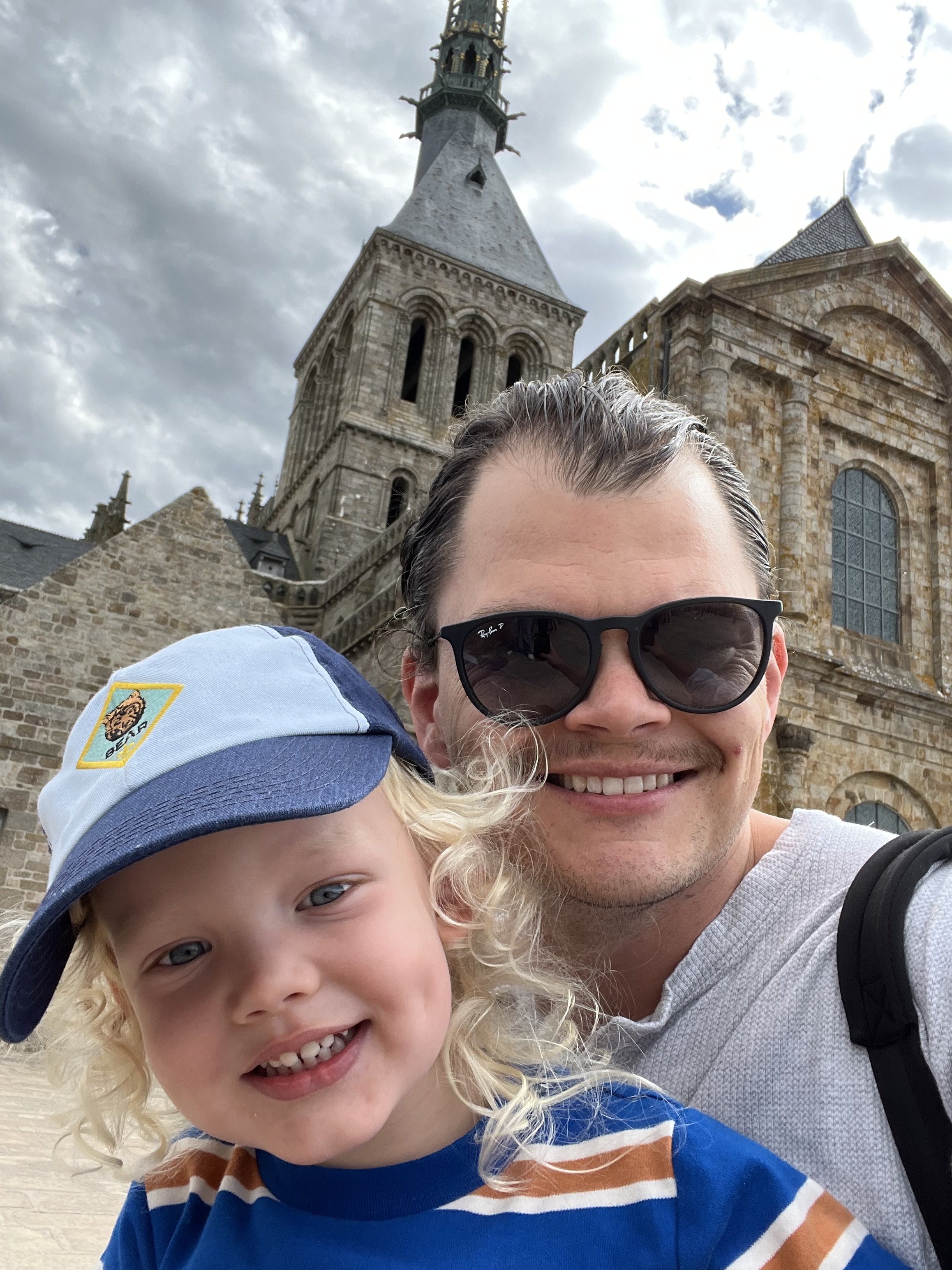
Wandering the abbey got us away from the worst of the crowds. Getting out meant taking a long, narrow spiral staircase down, which freaked Auggie out a little. But we made it, and then hoofed it to the exit of the town.
We made it outside the walls and I breathed a little sigh of relief, thinking I was finally away from the affront of the bulge of people on every side of me. In reality, I was just lulled into a false sense of security. A few steps outside, something smacked me upside the head. I ducked and swatted, sure that a volley of archers had mistaken me for an ogre hell-bent on sending for reinforcements to tear down the walls. In reality, I had been attacked by an aggressive seagull diving for the last half of my jambon beurre sandwich. Nice try, bird. I warned him that I knew how to cook a pigeon, and cooking a gull couldn’t be that much more difficult.
On Monday morning, we bid farewell to Cancale with a couple more kouign amann, then drove to the aforementioned and mistaken Dinan—the actual medieval city. It’s built up inside a giant wall. There’s a castle, turrets, and a clock tower built in the 15th century. Dinan’s basilica was built in the 12th century. We walked through a gorgeous park and let Auggie play and wear himself out. Unfortunately, we hit town around lunch and my stomach was growling, so much of our time was eaten up by sitting at a restaurant rather than exploring. It wasn’t all uneventful, though, as Auggie learned that if he sticks his fingers far enough down his throat, he throws up.
On the train home to Paris, we booked our flights home to Indy. We’ll be back in Indiana on October 3. It’s bittersweet. It would be so nice to stay here, to extend this, to keep going, but it’s not what we need right now. Auggie has to go to school, Katy needs to be back at Exodus Refugee Immigration doing some of the most important work in our country right now. We need to get back, get into the new groove of our life again. Still, back at our apartment while Katy put Auggie to bed, I cried while I unpacked the suitcase.
I didn’t talk much about food last letter other than the Bicky Burger, so I’m going to go on a bit longer here. (I know why you read this.) As we’ve been eating our way through the bucket list, one stop was Red Sauce. I’ve had my eye on it for months, found it on some magazine list of innovative restaurants in Paris, probably. It appealed to me because it hails itself as a “Detroit-style pizza place.” If you’re not familiar, Detroit style pizza has a nice, thick, airy, focaccia-like crust shaped in a rectangle. It’s topped with cheese, your toppings, and traditionally three stripes of sauce. I love it, and it’s one of the things I’ve missed most since moving here. I make a mean Detroit pizza, but I don’t have a good vessel to bake it in here. Of course we had to go.
It was a humid, rainy day and we were ushered into an impossibly large dining room—larger than almost any other Parisian restaurant of its type that we’ve been in. And it was busy. Detroit-style takes a long time to bake, and I was worried we were all going to be hangry before any food hit our table. We ordered a zucchini salad, the spicy “spaghetti all’assassinina” (yes, spaghetti of the assassin), and two squares of Detroit-style: the sauce trio with red, green, and white sauces, and cacio e pepe (cheese and black pepper).
The salad hit and Auggie started digging into the black olives. Katy and I ate the zucchini and burrata. She said, “It’s fine. I wouldn’t crave it. It’s fine.” I suggested we hold our criticisms until the actual pizza arrived, but turns out Katy’s intuition was right again. The spaghetti was—let’s call it “interesting,” which is what my dad used to say about books I would loan him which he didn’t enjoy. It was moderately spicy to me (which is too spicy to Katy), but the textures made it annoying to eat. Some of the noodles were fried very hard, some al dente, and some well done. I get what they’re going for, but the physical act of getting the stuff onto a fork just didn’t work well.
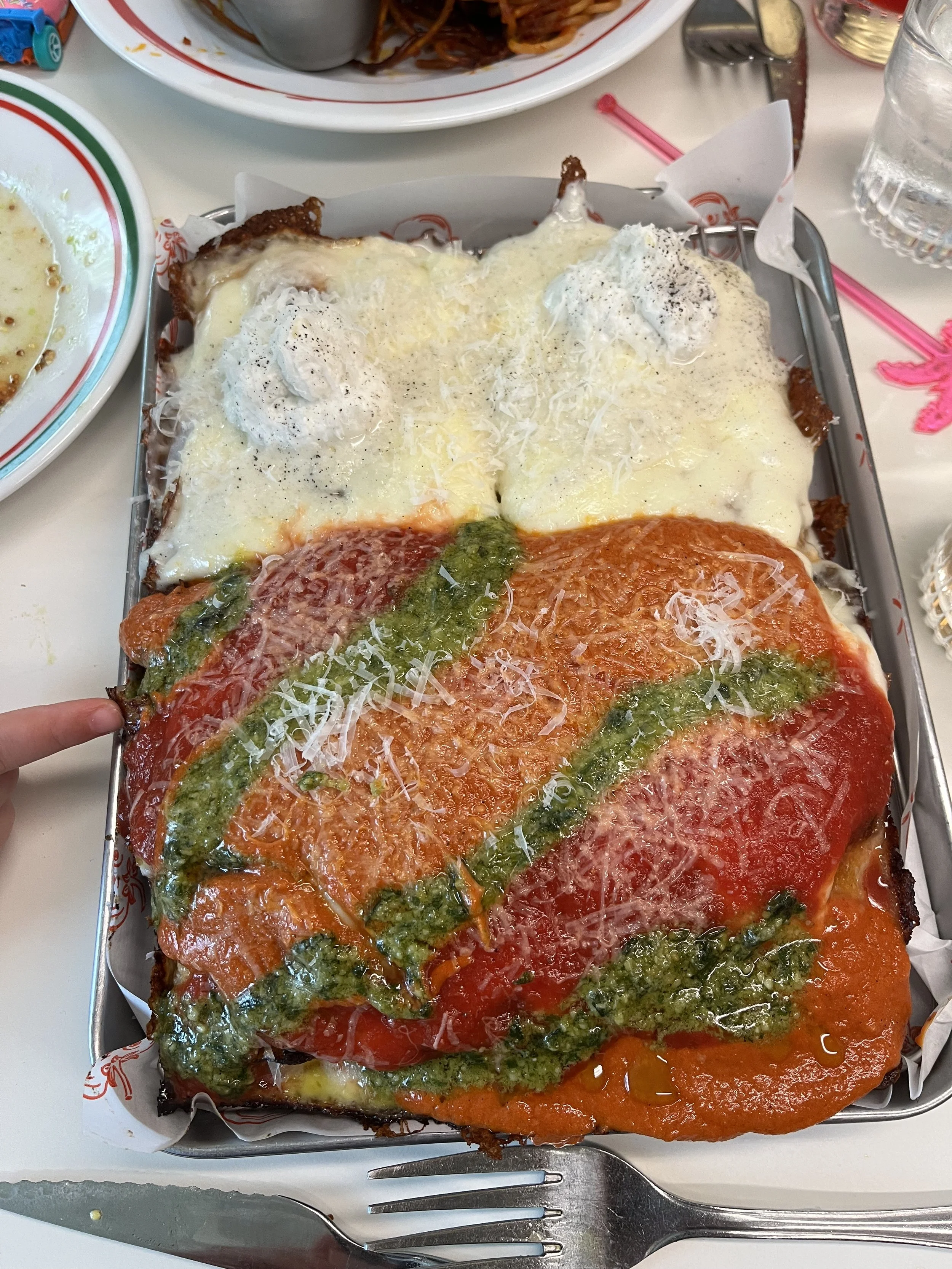
The pizzas were served on cooling racks inside a metal tray. Again: I get the idea. The beautifully buttery and crispy outside crust is a hallmark of the style, so putting it on a rack helps preserve that. It also makes it virtually impossible to cut—and no French person is picking up a piece of pizza like this with their hands. It came out lukewarm, almost like it had been hanging out for a while. Which turns out, it had. As I tried to cut through the pizza, some of the cheese just flopped off and revealed a browned upper crust beneath. Which means that they’re not par-baking. They’re baking the bread completely through, focaccia-style, then topping and tossing under a broiler to heat and melt.
The crust was pretty good, I can’t really complain about it. The problem is the way it all comes together. Detroit-style crust may be par-baked, but not usually to the point that it develops a full crust. Part of the appeal is the way all of the elements cook together. Of course they don’t have time to do a full, from-scratch bake with every order. But these left me wanting. I’ll make a good one when I’m back.
I told you we were going to eat well, and we have been. Katy and I had a Friday lunch date recently, and we took advantage of some last minute available reservations at a one-Michelin-star spot in the 11th called Vaisseau. The chef and owner, Adrien Cachot, was a finalist on the 2020 season of the French Top Chef.
Vaisseau, not unlike AT where I ate earlier this year, has a clean and minimalist vibe inside that plays across the food as well. Unlike AT—or nearly any other restaurant you visit—all the tastings were “blind.” There’s no paper menu in front of you. For lunch, you can choose the “Quoi” or “N’importe quoi” menus (the latter being slightly longer). When the waitstaff brings by a dish, they don’t tell you what you’re eating, only providing instruction if necessary. After you’re finished, they walk you through everything. It’s supposed to strike up conversation between the diners, and for us, that was absolutely true.
Katy has a much better palate than I do. I chalk it up to her incredible nose. She can also recall scents and tie them to very specific things better than I can. It’s fun to eat (and drink wine) with her and watch her work. So as plates were dropped off, she was calling out flavors and scents the second they hit the table, and very often getting them correct, or at least being very close.
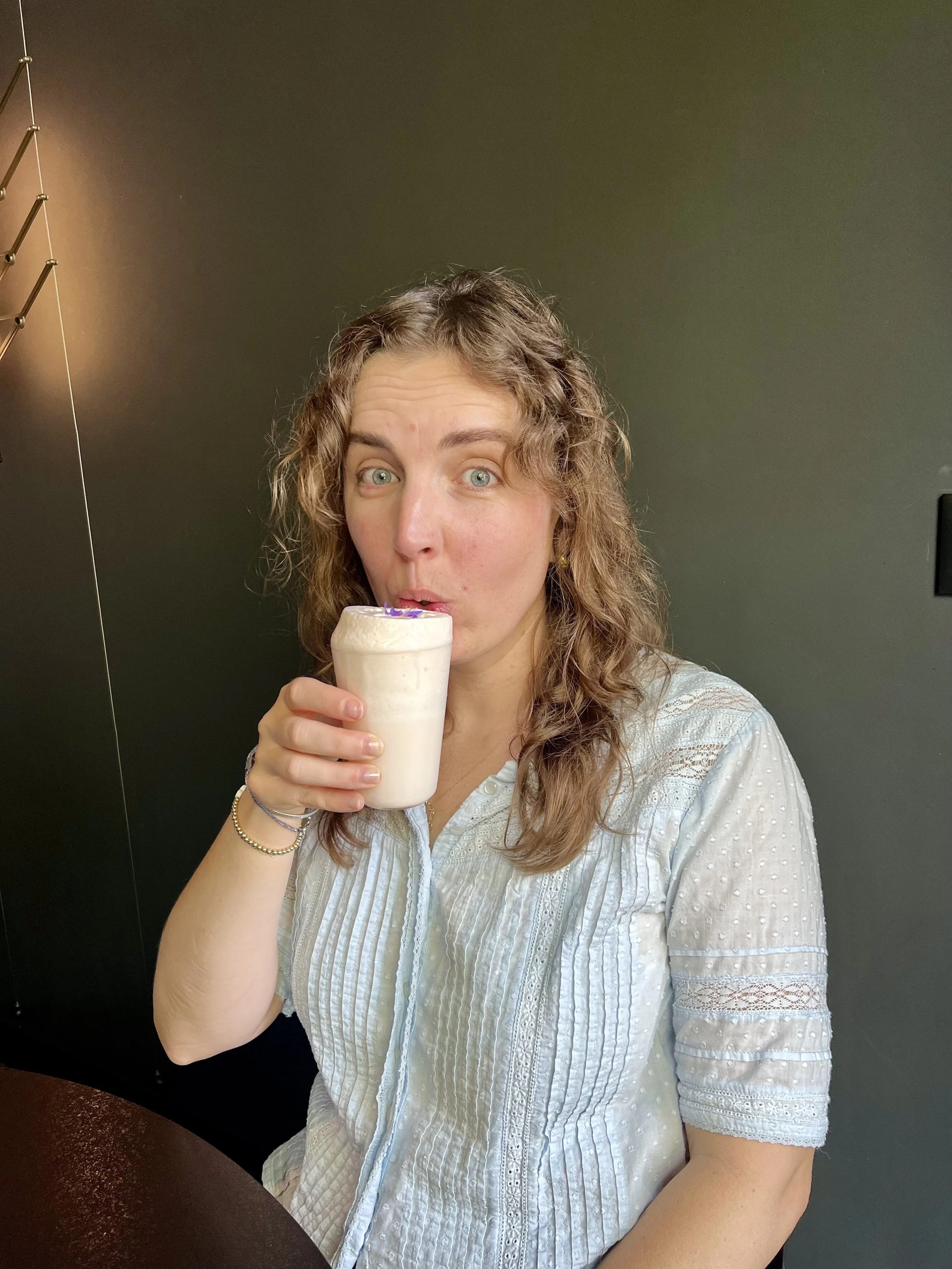
Food like this can be intimidating. You want to savor them, but food is also meant for eating. It’s a combination of art and one of our very basic needs in life. For me, restaurants like Vaisseau and AT are some of the most fun. The flavors combined in interesting ways, the highly creative presentations, the flow of plates that’s both just enough to remain interesting and also enough to satiate. And while it’s fun, don’t mistake this for all I like to eat. I love a well-cooked duck breast, a steak, a bowl of rice with kimchi. Just yesterday I bought four packs of instant noodles. Restaurants like this are a treat, and for me, meant to be savored.
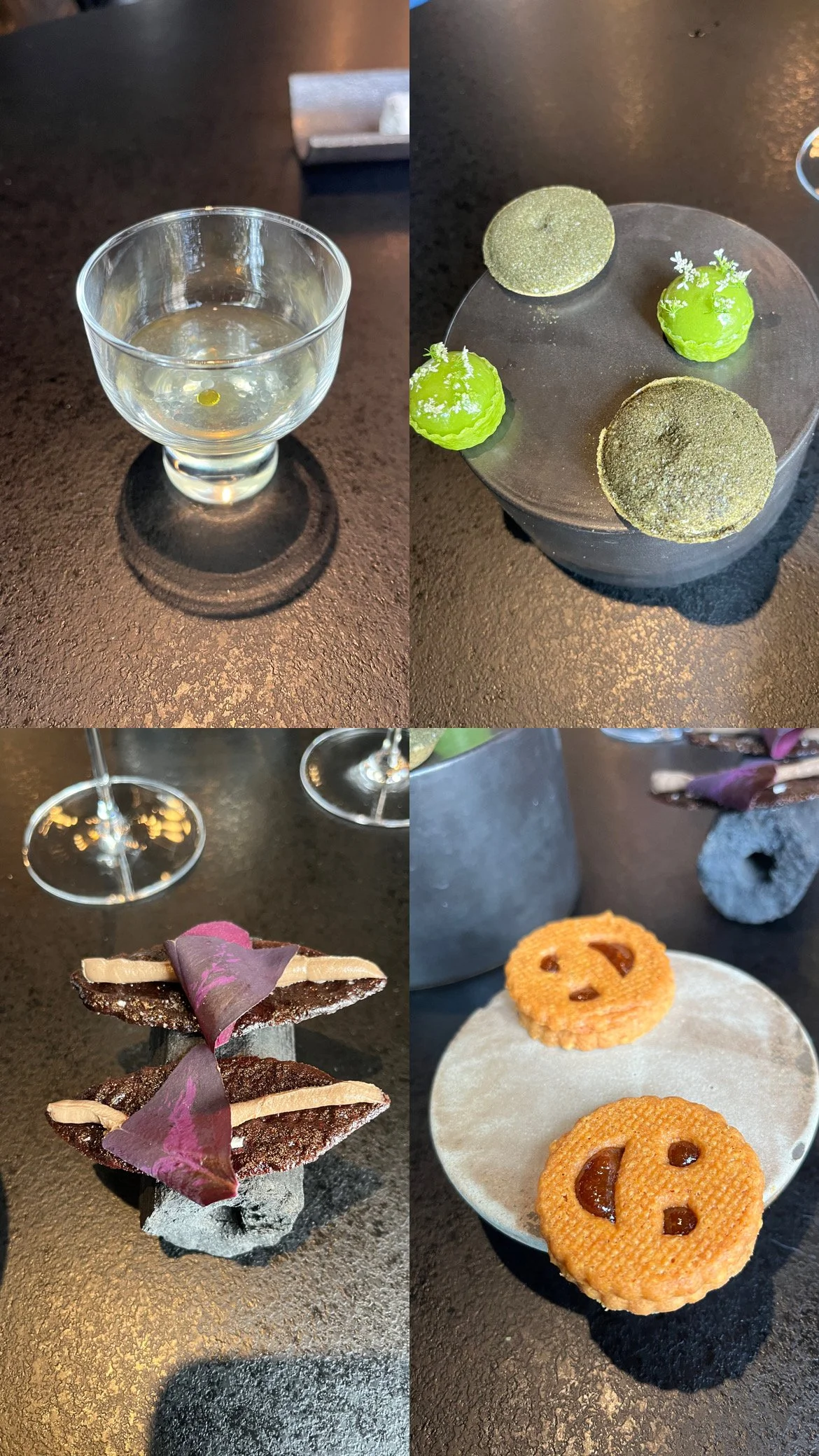
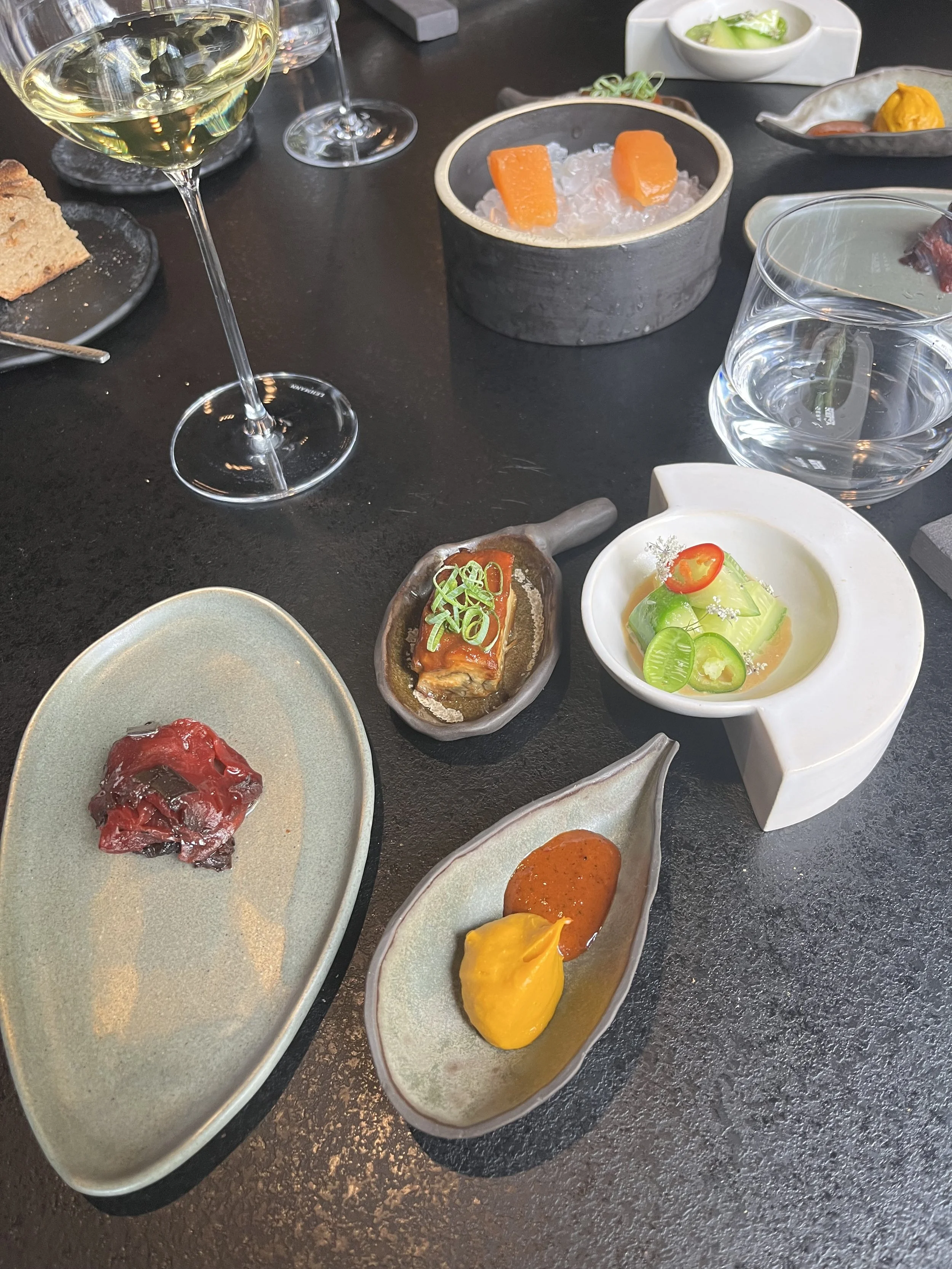
This was another spot that absolutely loads up dishes on the front end. It’s the chef’s playground, those amuse bouche. We (can I include myself in this yet?) get to experiment more with flavors and small bites without overloading a big main course. So while the waiter informed us the “Quoi” menu included the entrée, plat, and dessert, we were not going to go hungry. The meal looked like this:
Tomato-heavy vegetable broth - starting the meal with an umami bomb. Katy was calling out the tomato almost as soon as it hit the table.
Nori/horseradish/peanut butter
Green curry
Cacao chip/liver
Beaufort cracker/kimchi jelly - all of these bites were fun and interesting, and I didn’t dislike any of them. The last one, the cracker and kimchi jelly, won my heart. The best sign from this was that this restaurant wasn’t going to shy away from strong flavors.
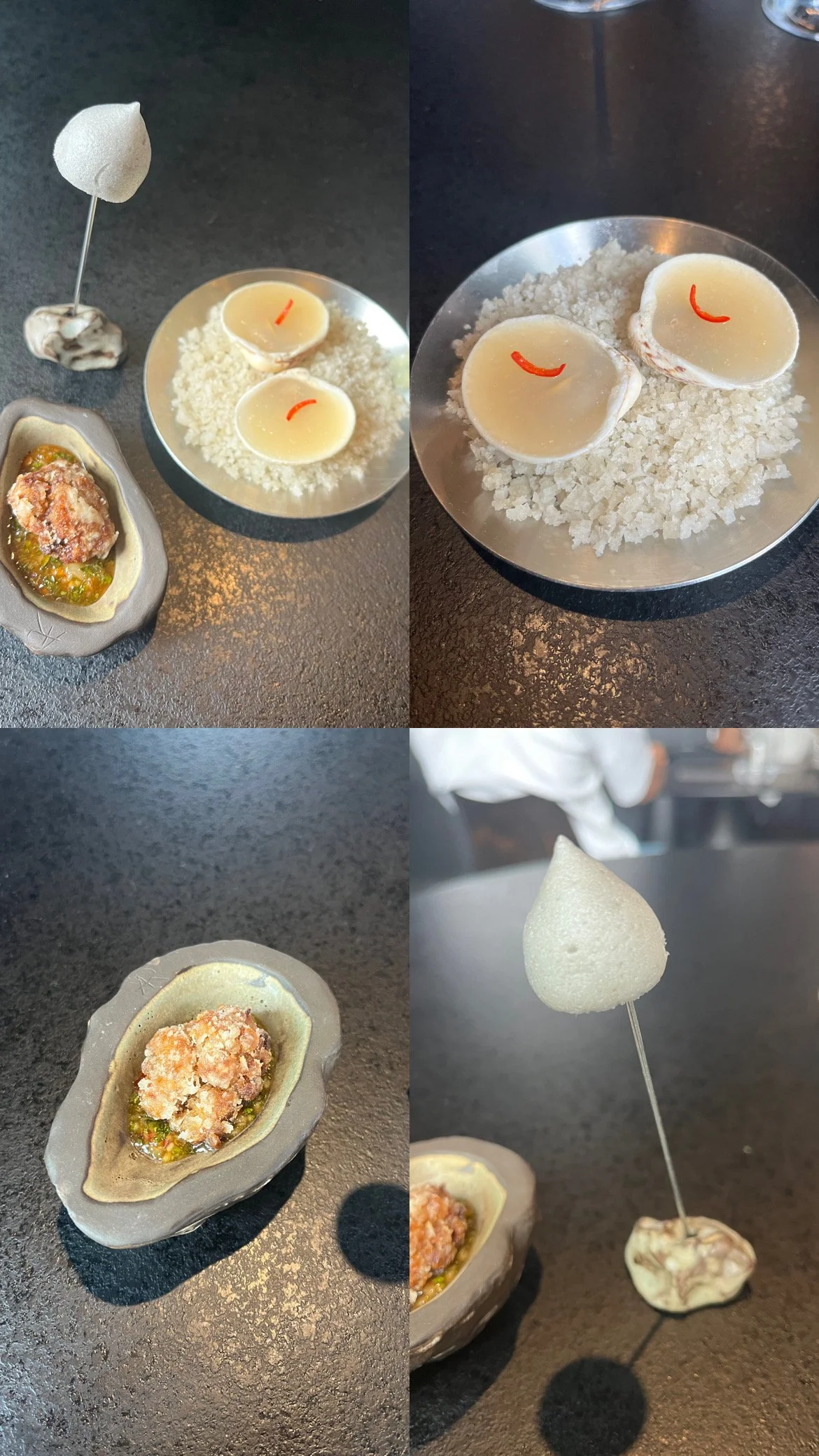
Clam/clam gelee - maybe the most straightforward thing we ate, a clam preserved in a gel made from its own broth.
Fried veal brain/chimmichurri - I’m hit-or-miss on offal, but some bites like sweetbreads hit every time. Veal brain, as it turns out, is a big hit for me. I loved this bite.
White pepper meringue - It looked like a piece of styrofoam. It dissolved in our mouths immediately. And left a lingering pepperiness on the tongue.
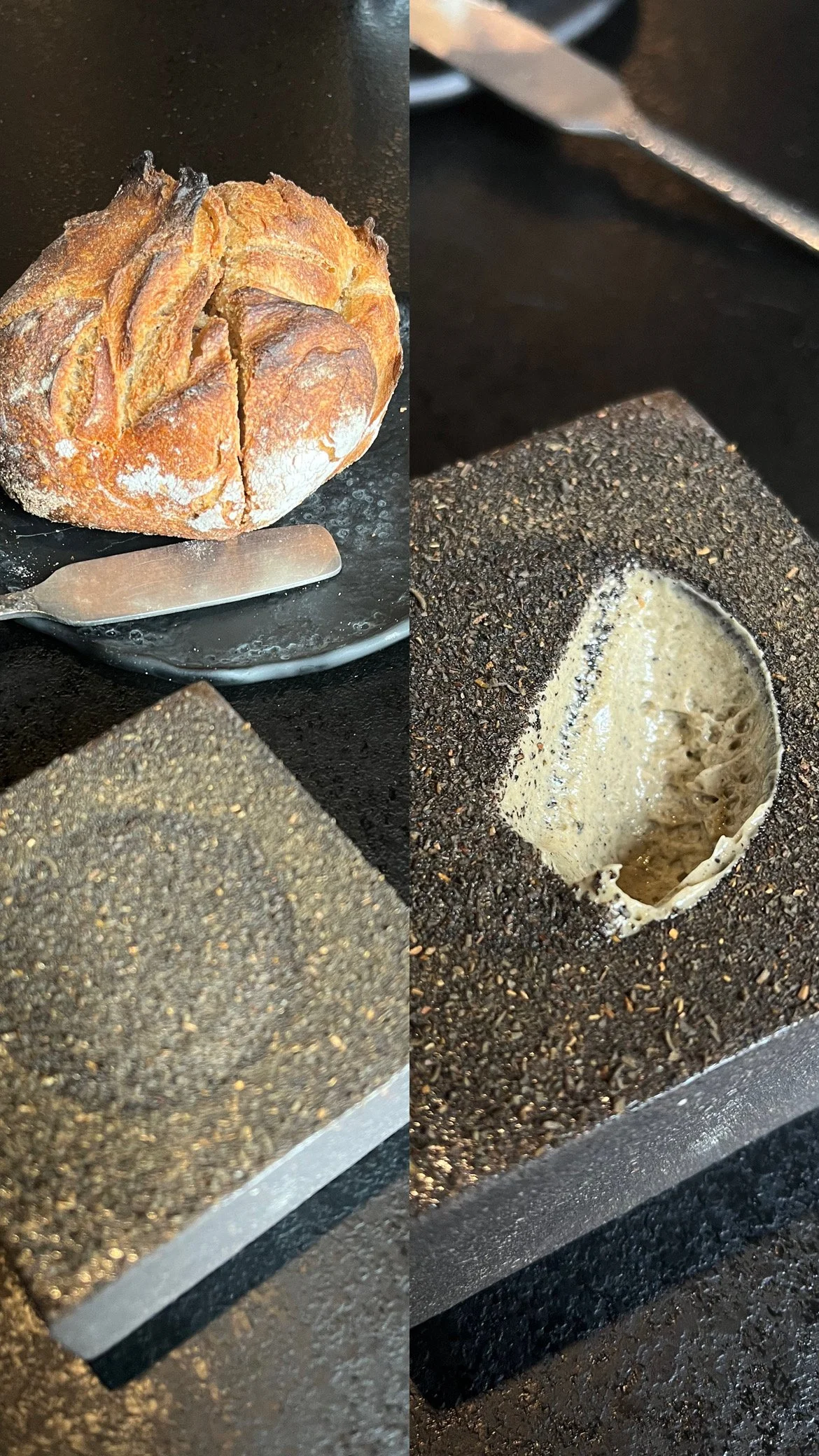
Red wheat bread/smoked tea butter - I love a bread course, especially when the restaurant comes correct. This one was so fun and so interesting, and I’m going to try to make it at home.
Compressed melon/pastis - it’s not a terribly complicated process, but it’s very easy to take melon, add spices or some kind of liquid, and compress it in a sous vide bag. It changes the texture and infuses the melon immediately. This was flavored with pastis, an alcohol flavored with anise. It was Katy’s favorite bite of the round.
Beet - this was beet cooked three or four ways, but unfortunately for me, they were all very soft and I didn’t find it particularly appealing.
Carrot/cumin/harissa - This was a plate of two purees, which is kind of an odd thing to serve, but both the carrots with cumin and the harissa were spicy and delightful.
Cucumber/cucamelon/beurre blanc - These little cucumbers were served raw, or maybe lightly pickled, in a beurre blanc (my favorite sauce) with small slices of serrano peppers. Sign me up.
Eggplant/barbecue - A beautiful, simple bite, and one I’ll be recreating on a larger scale at home. Why not smother an eggplant in barbecue sauce?
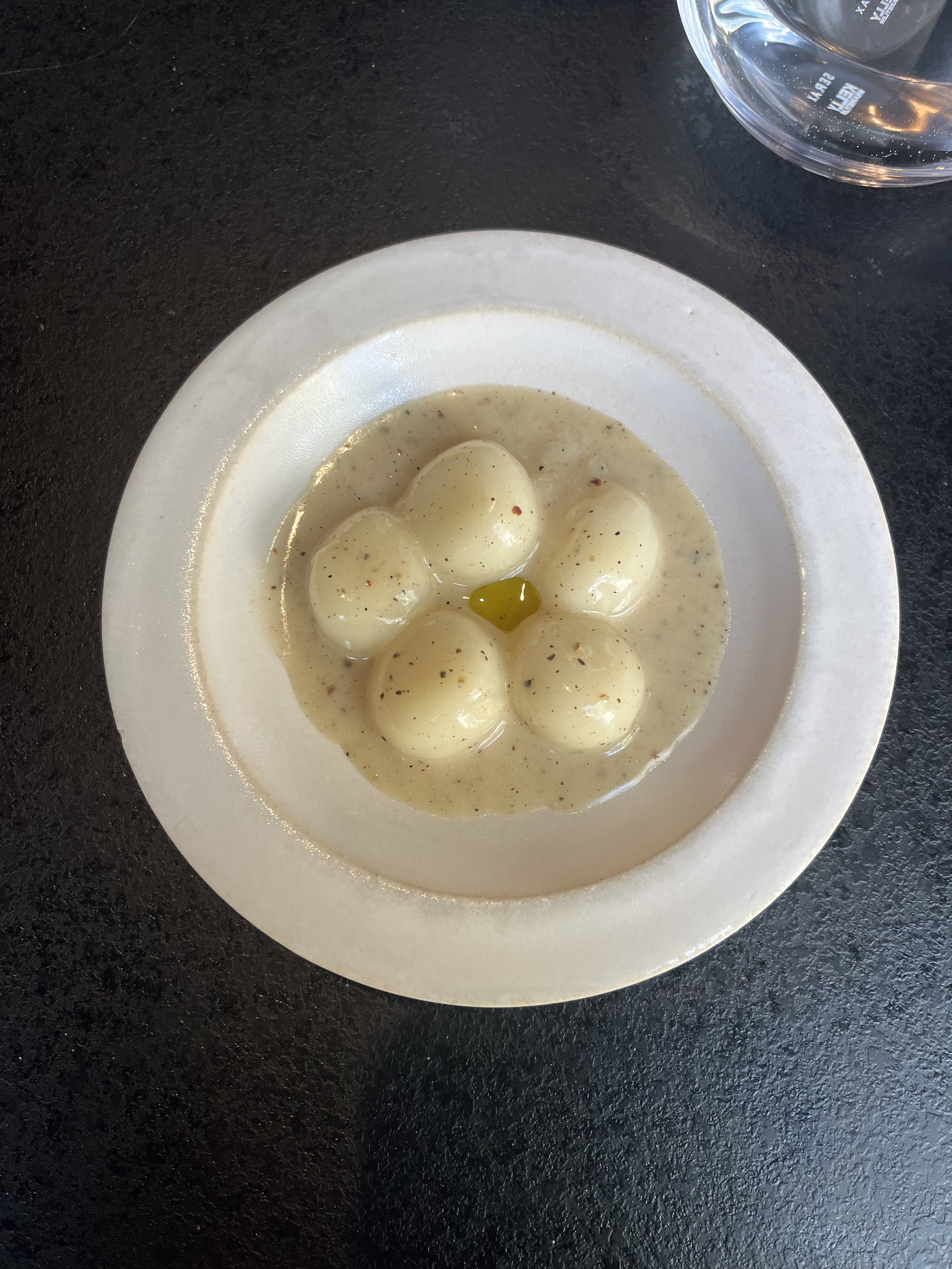
Rice flour gnocchi/cacio & pepe - the sometimes-bummer about meals like this is when they hit the main courses, they lose some of their spark. That wasn’t necessarily the case here, but we could both pretty easily call out the texture of the rice flour (which I don’t care for) and the load of black pepper.
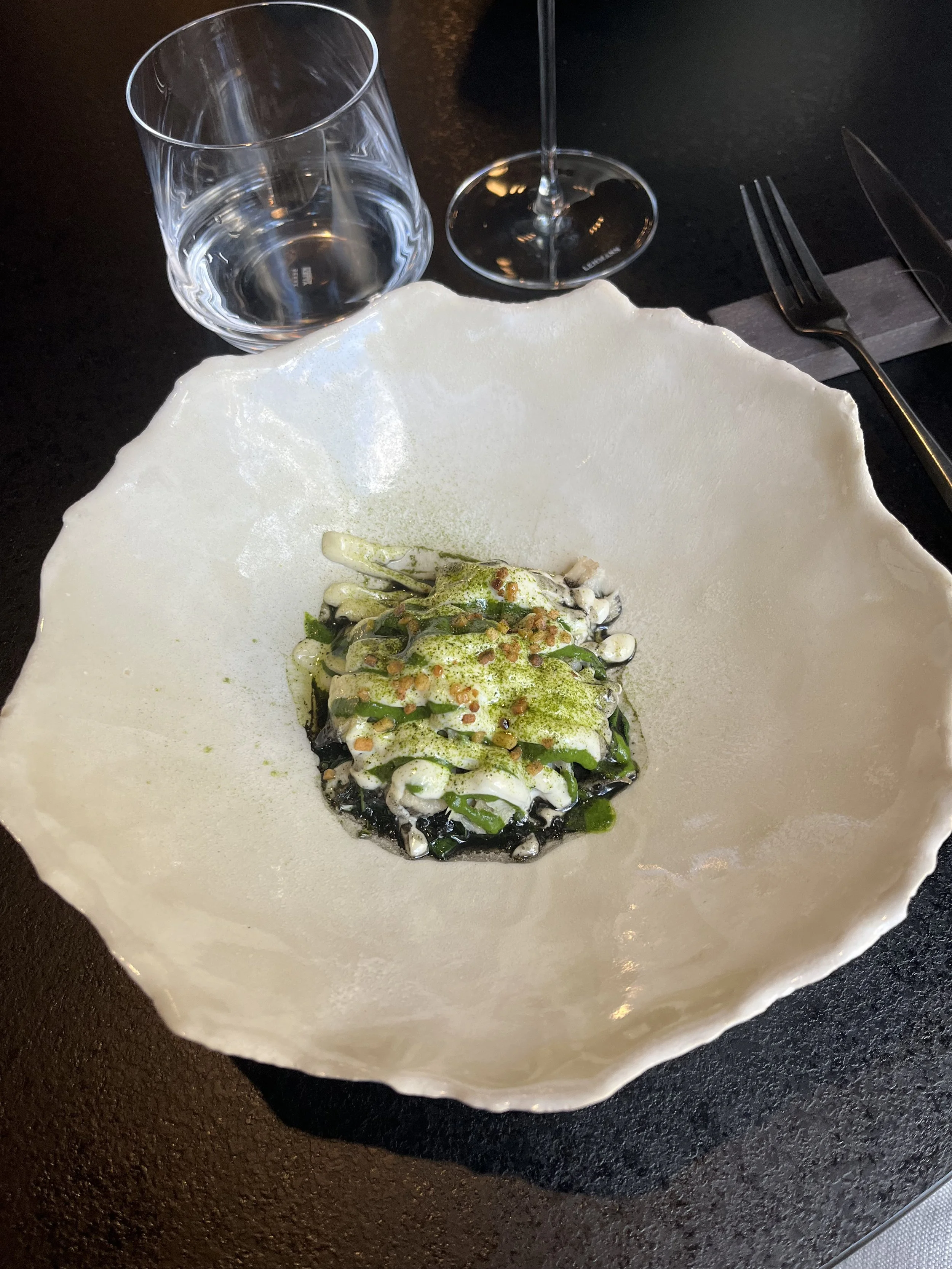
Hake/arugula/cuttlefish ink/matcha powder - this dish was delicious. It was also a mess. They had the hake absolutely drowning in different sauces. It veered away from being beautiful and creative and more toward doing-too-much.
Matcha sorbet/torched strawberry/almond - a simple palate cleanser before dessert. It tasted fine, though I don’t love the grassiness of matcha.
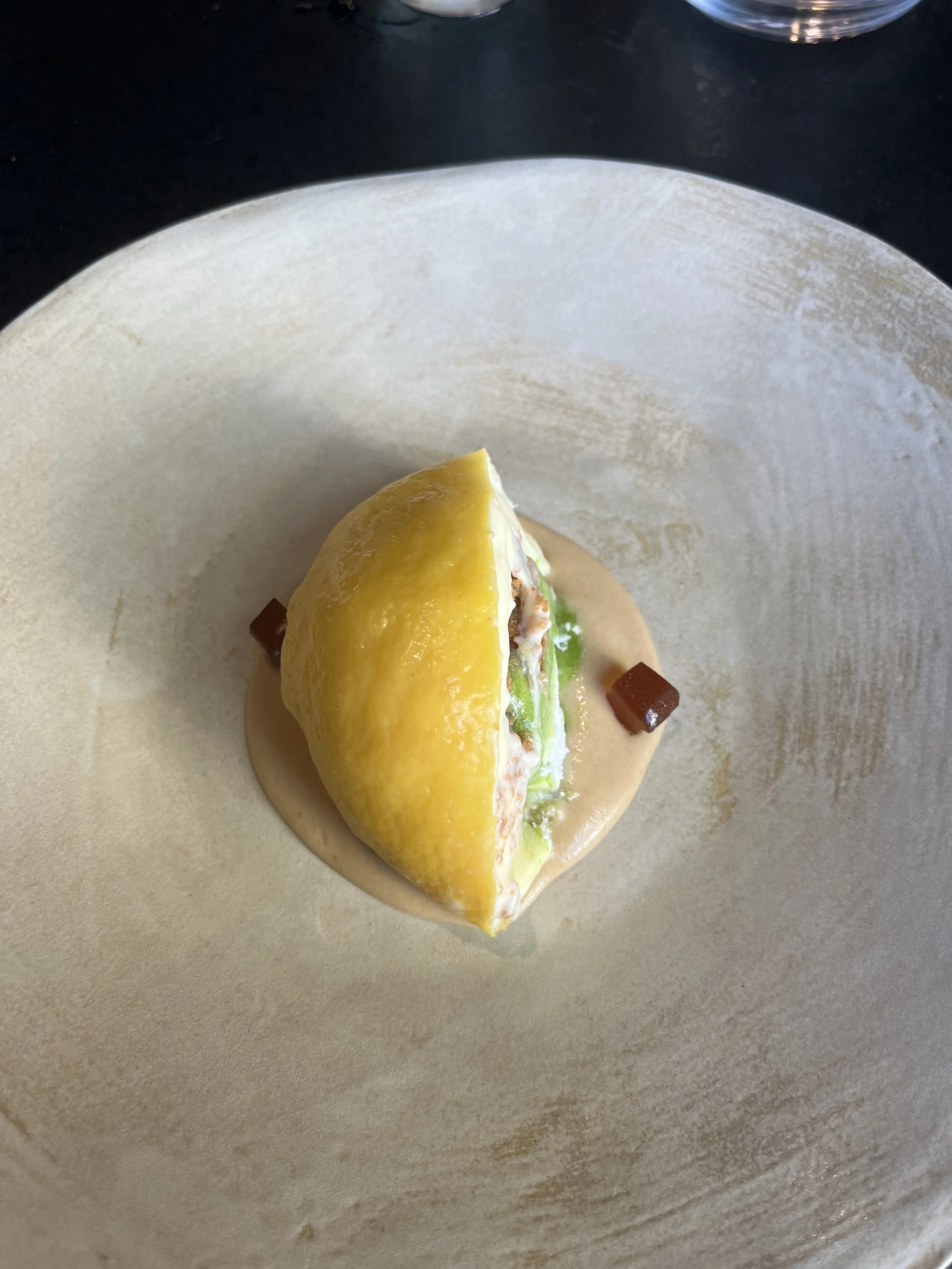
Lemon/dill ice cream/cookie sauce - unfortunately, it feels like restaurants like this often fall down at dessert. This one was a miss, for both of us. A lemon rind (which we were instructed to eat) was filled with a kind of creme, with a small quenelle of dill ice cream and sauce made from speculoos cookies. I ate the lemon rind, but I’m not sure why. It wasn’t enjoyable. It wasn’t tender. It didn’t add anything to the plate. Katy didn’t eat it. Looking around, others didn’t either.
Meals like this make me want to cook. They make me want to get creative and think about crazy things and figure out how I can put different flavors together. Of course I can roast a chicken. But can I do something really interesting? I bet I can. I’m excited to find out.
I spent a day (or rather, half of one) just outside Paris at a music festival called Rock en Seine. My favorite band, Interpol, just released their best new album in maybe 15 years, and they played a set, and there were a handful of other incredibly well-known post-punk groups threaded throughout the day—Slowdive, Mogwai. But the big draw, the headliner, and the only band who has made a single day of this festival sell out (ever) was The Cure.
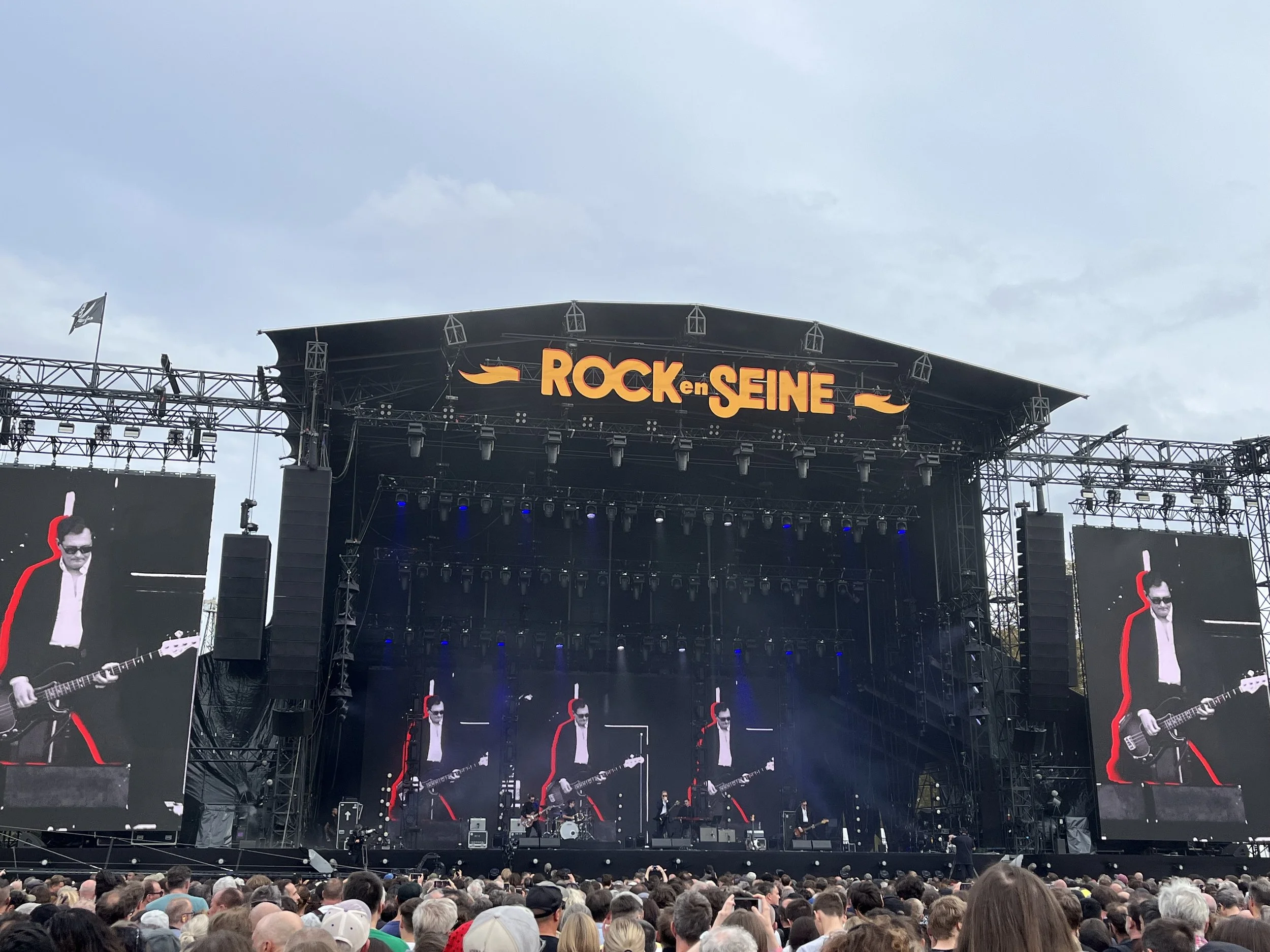
After being reasonably close for Interpol (who played three tunes from the new This Mirror Weighs a Ton), I went to grab food and caught part of Mogwai’s exceptionally loud set at a different stage. By the time I wound my way back to the main stage for The Cure, the crowd was immense. I stood in the back, under a tree, and just relaxed. Robert Smith at 67 years old looks every day of it and more (to be fair, the smeared lipstick and hairstyle don’t help, but that’s been his thing for a very long time), but his voice is golden. He sounds like he does on his records from the 80s. And they played a set of about 28 or 29 songs—that’s a long gig. I had a good time. My body hurt a lot afterwards. But I got to see my favorite band in France.
Your Auggie update: The boy now knows his ABCs and sings it over and over and over and over. In fact, I’m listening to him sing it while he lays in bed and I write this. He’s not even three. Katy also has him singing the days of the week. When he isn’t singing songs, he’s a dinosaur. He roars at and eats us. I have asked him to announce to us when he’s being a dinosaur so that he’s not just seemingly grunting and growling at us out of the blue for no reason—and usually, he does.
He continues to be food curious, not just eating oysters on this last trip but also shrimp and sea snails as well. At lunch in Saint Malo he asked for pea soup and oysters. The boy knows what he wants and likes, and it’s rare that he doesn’t like something.
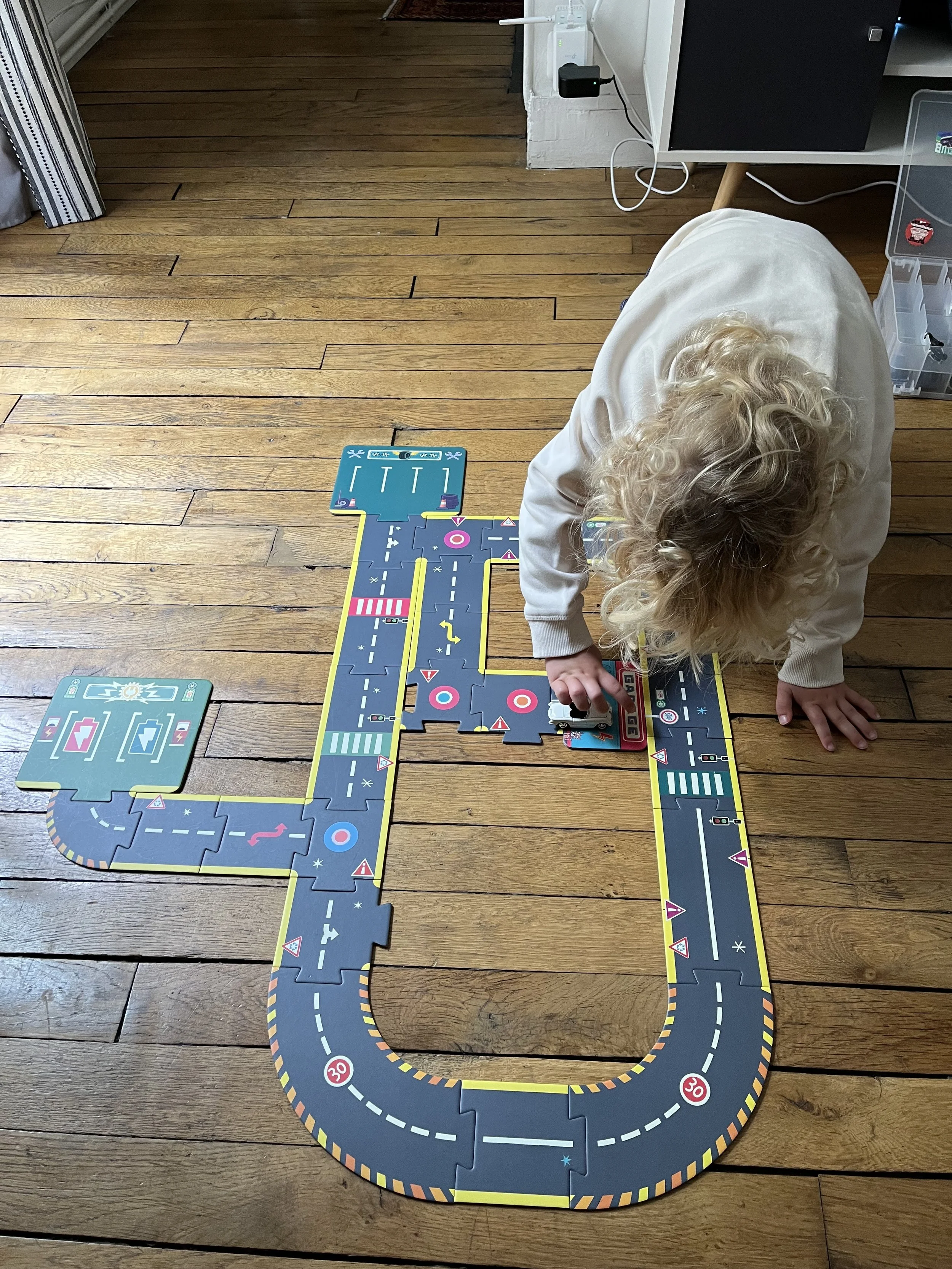
Auggie frequently asks us to read to him (even books without words), and in some cases he can “read” them to us. We have two small books by a French illustrator called “Papa Pousse” (Papa Pushes) and “Papa Dort” (Papa Sleeps). He knows all of the “Papa XYZ” phrases through each and reads them before I can. In our “Livre des Bruits” (Book of Sounds) which we bought for Harrison on our first trip to France, he knows almost all of the sounds. One of his favorite books is “Cars and Trucks and Things that Go,” by Richard Scarry, purchased for us when Harrison was alive by my college jazz guitar teacher—it was a favorite of his kids. If you know it, you know that Goldbug is hiding on each page. While Katy and I are doing things around the apartment, we often here, “Hey, where’s Goldbug?!” and look to see Auggie sitting on the couch with the book open on his lap.
He is remarkably smart, and headstrong to go with it. When we get back, school will be good for him.