“Bulles” - Bubbles
When Katy and I walked to Cypsele, the new-kid-on-the-block restaurant from the Noma alumnus, we walked by a spot just off Rue Saint Germain that had four consecutive one-star Michelin plaques sitting in the window. When we left Cypsele fairly disappointed, I looked longingly inside the simple, modern dining room. Without seeing any of the food, or a menu, or anything else, I knew I would eat there before I left Paris.
It’s a little restaurant called AT, which makes it a nightmare to Google. It’s the initials of the head chef, Atsushi Tanaka. AT isn’t a French restaurant, nor is it Japanese, nor nearly anything that can be easily categorized. Tanaka has cooked all over Europe, including a lot of the Nordic countries that are all the rage among fine dining right now. At AT, it shows.
I was joined by my friend, longtime creative partner, and former coworker Noah. When we would wrangle photo and video shoots in northern Indiana, those work trips often involved a meal at Roselily in South Bend, one of the most creative restaurants I’ve eaten at in Indiana. So when he and his family planned a trip to Paris, I saw our window. Design is a big part of Tanaka’s aesthetic in food, so having a designer with me seemed logical.
We started the night with a glass of champagne, because the sommelier asked us so nicely if we wanted one. I like champagne. It’s fun to drink and once you really get beyond the major houses, the variety is astounding. Here, it was a pour of Champagne Arnaud Beaufort Cuvée de Réserve Brut. It’s a blend of 70% 2019 vintage and 30% of 2020, 2021, 2022. I tell you all that, only because it was a blend made specially for this restaurant, and the sommelier was both very excited and proud of it. It was incredibly bright, lemony, and light on the palate.
Afterwards, we shared a bottle of Jeremy Recchione Savigny-Les-Beaune 1er Cru bourgogne. It’s made of pinot noir, a burgundy from the region Katy, Auggie, and I visited earlier this year, near Beaune. Out of the bottle, it tasted like a blast of raspberry. As we ate and the more it opened, it got earthier, with a little woodsiness creeping in. A really phenomenal wine—and my first bottle of premier cru. Burgundies and some other French wines are classified as either “cru,” “premier cru,” or “grand cru.” Grand cru are considered the finest vineyards producing the finest grapes and wines, and premier is a step down.
We ate dinner in 12 courses, so I’m going to get into it before I blabber on too much longer.
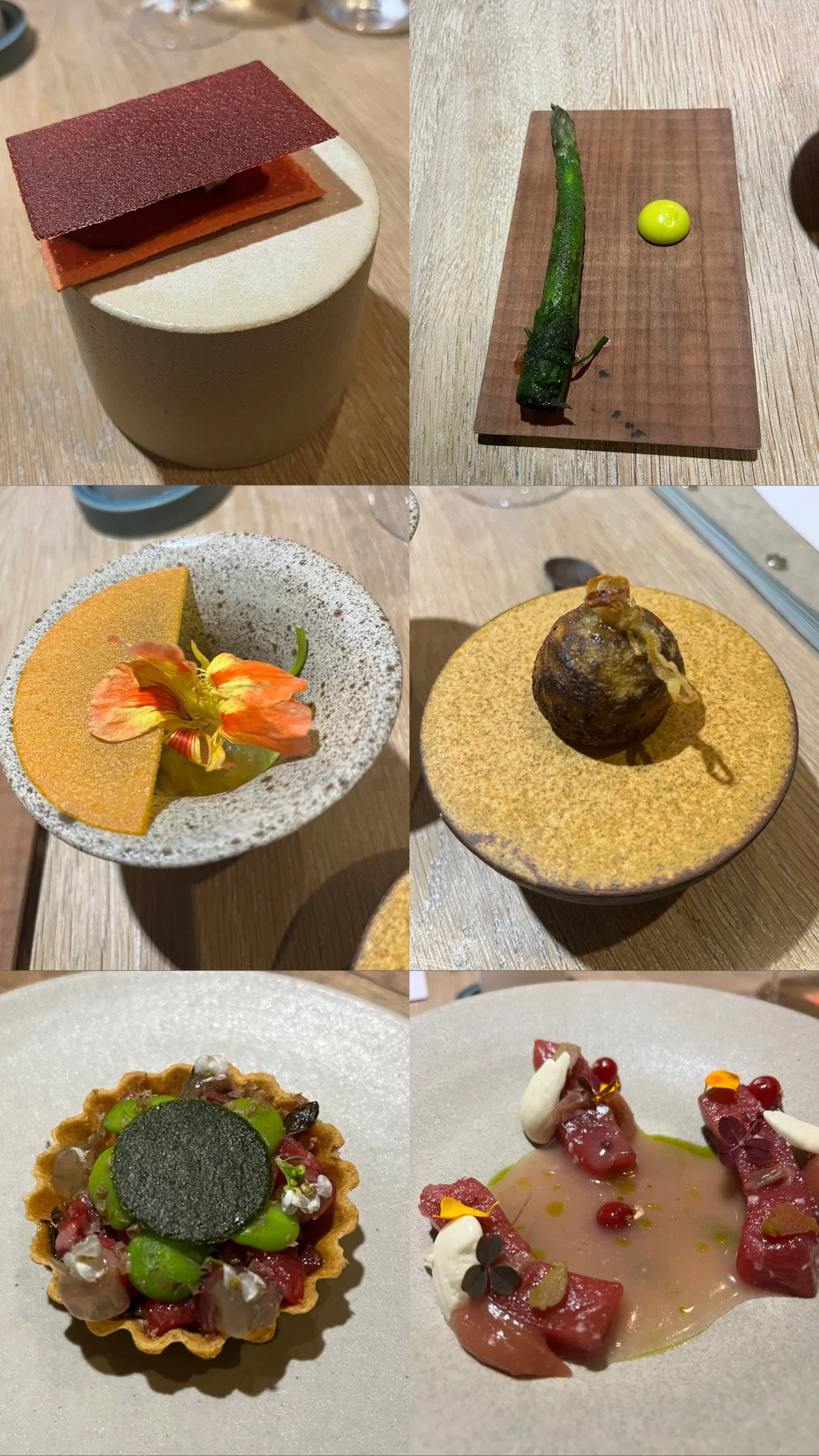
Beetroot - A pair of dehydrated beetroot chips, sandwiching a cauliflower puree with smoked salmon roe. Let’s go.
Melon - A cold soup made with melon gel cubes and cucumber. A little hint at some of the molecular gastronomy we see later on. Refreshing dish.
Asparagus - A stalk of green asparagus with dehydrated lemon balm and tied at the bottom with a shiso leaf. A small dipping sauce of lemon aioli. Well cooked, punches of citrus and umami.
Zucchini - A takoyaki is a traditional Japanese pancake, but made circular using an incredibly fun pan. They’re often filled with octopus, but this one had zucchini.
Beef - A beef and beef heart tartare tart. (Say that five times fast.) Featuring both raw beef and beef heart, as well as shavings of dehydrated beef heart. A sidecar of clarified oxtail consomme finished the course. I adored this dish.
Tuna - We started to ramp things up here. Three pieces of tuna sashimi, with blanched almonds, a fermented rhubarb puree, and a strawberry sauce that pulled everything together. Fermentation plays a big role at AT, and this was our first peek at.
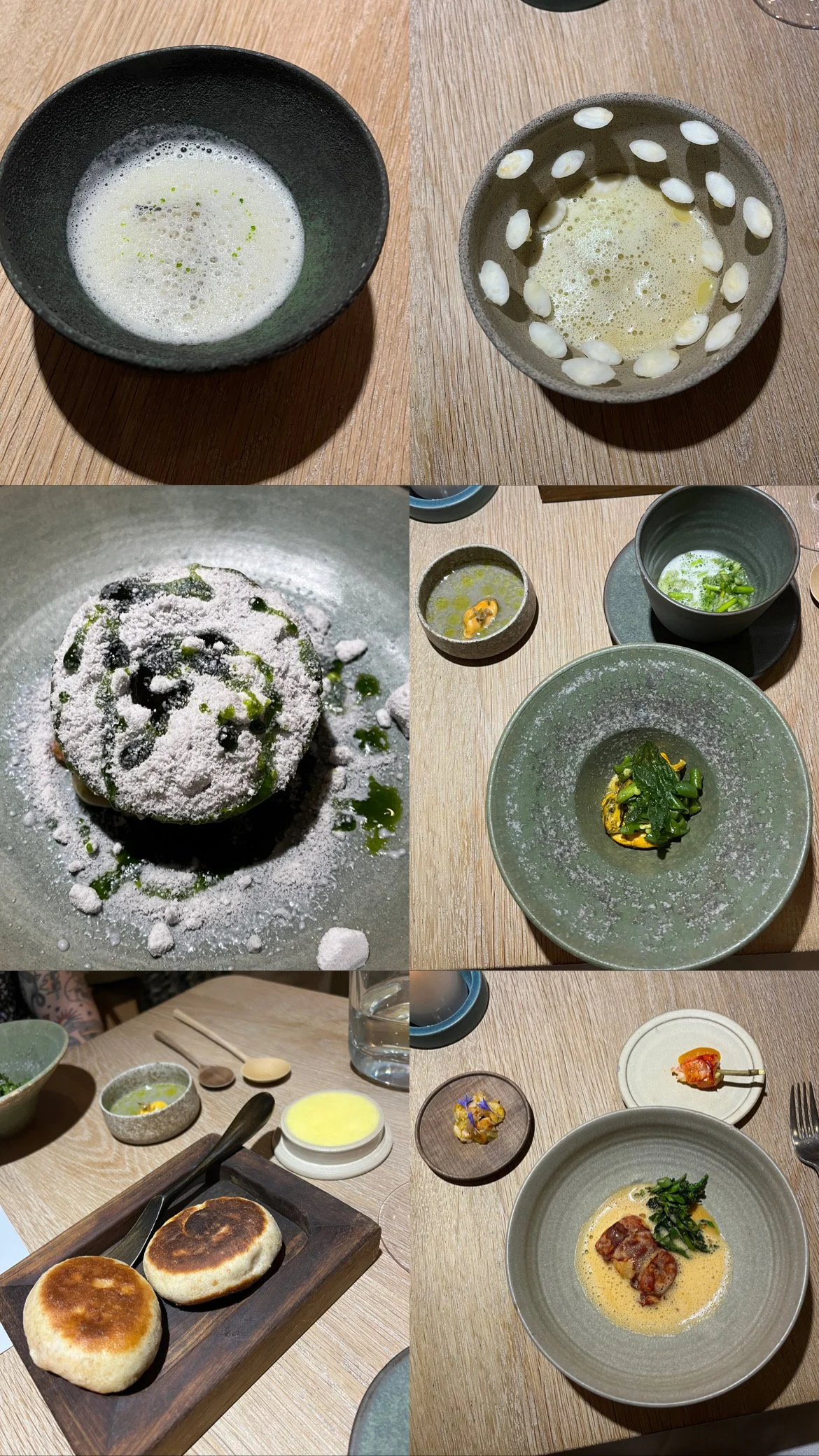
Oyster - I waxed poetic about oysters last newsletter. This one was cooked warm in a sauce of buttermilk (made from their housemade butter) and sake, and finished with dill oil. Vibrant, punchy from the dill, and beautifully salty.
Spidercrab - This is the kind of wild dish I was expecting here, and it’s one of Chef Tanaka’s signature dishes. It features leaves of celery root attached to the bowl with celery root purée, with a mound of spidercrab at the bottom of the dish. It’s then sauced tableside with a spidercrab velouté. I think this won the night for me, though Noah noted it looked like the mouth of the sandworm from Dune.
Camouflage - This one got weird. This is a trout tataki (which is a Japanese preparation of meat which is usually half-cooked) beneath a housemade cracker of green, black, and brown. You know, camouflage colors. At the table it was topped with a house-smoked cheese which was frozen with liquid nitrogen and then sauced with a wildly potent parsley oil. The cheese was still frozen, which created a “fire and ice” sensation. My only real issue here is the dish was already so beautiful, dusting it with cheese and oil seemed to ruin the spectacle and meaning to me. But it tasted good.
Mussels - Three ways. The first was grilled, the second in an espuma, and the third pickled. With this course they also brought the bread course, because of the numerous sauces. Food in France is designed around sauce, and as such, bread is almost always served because you mop that delicious stuff up. It also included two-day fermented butter (the buttermilk from which was used in the oyster dish noted above).
Lobster - Another three ways and this one did it for me. The tail was grilled with broccolini, in a sauce Americaine, which is made with lobster shell, brandy, and white wine. (Aside, sauce Americaine isn’t technically named for America, but rather after the creator who was working in the United States at the time.) This course also included a lobster arm with apricot puree, and a tartare with pink pepper gel and fermented sea buckthorn.
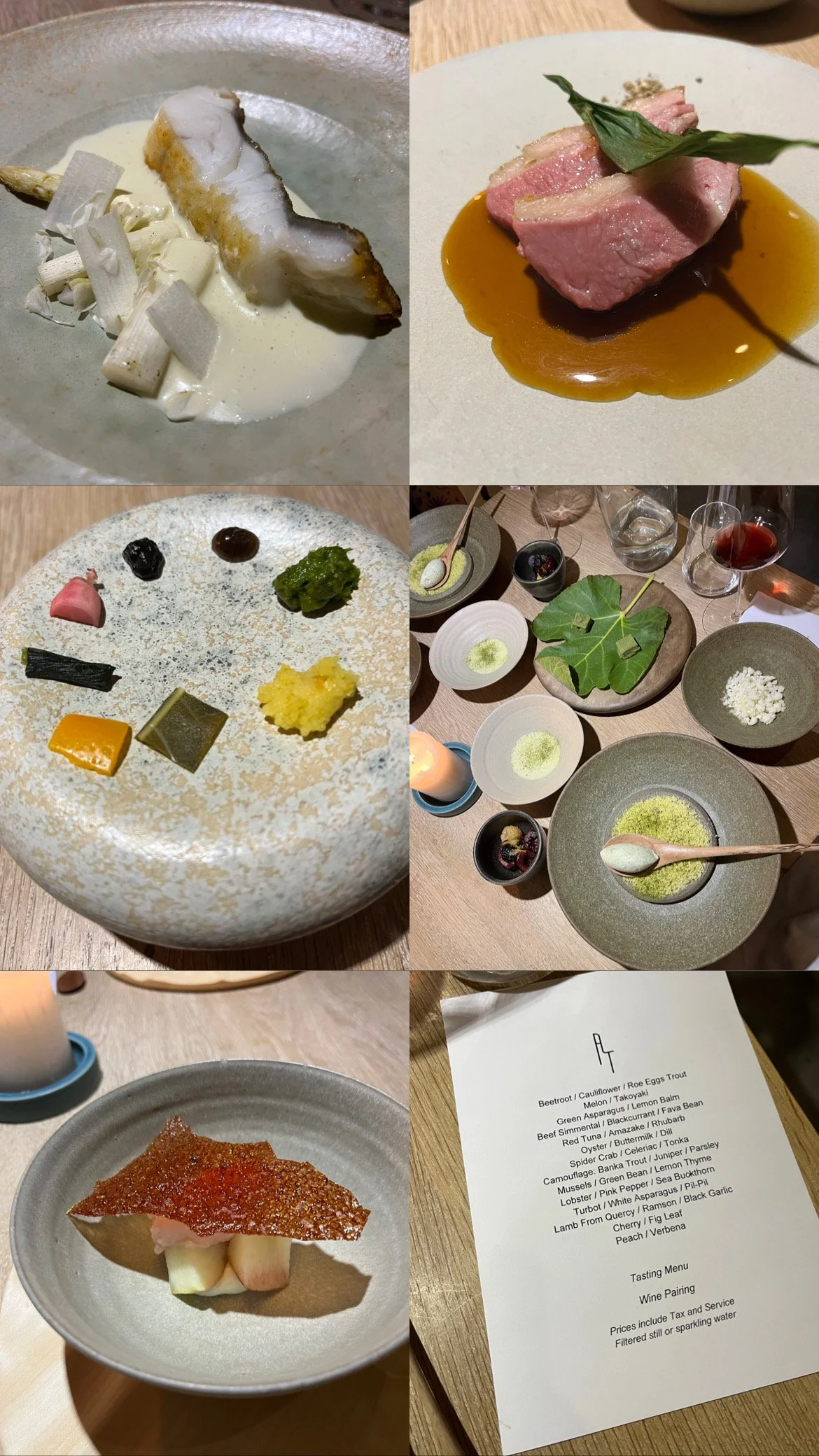
Turbot - This was cooked perfectly. Crispy on both sides, with both grilled and raw white asparagus. It was served with sauce pil-pil, which is a Spanish sauce that’s a lot of fun. In short, fish bones are poached very slowly in olive oil, which releases the collagen into the oil. You add more olive oil to this collagen-rich oil and emulsify it like mayonnaise. The things people have discovered with food do not cease to amaze me.
Lamb - Our last dinner course before dessert, the meat course, a beautiful fatty lamb, served with jus. It could’ve been simple as that, but it wouldn’t have matched the rest of the meal. Instead, they included a plate to the side with a variety of ferments, like black garlic, kumquat, fig leaf, and several others. They suggested we try each one separately with a bite of lamb—and that I did.
Fig - Onto dessert, and this was a fun course. It was variations on a theme of fig. This is the exact kind of creative cooking I love, when chefs take a single ingredient and figure out a dozen different ways to create a dish from it. This course included fig ice cream served in a quenelle on a fig crumble, a fig panna cotta, a fig granita, and pate de fruit rolled in fig powder. And of course, the pate de fruit were served on a giant, beautiful fig leaf which we did not eat.
Peach - The final act. A fresh white peach served with a lemon verbena cream, and an incredible strawberry cracker.
This is the most interesting meal I’ve had since being in Paris, and the kind of cooking I was hoping to see more of here. The server(s) made a point to tell us the various ways the kitchen was being sustainable—though I think it was less a means of sustainability and more a matter of not letting things that cost the kitchen money go to waste. Hence the fermented butter/buttermilk note between two courses.
A conversation we’ve had around LCB lately has been about the kind of odd and outdated recipes it feels like we’re cooking. They’re not “weird” in the experimental sense. Rather, they’re the kinds of dishes you really don’t see on many menus—even here—and especially not in fine dining restaurants. I know there are skills and techniques we’re being taught, but why did I have to plate a pigeon’s head? It might be nice to plate some smaller, more technical dishes like those we saw at AT.
Let’s talk bubbles. With friends in town, it gave us an excuse to visit another region of France we haven’t yet. One of Katy’s (and Noah’s wife Sarah’s) preferred drinks is sparkling wine—and the sparkling wine in France is champagne, bien sur. You’ve seen me write about this before, but real champagne (the wine) can only be made in Champagne (the region of France). Other sparkling wines exist: prosecco and asti spumante from Italy, cava from Spain, and cremant from Alsace and the rest of France. But champagne is special.
I say that with a smidge of sarcasm, but it really is a remarkable drink. Dom Perignon, a French Benedictine monk and the namesake of an often-regaled label from the massive house Moet & Chandon, is often credited with the invention of champagne, but that’s not entirely true. He did, however, make great strides in creating the beverage we understand as champagne today.
Champagne (the region) is dominated by a lot of really large champagne (the drink) houses. These are the production facilities for most of the champagnes you can find on shelves in the United States. There are two major destinations: Reims, the capital of the region, and Épernay, a smaller town a bit further south. We did both in a day. Probably a bit too much, but when friends are in town, we see it all.
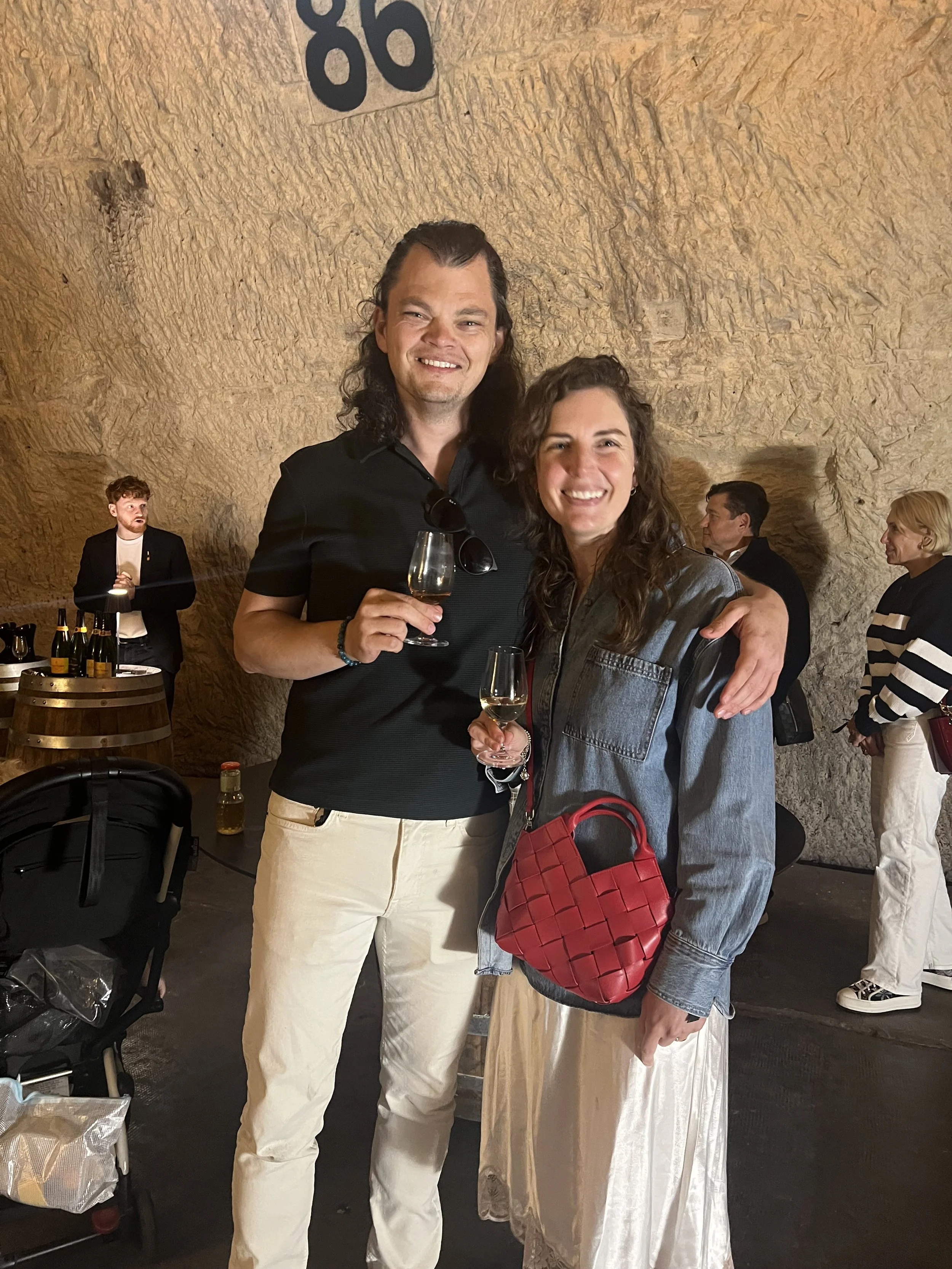
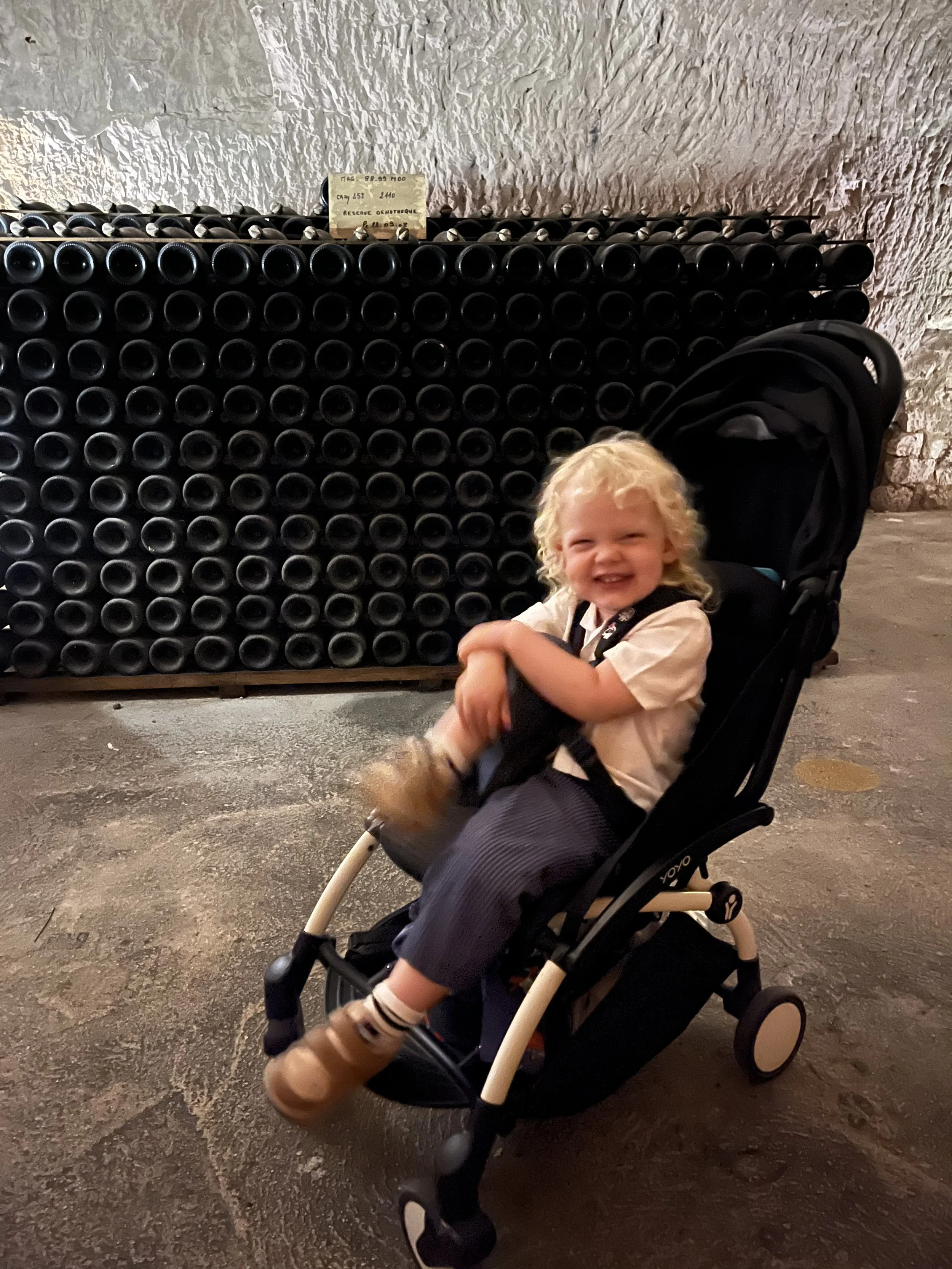
Champagne is, and has been for ages, a drink of celebration and the elite. It’s expensive, though also time and labor intensive. Stepping off the train in Reims, it’s immediately apparent. While it’s otherwise a typical large city in France, there’s obviously bubble money here. We stopped for a coffee before meandering our way down to Veuve Clicquot, one of the larger houses in the industry and one particularly well known for their vibrant yellow label. Our tour took us underground into the chalk mines beneath the production facility, where the champagne is stored for proper humidity, temperature, and lack of light.
If you’re interested in the history of champagne, I recommend a book called The Widow Clicquot (“veuve” is French for widow). While Clicquot was originally founded by Madame Clicquot’s husband, he died a short time after they were married, leaving Barb-Nicole Clicquot née Ponsardin in charge of the struggling champagne business. Hardly dissuaded by the political climate and general feelings towards woman-led businesses at the time, she turned it into an empire. Today, she’s affectionately known as La Grande Dame.
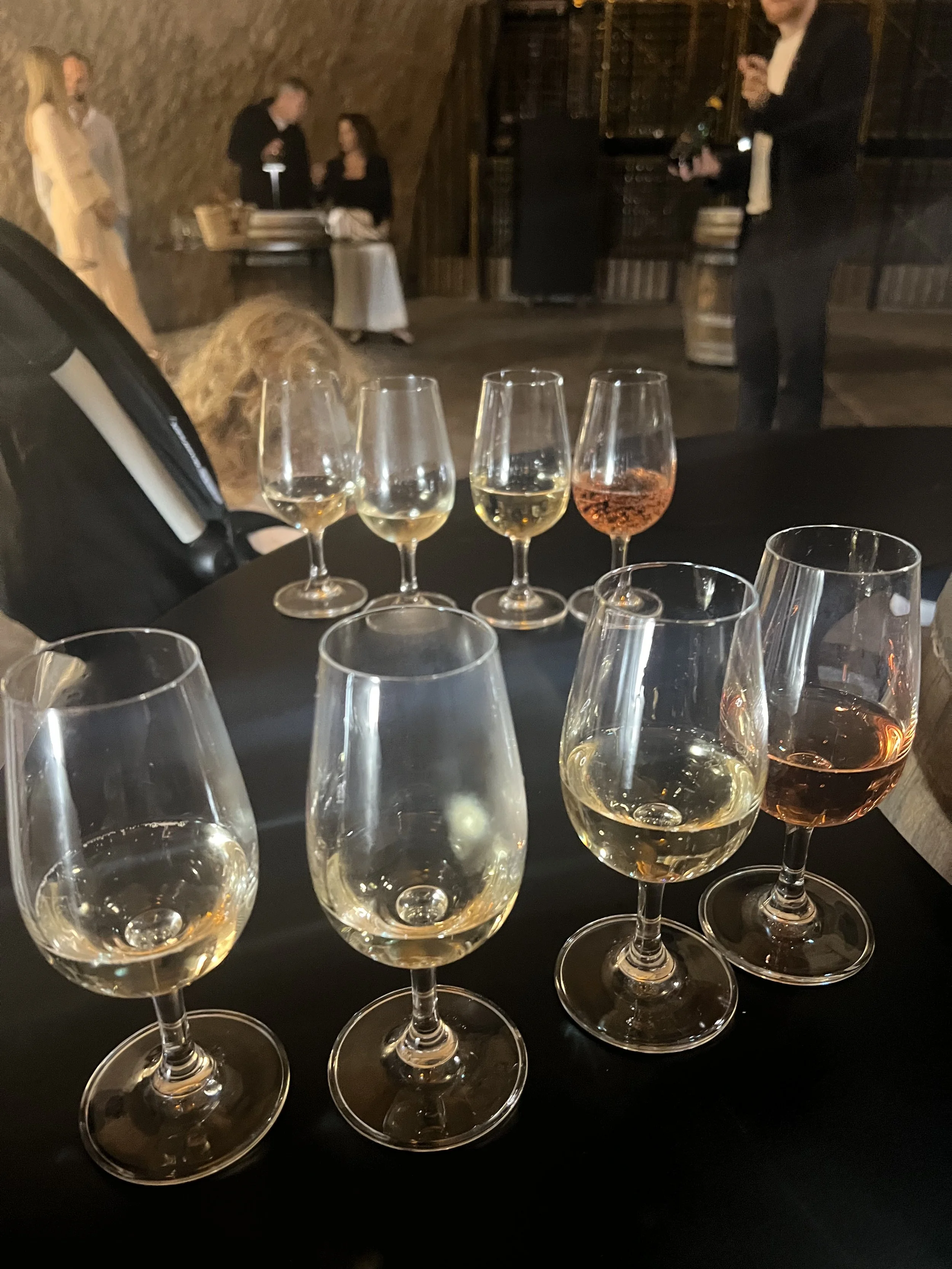
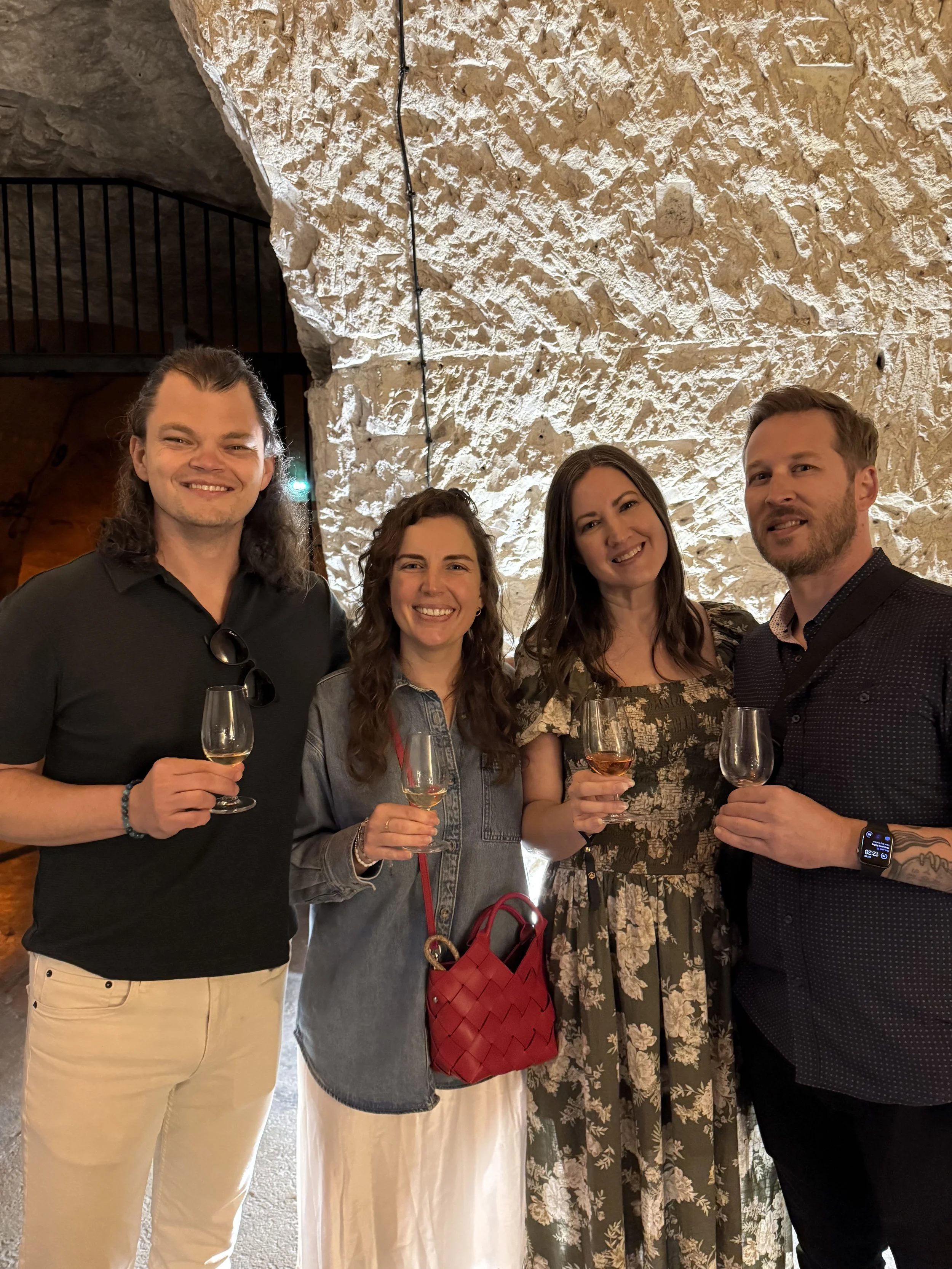
We ended the tour with a tasting of four champagnes: the classic yellow label, Extra Brut Extra Old 3, a single vintage (made with grapes only from a single year) of 2015, and a single vintage rosé of 2015. The latter two came home with us.
After the tour, the guide caught up to me and chitchatted for a moment: about culinary school, about the United States, about the World Cup. He said, “You know, sometimes when I see a trolley (stroller), you never know how the tour is going to go. But he was great, so thank you for that. That’s great parenting.” I thanked him, because experiences like these are the type I hope Auggie will enjoy for the rest of his life.
What I did not tell him was that through a lot of the tour I kept Auggie busy with cookies (good call, Katy) and knelt down next to him while the tour guide talked. I kept saying, “Shhh. Our friend’s talking. He’s talking about trains. What’s he saying about trains?” If there’s train discourse, Auggie’s there to listen and hear whatever he wants to hear.
From there, we made our way back to the train station, where we boarded for Épernay. Secretly, I was more excited for the second leg of this trip. I tend to like the smaller towns, the communes, than I do the larger cities (love you, Paris). Épernay was immediately more bustling with people, but also much more lovely from the second we stepped into the sunlight. As one should, we made our way immediately to the Avenue de Champagne.
The majority of the champagne houses we know by name are absolute juggernauts in the wine world. These bigger houses, by and large, don’t always own their own vineyards—or at least, they don’t solely grow their own grapes. Rather, they buy up stock of grapes and make their own wines by blending to create flavor profiles. There is—and I cannot overstate this—so much money in these large champagne houses. There’s a new (which is being generous, it’s always been like this but they’re just now getting popular again) trend for grower champagnes. This is champagne made by much smaller houses which own their own vineyards. There’s only so much they can make, because there are only so many grapes they can grow. We’ve had several since we’ve been here. To my inexperienced palate they’re more complex, a bit more interesting, less swig-worthy and more thoughtful. With grower champagnes, you get vintages—all the grapes coming from a single year, because they don’t have a choice. With champagne houses, you get consistency from bottle to bottle, year to year.
None of those grower houses are on Avenue de Champagne. This is about the money. These facilities are massive and the bars at which you can drink them? Massively luxurious. In fact, Veuve Clicquot is owned by fashion and luxury icon Louis Vuitton. They also own Moet & Chandon. And Krug. And Ruinart. Louis Vuitton’s holding company, LVMH, represents over 60% of the champagne market.
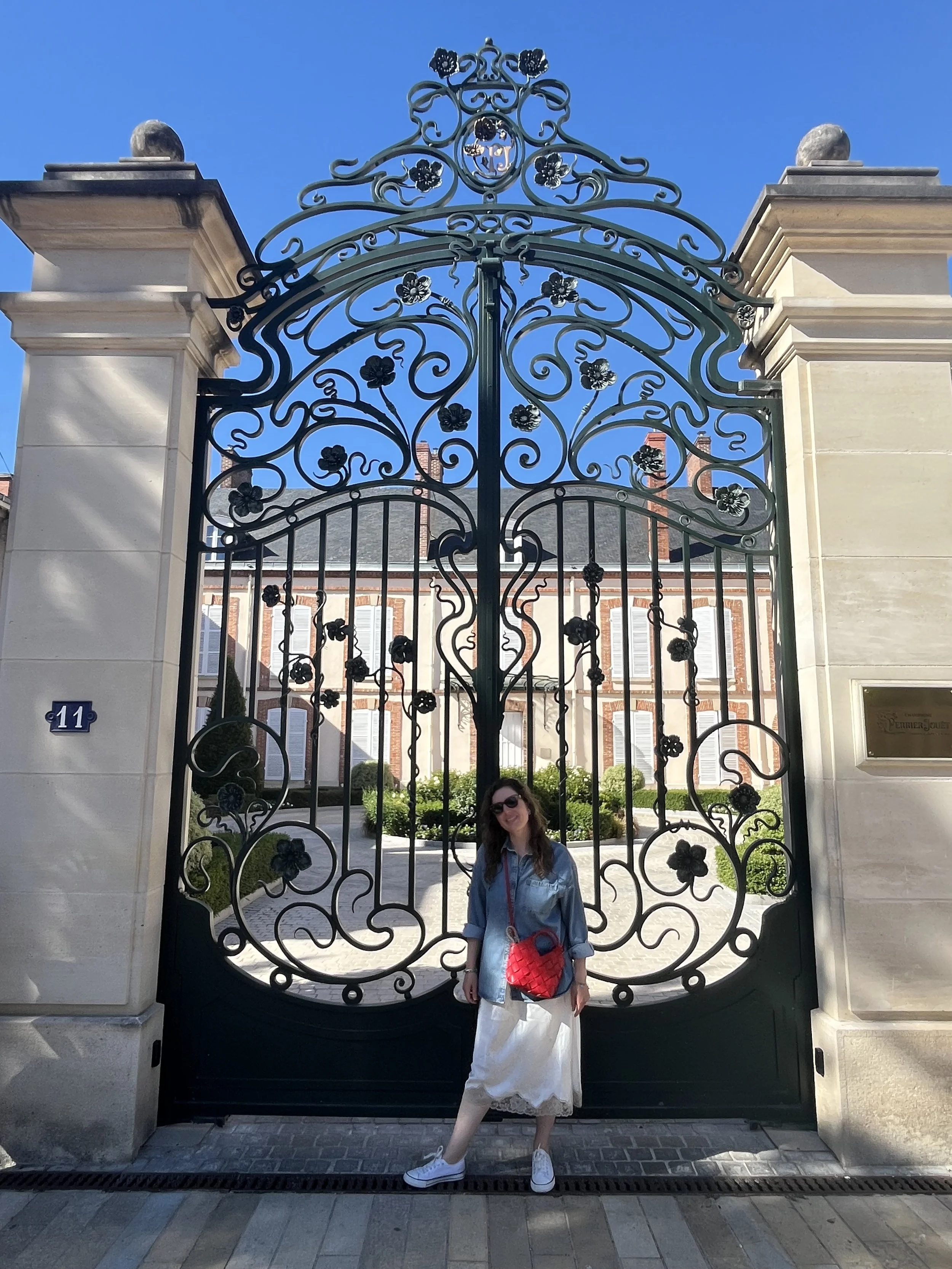
Like I said: a lot of money.
I love supporting the little guy, and Katy and I tend to drink grower champagne when we’re having bubbles. But it’s impossible to get to most of their spots without a car, which we didn’t have and didn’t want. So we walked along the avenue and gawked at all of the hospitality these big places afforded Épernay. We saw what we thought was the most beautiful courtyard we had ever seen, before we walked a few more meters and saw the new most beautiful courtyard we had ever seen, and so on.
Finally, we stopped at a small bar called #BRUT (the hashtag is part of the name). We got flights, as Katy noted that she “likes to have an opinion” on what’s good and what isn’t.
We drank and ate our wealth of French cheese and charcuterie and had to make our way quickly back to the train. Turns out three hours isn’t much time to spend in a place designed to make you move slowly.
When we got back, I was throwing together a quick dinner in the kitchen while Katy unpacked our day. We heard Auggie talking to himself at the table while he ate. He was recounting his day, the number of trains he rode, the times he needed help taking a big step across the gap between the train and the platform, maybe some of the things about trains he learned from our tour guide at Veuve. Katy stuck her head out and said, “Who are you talking to? Do you…see someone?” He said, “No, mommy. I don’t see anyone. I’m just talking to that motorbike.” We left it for a moment, but once he came to give me a goodnight kiss, I asked him again. “Were you talking to a motorbike?” He said, again, “No, daddy. I was talking to Paw Patrol on the motorbike.” Ah, of course.
Intermediate Cuisine is over. Just earlier this morning, I had my final exam in which I had to make curry d’agneau créole (Creole-style lamb curry) and mirilton (almond paste pastries) from memory. Grades will come out later, but I’m feeling confident. That feels like reason to celebrate, and thankfully, we have champagne in the apartment. But that means over two-thirds of this wild adventure is over. It’s the middle of June. In July, I move on to Superior. And after that—we’re coming home.
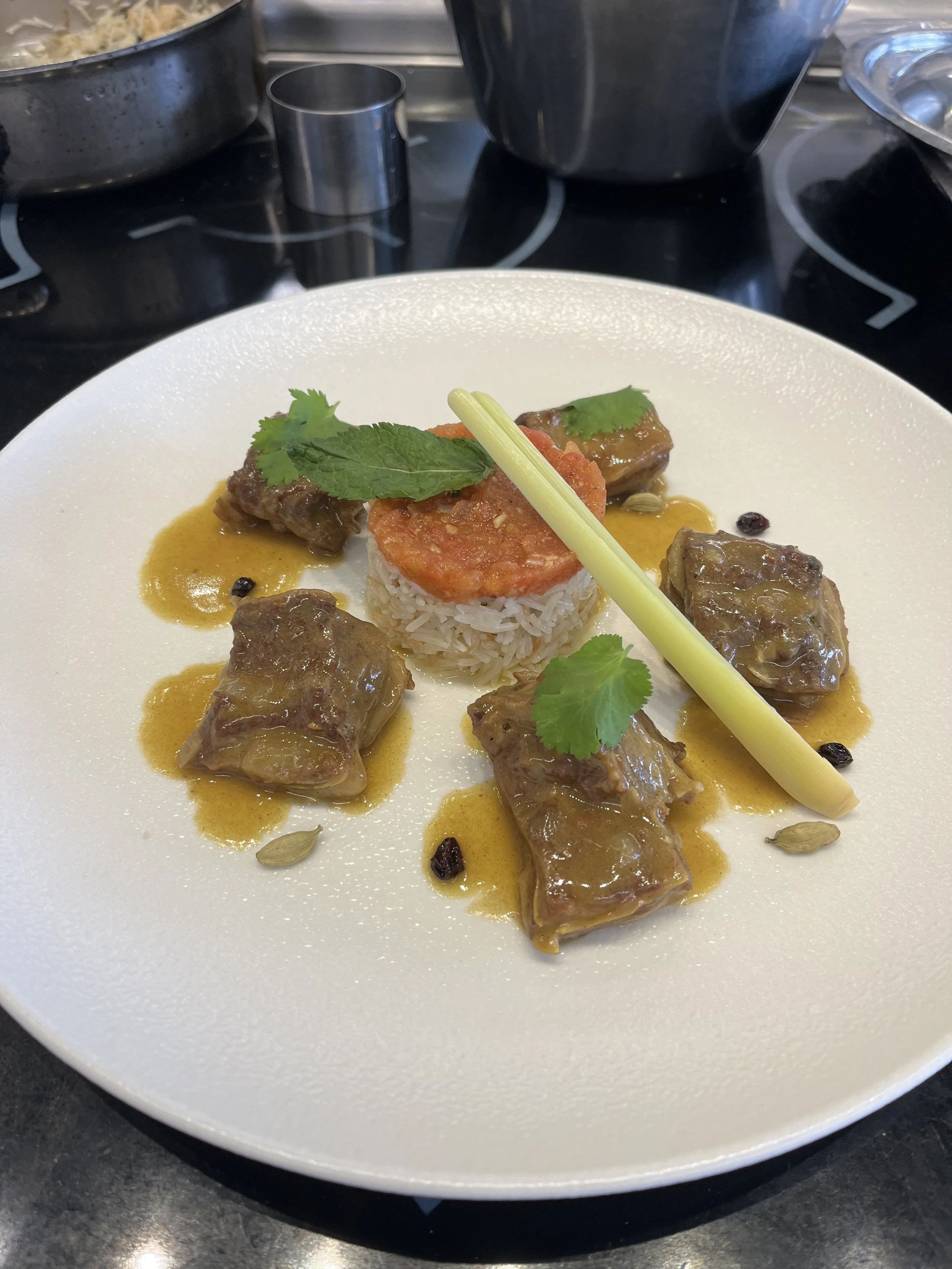
While I felt pretty comfortable during Intermediate, it wasn’t without its ups and downs. Bless Katy for handling those few days I came home after a bad cook, confident I had learned everything I was going to, that I had hit my cap, that there was no way I was going to get better and keep improving. But my final two cooks scored incredibly well, including the last under the chef who will lead us in Superior. That felt good, and gave me the confidence I needed going into the exam.
Since I was young, I’ve gotten intense feelings of nostalgia, or longing. For moments in time that seem so perfect I want to hang on to them, want them to last forever. Working summers at the scout camp in my hometown as a groundkeeper, things got so vibrant the two or three weeks the scouts were there. Then they left, and the counselors left, but the grounds still needed kept and an almost eerie feeling set in. Or a camping trip we took when Harrison was still crawling, in Madison, Indiana. We had such fun, hiking with him on my back, cooking over a campfire. The next day, as we packed up and left, I started crying and turned to Katy and said, “I’ve had such a good time. What the hell is wrong with me?”
Obviously those feelings have gotten worse on this side of Harrison. And now I’m having them here. Our day in Champagne, and the train ride home, where Noah and Sarah’s girls kept Auggie entertained. Or as friends who stayed with us in our little apartment left, and Auggie said so sweetly, “bye bye!” It might be that I miss our friends (I do). Maybe that I miss home (less sure). Or perhaps that I’m seeing the end of this road coming, and know there’s a turn up ahead.
So as we do, we will keep living this little life of ours to the fullest. At the end of this week, we leave for the French Riviera, Côte d’Azur. We’re staying in Antibes, planning day trips via train nearly every day we’re there—Cannes, Nice, Éze, Saint Paul de Vence, a few others. We will explore, visit the beach, show Auggie the Mediterranean. It’s still surreal to me that he won’t really remember much of this experience, despite how much he’s grown and changed. In any case, this getaway will be very welcome before stepping back into the kitchen for what should be a very challenging term. On y va.