“Soleil” - Sun
The train ride south out of Paris rips largely through swaths of countryside, for which I am immensely grateful. It’s farmland. Checkerboard patterns of golden grains and greens, maybe corn, maybe something else entirely. Am I really so far from Indiana? The hills roll gently and easily down towards the coast, with cows and sheep and goats grazing. Maybe this is my future, I think. A small place in the French countryside where even the outbuildings are beautiful and shingled with clay tile, with sprawling hectares of land and growth, food brought up from the very ground on which we walk, a deeper connection to all of it.
Of course it’s easy to romanticize the whole thing when we’re flowing through it at 150 kilometers an hour. And while France does place much more gravity in the professions of farmer, butcher, cheesemonger, any of these professions might await me back home, too.
Eventually, the scenery changes. Gone are the lush fields, traded for rockier ground split by a stream which winds its way through them, back and forth beneath the tracks. In the discomfort of our non-air conditioned train car, I imagine wading into that little stream with its smooth rocks, first knee deep and then deeper, perhaps to my waist. Am I feeling cooler, or just torturing myself? There are berries growing here which prefer the rockier soil, covered painstakingly with netting designed to keep out the pesky birds and who knows what else. The trees become less leafy and more needled. Most clearly are the rocky outcroppings, jutting violently toward the sky, as if pointing and saying “Here. Here is where we all end up.”
Maybe that’s some kind of warning because without any pomp we are then in Marseilles, looking briefly at the ocean port and the city's mountains, speckled with scraggly bushes and sun-baked and -worshipped houses. The train sweeps us along the outside of the city. I remember when we came in 2022 with Harrison, driving along the highways we now ride beside. Then, in our rented VW SUV, I watched the train passing us so quickly and learned a lesson the hard way. Now, we sit on the train and do the passing.
As quickly as it came, the grit of Marseilles fades and is traded for rocky coastline and large, beautiful homes that perch like hawks for the view beneath them. The fields that streak by us are now filled with—what else?—grapevines that will become rosé and olive trees destined for oil.
I wish that our entire train ride had been one of gentle reflection and window-inspired daydreaming. But in advance of a stop at Saint Rafael, the conductor announcement began warning us of thieves who might jump on the train, grab a bag, and run off with it at one of the many stops. He warned us to be vigilant.
That didn’t happen to us. What did happen to us, however, was an old man who was disembarking identified our bag as his. Because Katy and I were watching, we saw our bag get moved out of the train. I jumped out of my seat, hurdled a dog which was lying in the aisle, and ran off the train. I saw the old man and his cohort, as well as two attendants, standing with several bags. I spoke sternly, in French. “Cette valise. C’est à moi. C’est à moi.” I grabbed it, and the attendant, eyes wide at seeing me leap out of the train at him, stepped back and held his hands up.
The old man looked concerned and said, “c’est la meme, c’est la meme chose” (it’s the same, it’s the same thing) and pointed to another of his suitcases which looked nothing like ours. “Ce n’est pas le meme! Bah,” I said, and flapped my arm at him. He backed away while I hefted our bag back into the train and into the luggage compartment. When I finished and looked up, the entirety of the car was standing up and staring at me. And after that, at the remaining stops, someone was standing vigil at the exit to keep any bags from being lifted.
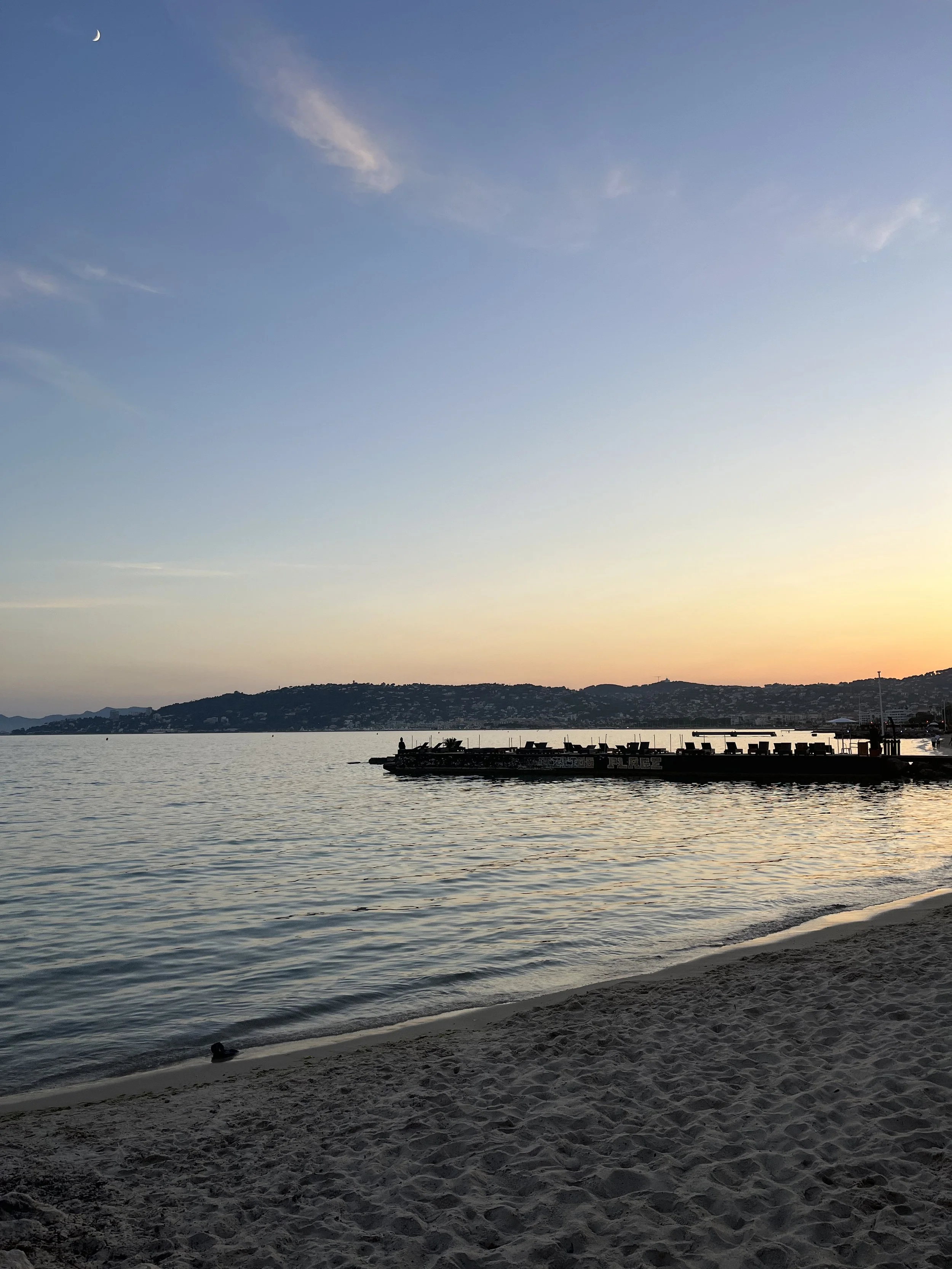
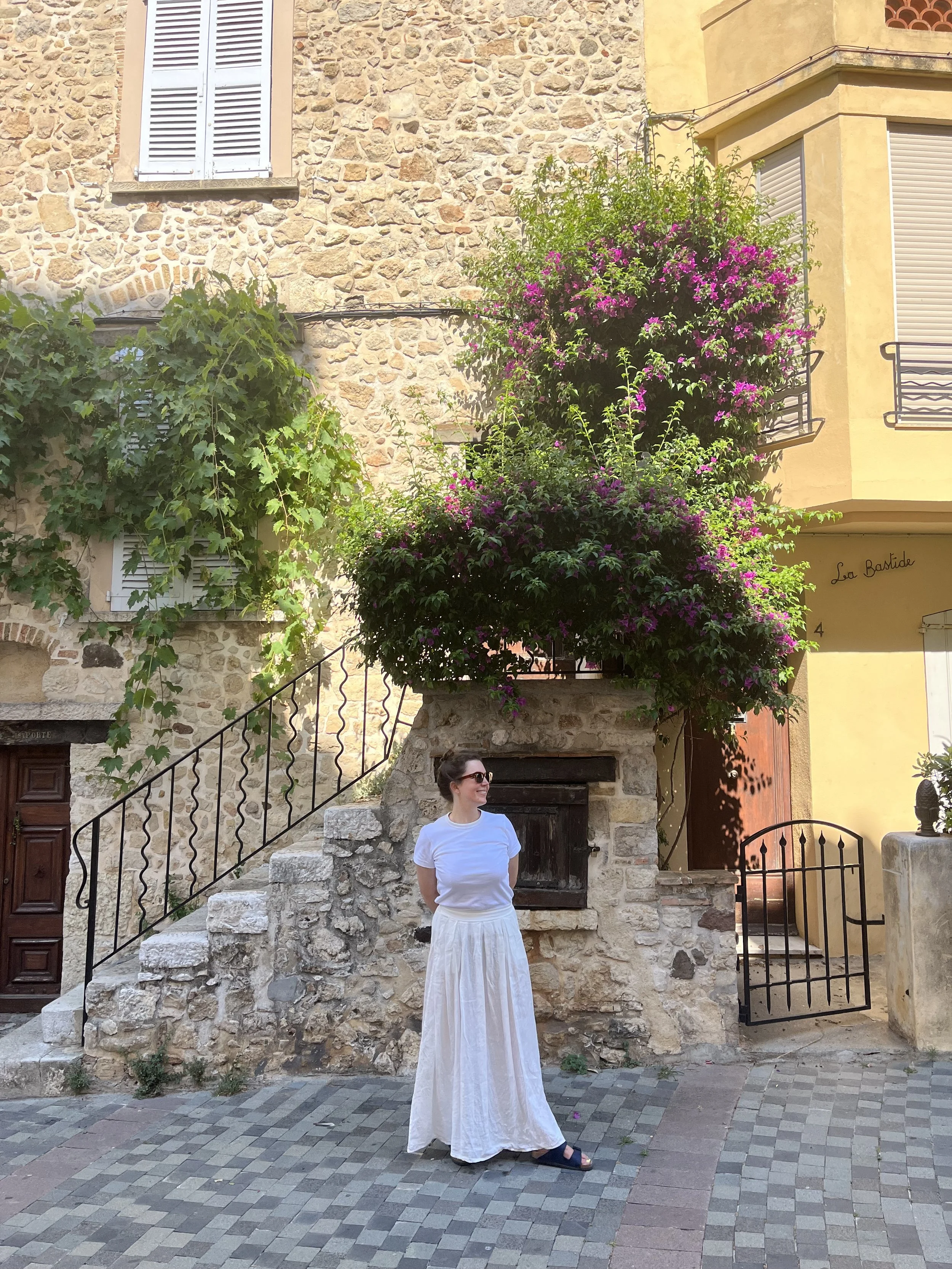
Antibes, our home base for the week, has been a resort town since the 1920s when it attracted the likes of F. Scott Fitzgerald and Zelda, Charlie Chaplin, Marlene Dietrich, and PIcasso. Of course it’s beautiful here. But there’s also a casino, and nothing pulls people to a place like the prospect of losing a lot of money. After a few quick spins through old town and down to the other side of the cape at Juan Les Pins for dinner, there’s a certain Miami-in-the-80s kind of vibe here. I like it. The buildings haven’t been updated in a long time, but they’re well maintained. They’re mostly white and cream so the sun doesn’t bleach them out. There are a few once-pink, now appropriately faded rosé-colored walls. Not a lot of new construction. It’s touristy here, don’t mistake that. Outside of a few service folks, I’m not sure I’ve met or seen anyone who’s actually from Antibes. And that’s ok. It doesn’t feel touristy in the same way that a lot of places in Italy feel touristy. It’s still very Provençal.
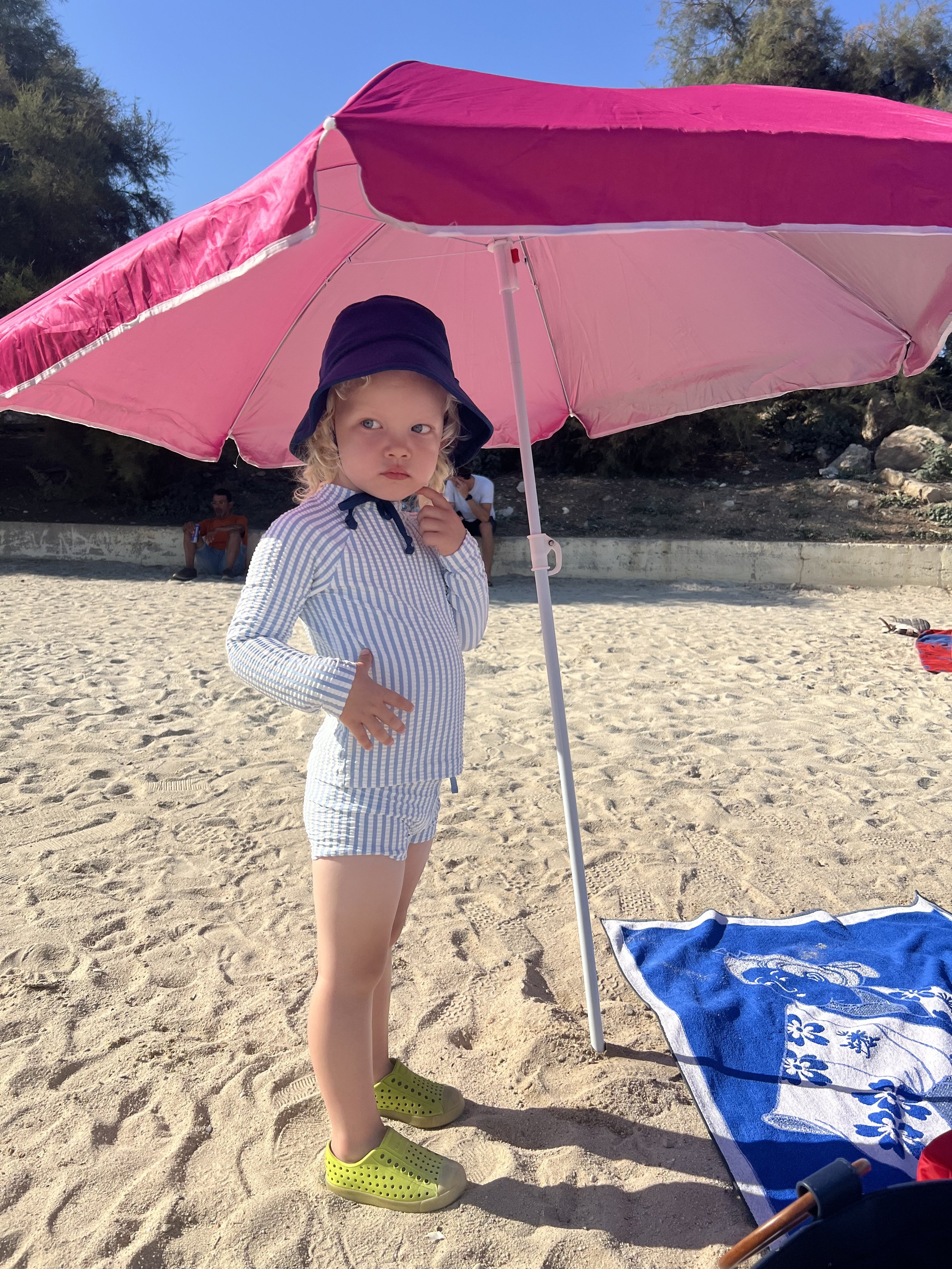
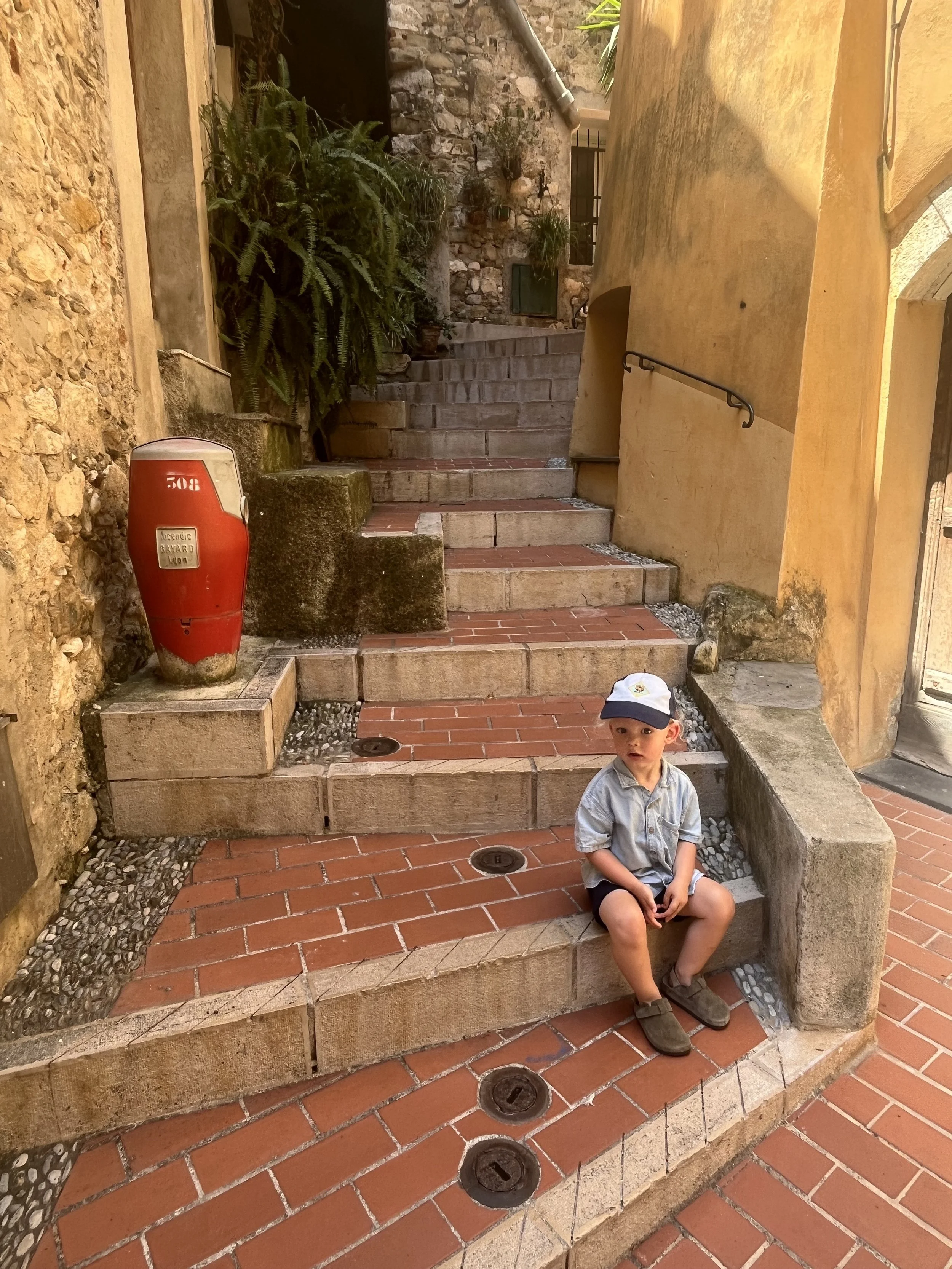
The vegetables in the marché are exquisite. As are the beaches. Auggie has met the Mediterranean, but admittedly was shy to warm up to it. He clung to Katy and me while kicking and splashing at the water. Then stood at the edge and threw every single rock on the beach into the sea, twice. The sun beats down on us but we’re slathered in SPF 50 and it doesn’t feel like there’s anywhere else to be. *
Obviously, Paris thrives on tourism. So too does the French Riviera.
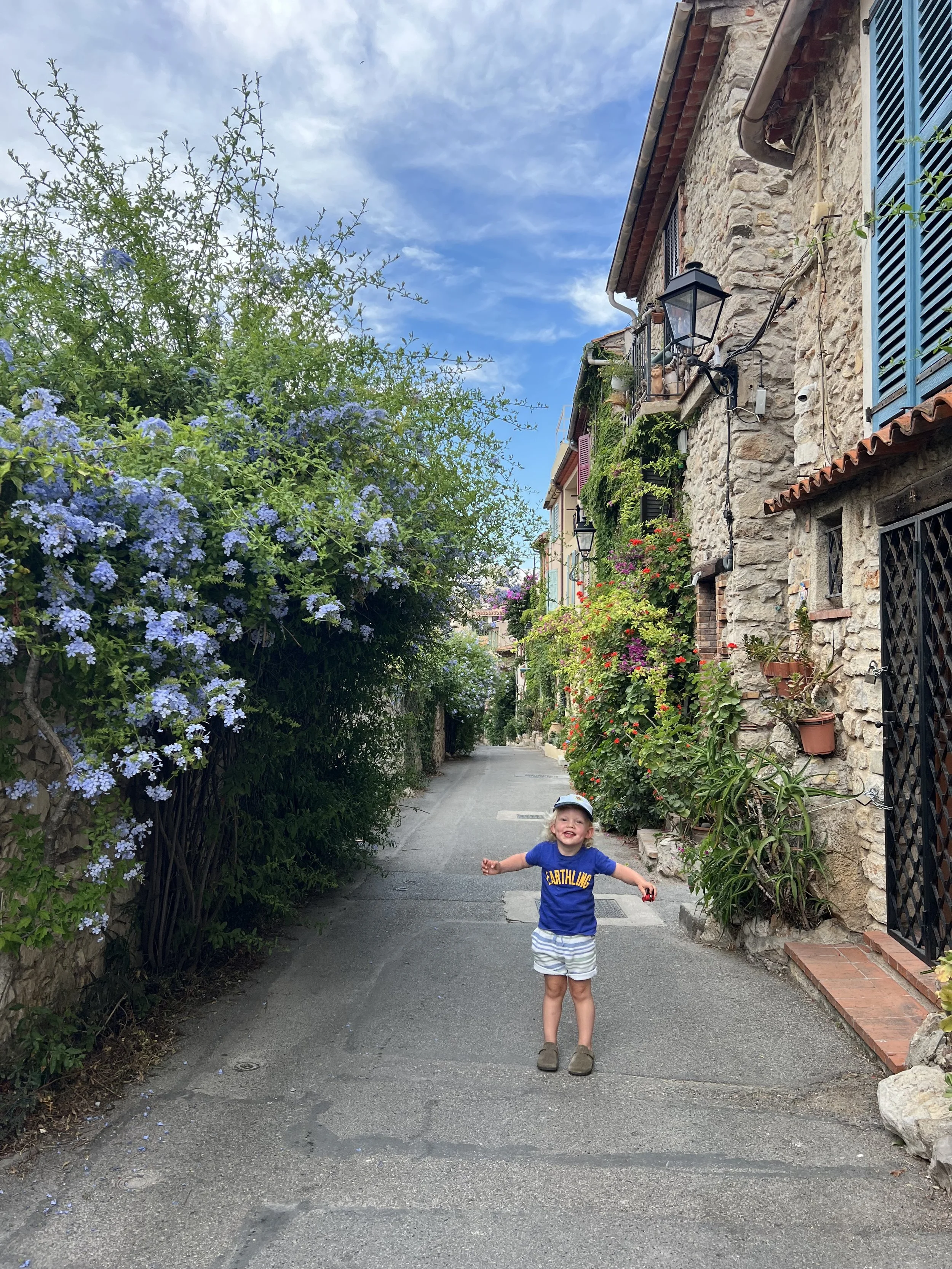
A little east of Antibes, there’s a small medieval village in the mountains, called Éze. Katy had heard of it—presumably from instagram where it has blown up in the terrible way that things do there—but one of my chefs at school also recommended it. In fact, he said in an email, “vous devez partir” (you must go).
The train takes about 40 minutes, but then, unless you’re walking the Nietzsche Trail straight up the mountainside for an hour and a half, you take a bus for another 20-25. I don’t know why it’s called that, but he is attributed with having written, “What does not kill me, makes me stronger.” I imagine there’s a decent amount of both death and strength on that trail.
I’ll take a quick moment to say that Katy and I have been joking on this trip that our toxic trait is thinking we’re better tourists than others. I’ve written a bit about that recently: how we avoid tourist traps, we try to blend in, we research the places we’re going extensively for sights, restaurants, and how to navigate public transit.
You can probably tell where this is going.
We took a very crowded bus up the hill, through a series of switchbacks with the bus’s tires scrubbing around corners. I can appreciate the need to disassociate when climbing roads like this—the fear of heights, the motion sickness. But most of our busmates never looked ill or afraid. They simply kept their eyes glued to their phones. Enough so that upon stopping, the majority of those surrounding us started asking one another, “is this it? This is where we get off for the village?” When, had they briefly looked out one of the bus’s large and clean windows, they would have seen a looming medieval village waiting for them to disembark. When you look up, the world has a tendency to reveal itself.
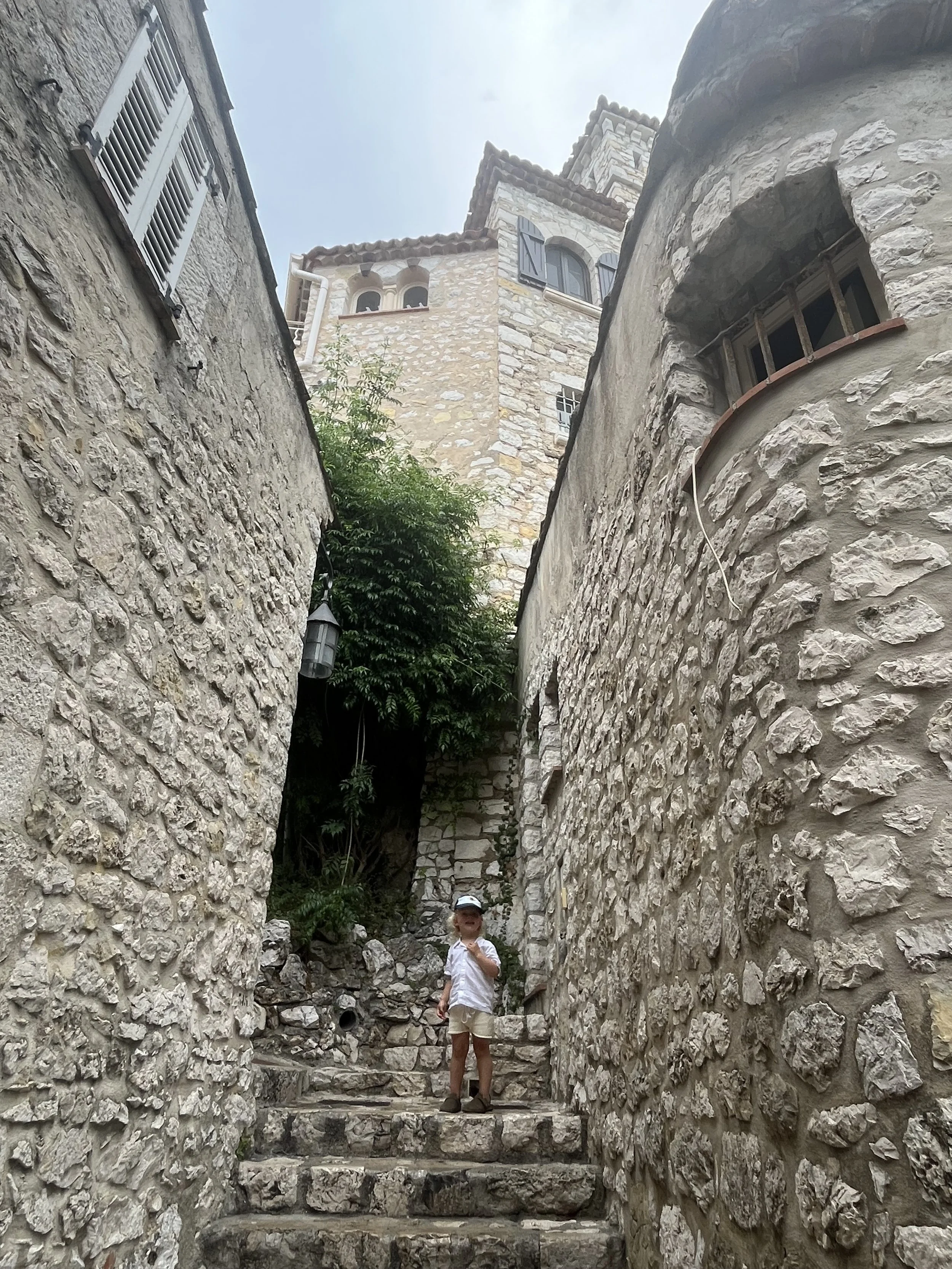
As we walked up the hill into Éze, we were affronted with perfume stores, snack stands, ice cream shops, art galleries, more art galleries, and souvenir shops selling things similar to what you’d find literally anywhere else in Côte d’Azur. I told Katy I was afraid I had been sold up the river.
There are no cars allowed in Éze. They simply wouldn’t fit on the street, and the throngs of people would have no way of getting out of their path. In that sense it is very medieval.
People wandered and seemed to file into packs, even though they didn’t know one another. When someone took a photo, others in the group would instinctively raise their cameras in a kind of groupthink even birds are jealous of, all while shuffling along with no real destination in mind.
I counted fifteen art galleries before I stopped counting, but I certainly saw more.
I’m painting what is to me a dreary picture, and I sound like a brat. I know. Éze made me sad because I’ve been to other gorgeous medieval villages in Europe—they’re some of my favorite places to see—and those maintained a kind of integrity. Toledo in Spain is a time capsule and yes, there are crummy (as well as Michelin-starred) restaurants inside it. But you can wander around and not be affronted by racks of the same clothes you saw for sale at a different store down on the beach. I rather famously didn’t enjoy much of Italy, but Montefioralle is one of the nicest places I’ve ever visited. An ancient village up a very steep hill from Grève in Chianti, we did loops and loops and just explored how lovely it all was. It was lived in, made to work in modern society without the need to sell something out of every building.
Éze had very little of that untainted charm. There were pockets, of course. The church, built in the late 1700s, was lovely, though under construction presumably because of having been built in the late 1700s, and we couldn’t go inside. The cemetery, of all places, was quiet and solemn.
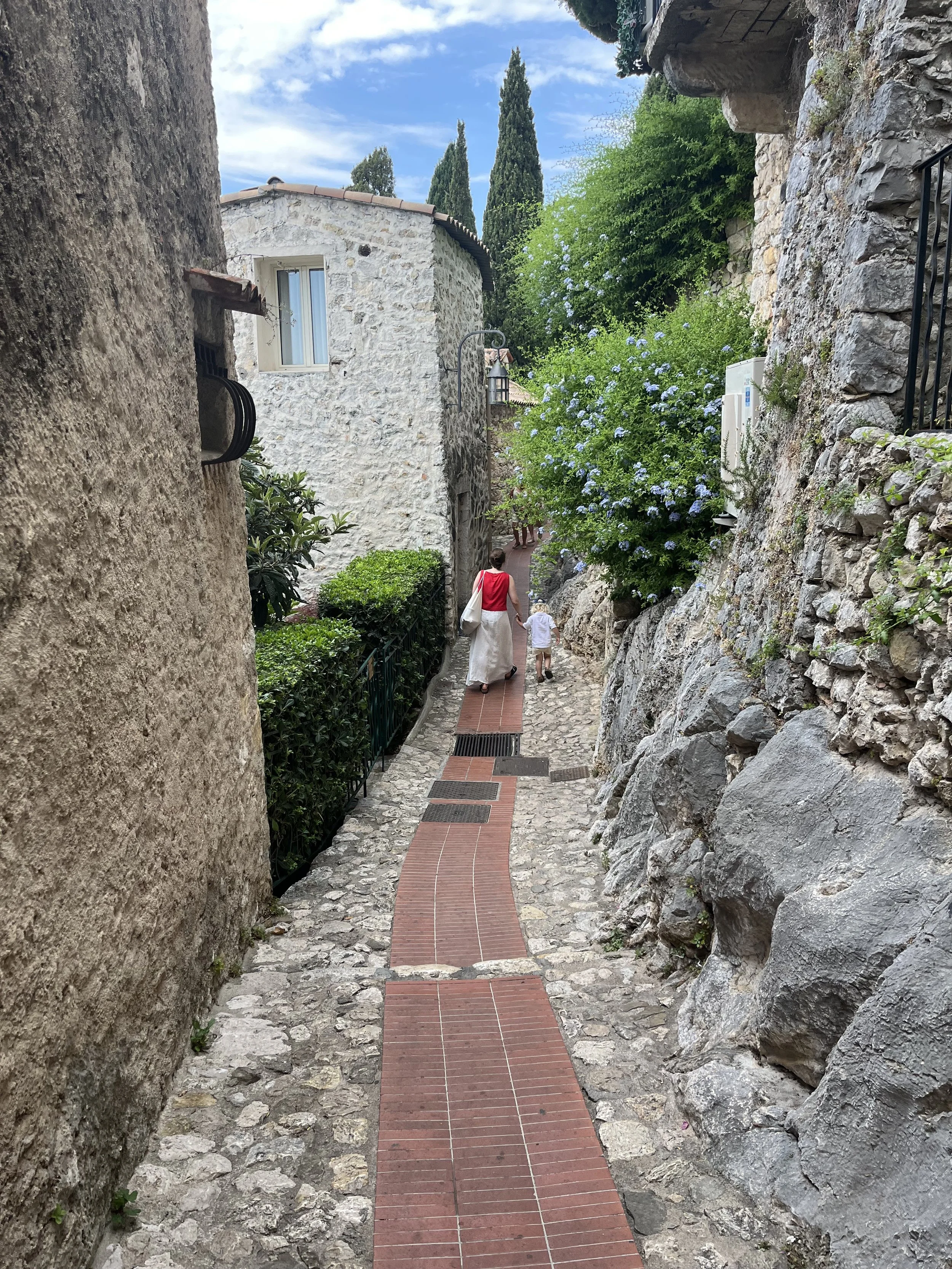
Large swaths of the town belong to two luxury hotels: Château de la Chèvre d’Or and Château Eza. Once we wandered back into the parts of town that were reserved for hotel rooms it got quiet—almost eerie. And in those places, where the stone walls stretched up high above us, and flowering plants and bushes grew almost unchecked, it was easy to see why people flock here. The beauty, away from the capitalistic and opportunistic outlets, exists. Just took a bit to find it. (By the way, a lot of those rooms start at $900 a night, hence the Bentleys, Rolls Royces, and Porsches being valet parked behind their gate.)
I learned later that in the 1950s, Walt Disney ate at the Chèvre d’Or restaurant. Savvy businessman that he was, he encouraged the owner to buy up several of the old village homes and turn the whole thing into a hotel—and that’s precisely what the (already successful) hotelier did. I found a comment on reddit that said “the charming village is more like a theme park these days,” and that makes so much more sense now.
We had a light lunch of charcuterie, fromage, and two glasses of rosé at Château Eza (which holds a Michelin star) where we had a glorious view overlooking the cliffs (“they always save the best views for the paying customers,” I told Katy, which still fits with my view of cemeteries). Then we crammed onto an even busier bus to make our way back down the hill and home for the week in Antibes.
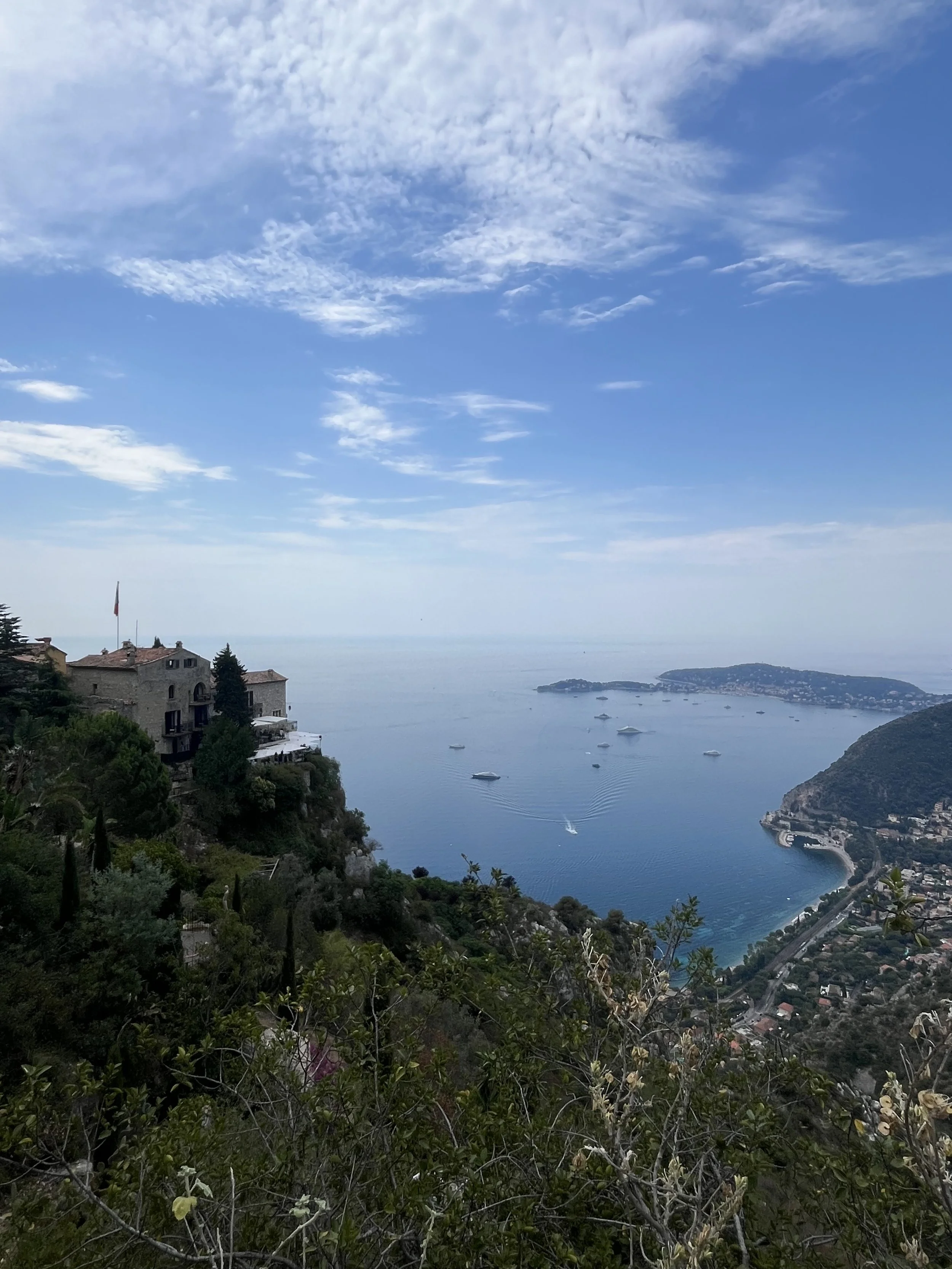
Despite all my writing, I didn’t hate Èze. I’ve been in much worse, much more touristy places (read: Rome and Florence). Places like this exist for a reason, they attract people for a reason. It’s beautiful there. The views are impeccable. The buildings are well maintained thanks in large part to tourism. For me, it’s more a question of authentic, realistic French lifestyle versus a spot high up in the mountains designed to dole out consumerism. That village may not exist today were it not for that. Would it be worth visiting, then? For some, absolutely not. But I would certainly be there.
Villefranche-sur-Mer. It’s astounding, jaw-dropping, awe-inspiring, and every other positive adjective you can come up with. We got off the train after spending the majority of the day in Nice (pronounced like “niece”), and the two of us just kept spinning our heads around looking at everything.
The town sits between a cliff and the ocean. Beautiful homes and apartment buildings are scattered up the mountain, and the town is so impossibly small there’s a barely-two-lane road that runs through downtown. Vieille Ville (“old town”) is a series of arching buildings surrounding laid stone roads. There’s wrought iron everywhere. The buildings feel Spanish, Italian, Mediterranean. We walked the main stretch of road toward the beach. There’s a small sidewalk and then…the bay. It’s right there, and immediately deep. Massive sailboats moored, and even larger yachts sat farther out. I kept saying, “I can’t believe this,” and Katy kept saying, “This looks fake.” Oh we of little faith.
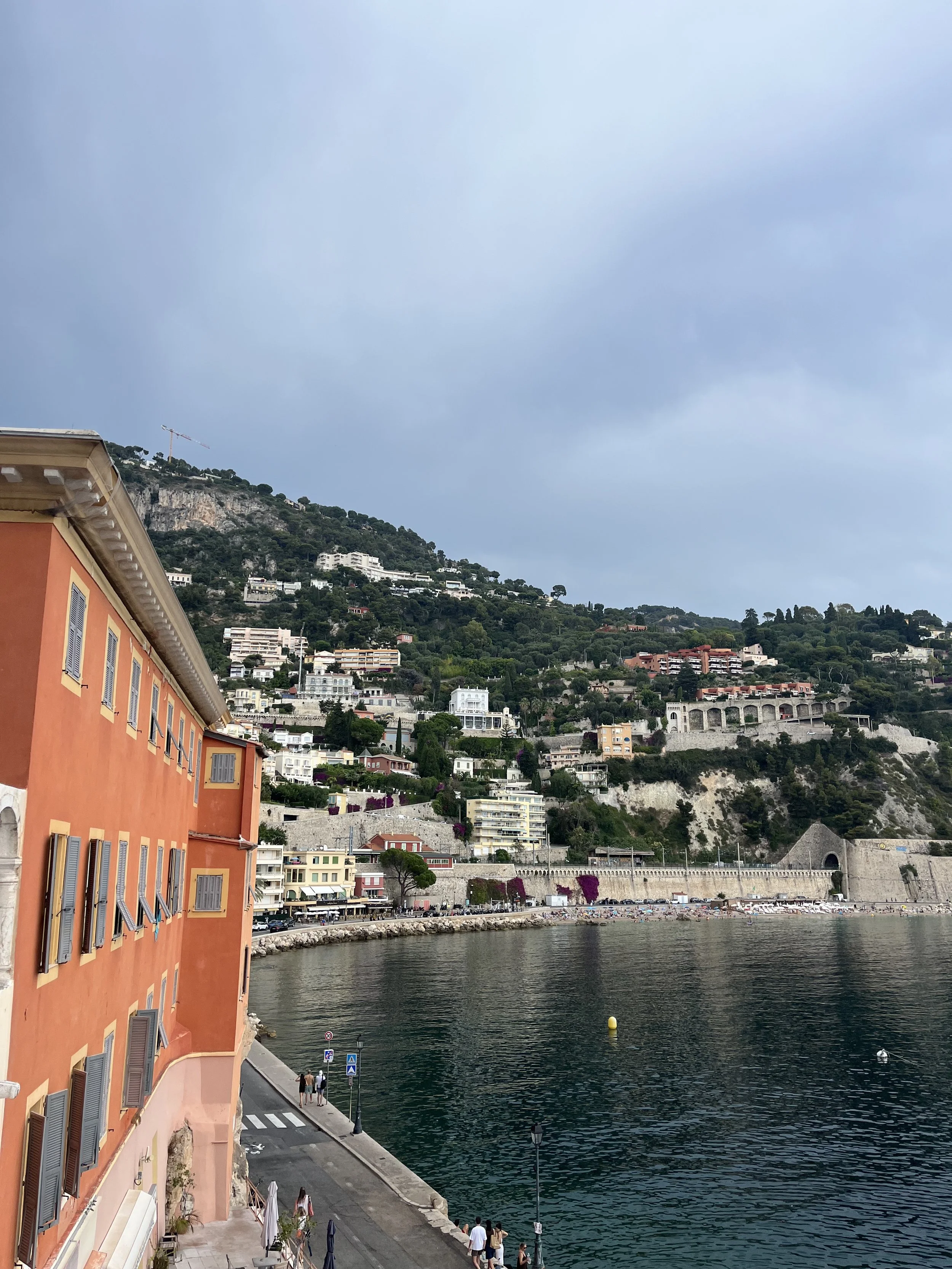
I tried to imagine the type of person who makes Villefranche-sur-Mer their home—even their temporary home. Who makes their boat on the bay their home. I almost wish we had chosen it as our homebase instead of Antibes, just to have more time there.
We walked and took pictures and Auggie and I changed from our sweaty t-shirts into button downs before dinner. I had my heart set on a small seafood restaurant, one where you could find a kind of variation of bouillabaisse—a Marseillan seafood stew made with scorpion fish, which I have never properly tried because it is often prohibitively expensive and requires two people to order it.
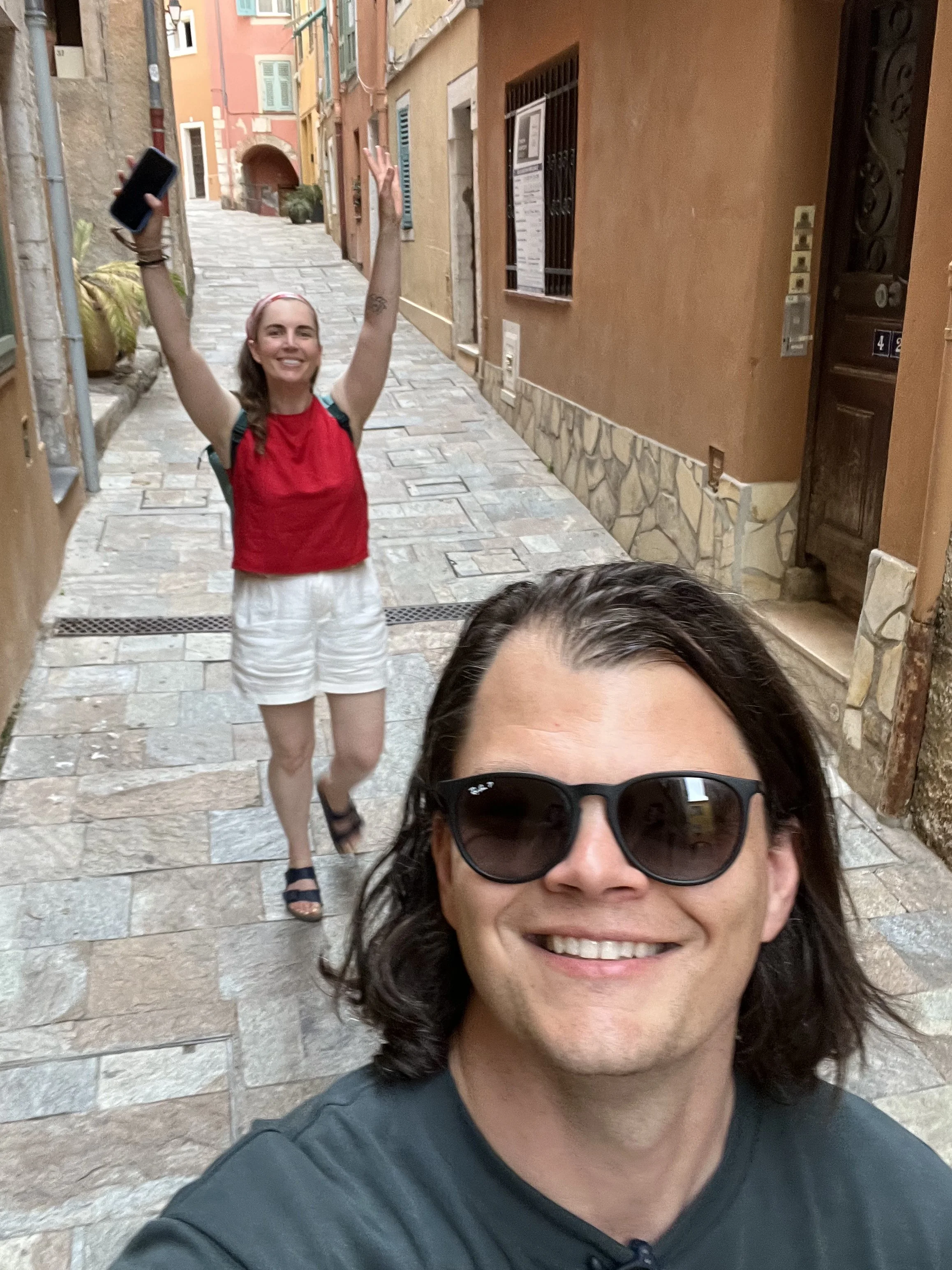
Unfortunately, dinner never came. About 15 minutes before the restaurant opened, August—who had been an absolute champ all day and unfortunately skipped his nap as a result of our travels—melted down into a red-faced banshee because Katy wouldn’t let him run out into the very small (and moderately busy) street by himself. We strapped him into his stroller and Hell broke loose. He screamed at us and everyone around us long enough that we knew there was no way we could sit through a dinner. So we started moving again towards the train, while Auggie continued to crash out the entire way. He’s so good, he does so well, and sometimes we push him too hard. That night, he was asleep within 60 seconds.
Pizza in France is infamous, and I’ll remind you that the word means well-known for a bad reason. It doesn’t make sense to me, because Italy is just right there. I know there’s a culinary competitiveness, but this feels like one where France can take the L and learn a thing or two. (For what it’s worth, I had some pretty crummy pizza in Italy, too, but France takes bad to another level.)
If you know me, you know that I am a bastard about pizza. If I am good at cooking any one thing, it’s that. It’s something I’ve studied, practiced. I’ve watched countless videos on YouTube about balling and stretching dough, tried using both flour and semolina—and still go back and forth between them. I scrutinize toppings, do not scrimp on tomatoes for sauce. I have four different dough recipes I use for different applications. Of the things I miss in France, pizza is near the top.
In Côtes d’Azur and the Provençal region, there are two sort-of pizza dishes. In Nice and a bakery in Antibes, we tried a pissalidiere—a kind of focaccia-adjacent dough that’s topped with caramelized onions and black olives. Really nice when done really well. There’s also socca. Socca are made with chickpea flour and cooked like a crepe, then filled with either savory or sweet fillings. Also perfectly tasty, albeit a bit eggy despite having no egg in the batter. I liked them both perfectly well, but neither is pizza.
We took the train from Antibes to Menton. It’s the last fairly large city in France before landing in Italy. As you stand on the coast, which we did, you can point over in an easterly direction and say, “There it is, there’s Italy.” Menton is known for its lemons, citron de Menton. They’re a smidge sweeter than your normal lemon. There’s a festival in February dedicated to them. We popped into a small boulangerie and got a lemon bar and polenta lemon cake and ate them at a park so Auggie could run around somewhere that didn’t involve traffic.
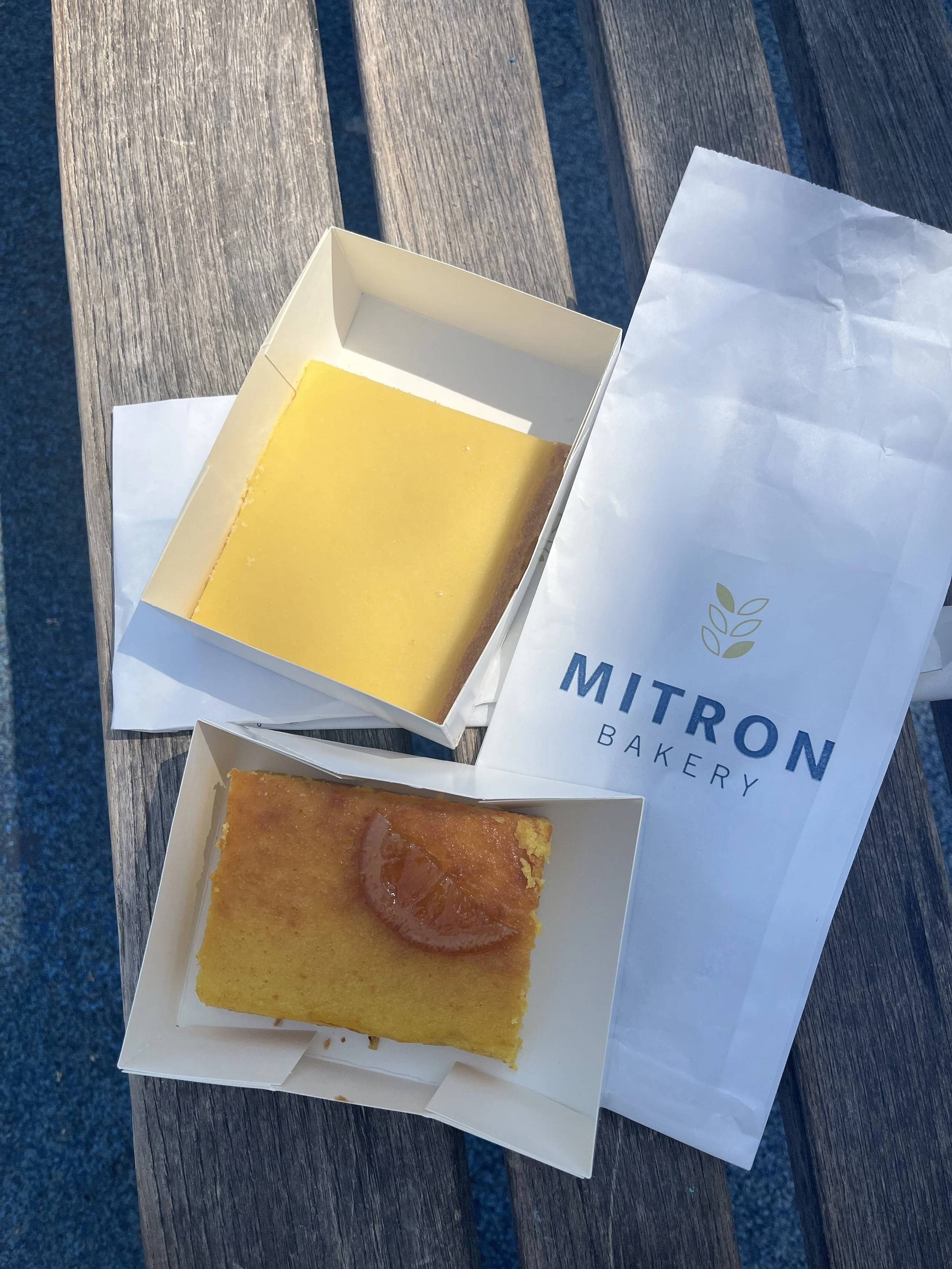
Before we came here, I found several lauded pizza places. I was skeptical, but also expected Auggie to not be his best self on a hot day, so suggested to Katy that for lunch we just find a pizza and try it out. Why not? If they can’t get it right this close to Italy, it’s safe to say it’s a lost cause.
The sun beat down on us pretty hard, and while I got a bit invigorated exploring old Menton, full of winding and switchbacking alleys that snaked off in different directions like river tributaries, full of apartments and townhomes, laundry hung outside their open windows and the beautiful, lovely quiet that comes from areas like that, we all needed more water and some real food.
Of the three pizza places I found, only one was open. La Pecoranegra (The Black Sheep) is located right on the water, a spot with an umbrella covered deck. Katy and I each ordered a cold beer and a giant carafe of water. Even in the shade, it was so incredibly hot. So we ordered a cold ratatouille and a hot pizza Diavola.
Diavola is one of my favorite pies. It suggests spice and heat, but it’s not about that. It’s a riff on margherita (red sauce, mozzarella, basil), adding some kind of spicy cured meat. It’s akin to a spicy pepperoni, but in this case they used chorizo, a really common substitute for pepp in France. Sometimes you’ll find a chili oil used as well.
Respectfully to Menton, I did not have high expectations. When the pizza hit the table, it looked good. It looked right. Maybe a bit scattershot with the salami, but the cooks are working by a 900 degree oven on an already hot day—I’ll give them a break. The dough had a properly risen ring around it. It had a bit of chew, well fermented flavor. The ingredients were classic and delicious. I had, as Katy and I very rarely say, no notes. I devoured it.
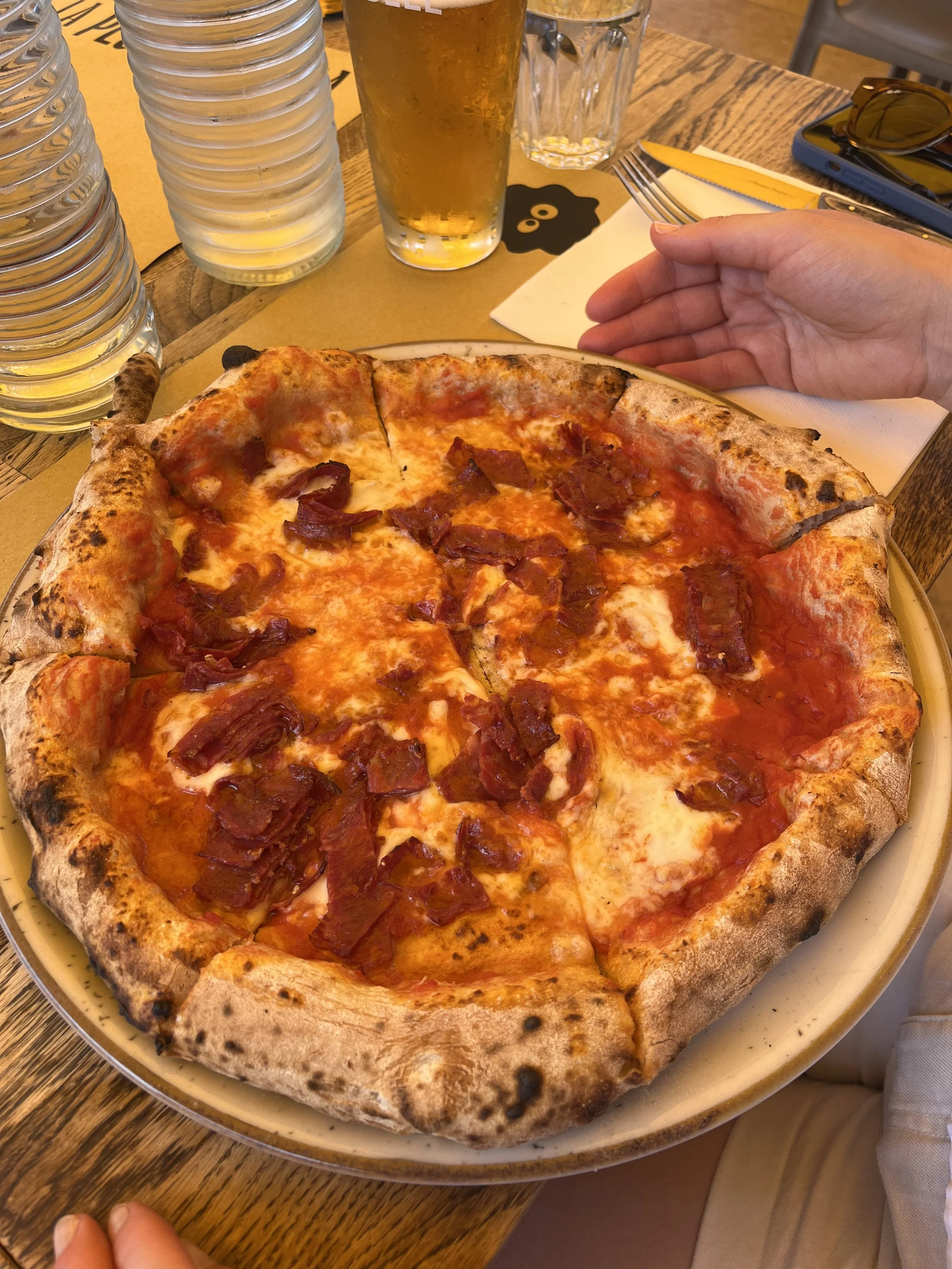
In general, we ate well enough throughout the trip. Tried the local specialties. Ate a lot of seafood. I lament missing bouillabaisse yet again, but my time in France isn’t over. We also ate some perfectly mediocre food. Obviously not every meal is a stunner, especially in areas that deal with a high churn of customers. But this pizza, I’m still thinking about it. If Menton were closer, we would have gone back.
The morning of our last full day in Antibes, Katy and I decided to play it by ear. The original intention was to visit Saint Paul de Vence, another walled medieval city just north of Cannes, but Auggie had been hot-and-cold enough that I wasn’t confident it was a good idea. We also thought, why not spend one last full day at the beach which we’ve enjoyed so much, and relax? “No, let’s go. Let’s do Saint Paul. Why not? I don’t want to regret not going,” Katy said, and so we stood to get ready.
Auggie sat on the couch watching Paw Patrol, a show he’s very recently gotten into and a habit we’ve made for mornings: milk and a show, before moving on with our day. It allows for a slow wake up, which may or may not be for the best. When it came time to get dressed and get moving, Hell was loosed yet again. Auggie cried, screamed, screeched, slapped, kicked, and hit a door. All we wanted to do was get dressed and have an adventure. But again, it seems like we’ve done too much of that this week, and pushed Auggie too hard. He kept at it, and kept at it, for one of the longest tantrums I’ve seen out of him.
I understand this is normal toddler behavior. Mostly, I’m writing this to show that all of our best laid plans and adventures don’t always work out. That the character of Auggie which I write in this newsletter isn’t some infallible saint. He plays the anti-hero perfectly well too.
Katy and I, too, want to instill in our kids a sense of adventure and wonder. But it’s easy to overdo it with a toddler, and we don’t always know our own limits. Until fairly recently, Auggie hasn’t really cared about screens or shows. But that has changed in the last few weeks to a point that makes me, personally, uncomfortable as a father—but please know I’m not shaming anyone. So once the fit calmed, we agreed to spend far less time on our own screens, because what kind of example does it set for him, when we tell him no TV at all and we continually grab our little entertainment boxes and scroll away?
Ironically, I saw a post from a friend recently on Instagram, about childhood before the blue screens, the black mirrors. Running and playing outside, getting sweaty, getting bored. Getting focused on something, coming up with a good game to play, playing it, maybe fighting a little bit about the rules or about whose imagination came up with the better story. And we came home for dinner. That’s the childhood I want for Auggie. Of course I understand that I’m asking so many of you to read this letter from France on a screen of your own, so thank you for taking time out of your day to do that. But after, maybe go for a walk in a garden, or toss a ball with your kiddo for a bit. We’ll all be better for it.
A lot of you have reached out regarding the heatwave in Paris and our comfort. It’s all over the news: yet another “one-in-a-thousand” occurrence, yet here we are. Thankfully, obviously, we’ve been in Antibes and our little apartment there had air conditioning. We’ve also spent multiple days at the beach, cooling off in the sea. We’re back in Paris now. Our apartment was roughly 94 degrees Fahrenheit when we got home at 10pm. Temperatures are due to break, but we also bought an air conditioner before we left to help us prep for the summer. These temps, presumably, won’t get better.
Father’s Day passed while in the south of France. As you can imagine, I have a complicated relationship with it. Being a dad is my favorite thing, the most fulfilling thing I’ve ever done. And yet the day dedicated to the act of fatherhood reminds me of the pain that can be associated with it. For some time, after Harrison died and before August was born, I felt like a half-father. Someone who was, and then was not. But that mentality shifted when I realized my experience was unlike most: I loved and lost my son, then learned what it meant to continue that love in absence. I’m thankful most others don’t know what that’s like. In the same way Harrison is part of me, so is his absence. All that is to say, I generally ask Katy not to make a big deal of Father’s Day. So I woke early, let Katy and Auggie sleep, and went for a walk by myself along the coast, thought of Harrison and my own dad now gone. I looked at the water, the endless and infinite body which I believe will someday—in some way—hold us all again. As usual, I felt better being near it.
Oh, and, if you’re wondering: I passed intermediate cuisine. That means we’re on to superior in just another week or so. I’m intimidated, despite having done perfectly well up until this point. But I’m not here to be comfortable, am I? It also means it’s time to start thinking about what’s next. Nine months, I thought, would last a lifetime. I should know better by now.