"Tableau" - Painting
Claude Monet, the impressionist painter who is sometimes referred to as the Master of Impressionism, moved to a home in Giverny, France in 1883, when he was 43 years old. He would live there the rest of his life, another 43 years, until he died at 86. Giverny is a tiny town north of Paris, about an hour train ride. It’s technically in Normandy, which you may remember me writing about when we visited Rouen and Etretat (two other spots where Monet painted). Giverny might be best known for acting as inspiration for one of his most prolific series: Les Nymphéas, or Water Lilies. I imagine that while he lived there, it was one of the most beautiful places on the planet.
I also imagine it was more enjoyable when he and his select group of friends were the only ones to see it. But that’s me being a grouch.
We visited Giverny on a sunny, borderline-hot day. The train brought us to Vernon, and we then took another train-shaped shuttle car (to Auggie’s absolute and utter delight) to Giverny and Monet’s home and gardens. Vernon feels much like a typical French town—not terribly unlike Rouen. Giverny feels more like a quaint village. At least, it would if there weren’t thousands of people roaming its streets. I can’t complain too loudly—I was one of them. As we approached the gardens, we saw a line. Such a line. I trekked to the front of it, leaving family and friends behind, and walked a solid minute at a brisk pace before finding the beginning. It was a lot of people. I said a variety of things amounting to “no way” and “absolutely not,” while returning to the end of the line and only then realizing there was another entrance for e-ticket holders, which we were. Just a couple of minutes later, we were in.
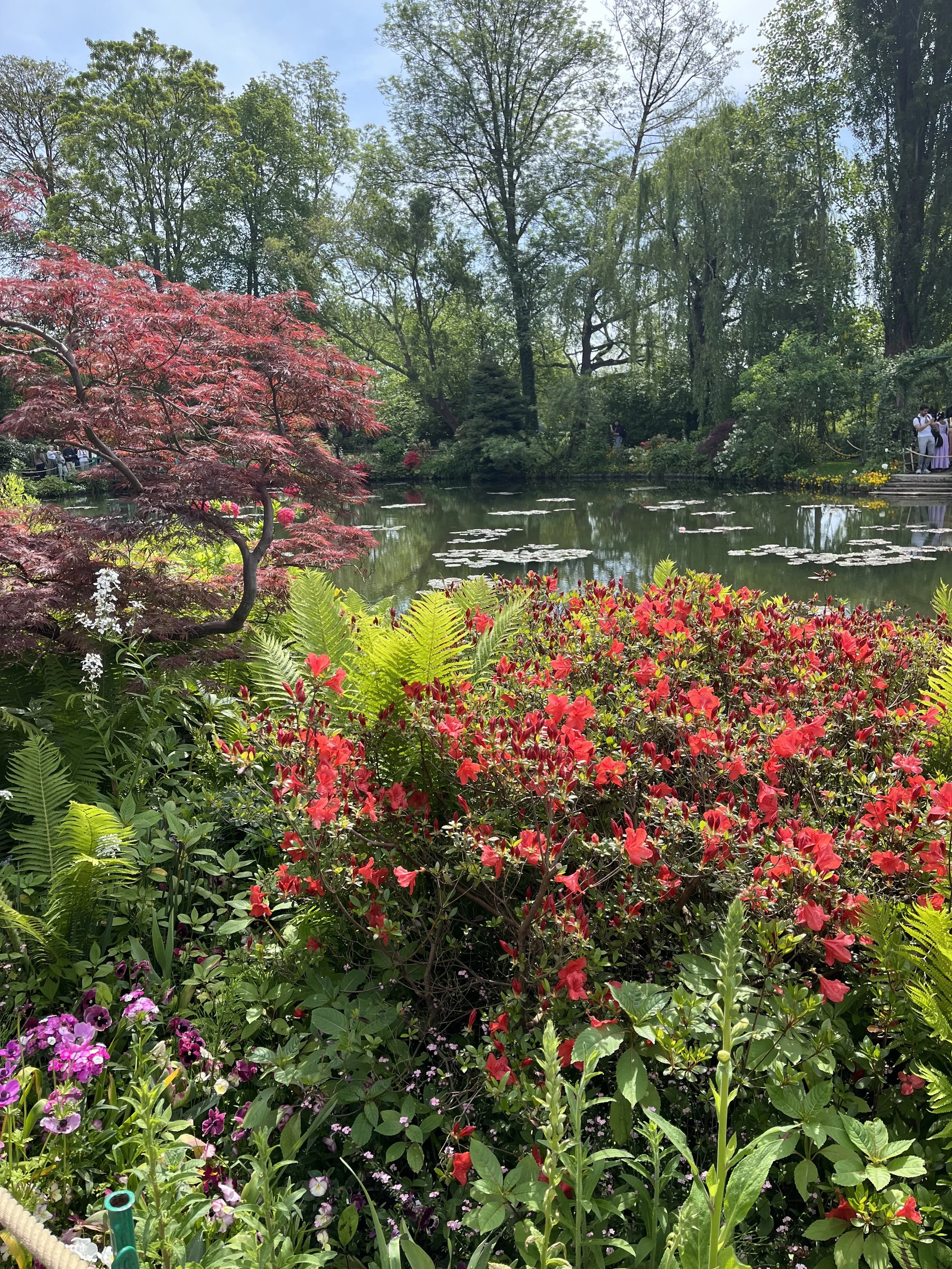
Monet’s gardens are divided into two sections: the clos Normand (or “Norman enclosure”) and a water lily pond which Monet created by casually diverting a tributary of the Seine. The lilies weren’t in bloom—that doesn’t usually happen until late July and August—but the gardens and pond are designed with flowers that are in bloom literally all summer. As one set of flowers ends its show, another is there to take its place. It’s not by chance: the place employs 10 full-time gardeners.
Those gardeners, and several before them, were responsible for bringing the gardens back to their glory in the 1970s. And restore it they did. At the time, they were anticipating between 50,000 and 70,000 visitors a year. Now they get roughly half a million.
That’s unfortunately why we didn’t step inside the house. That line also snaked, and there was certainly no way to maneuver an increasingly tired little boy through a crowded home. Maybe later this summer, when things have thinned.
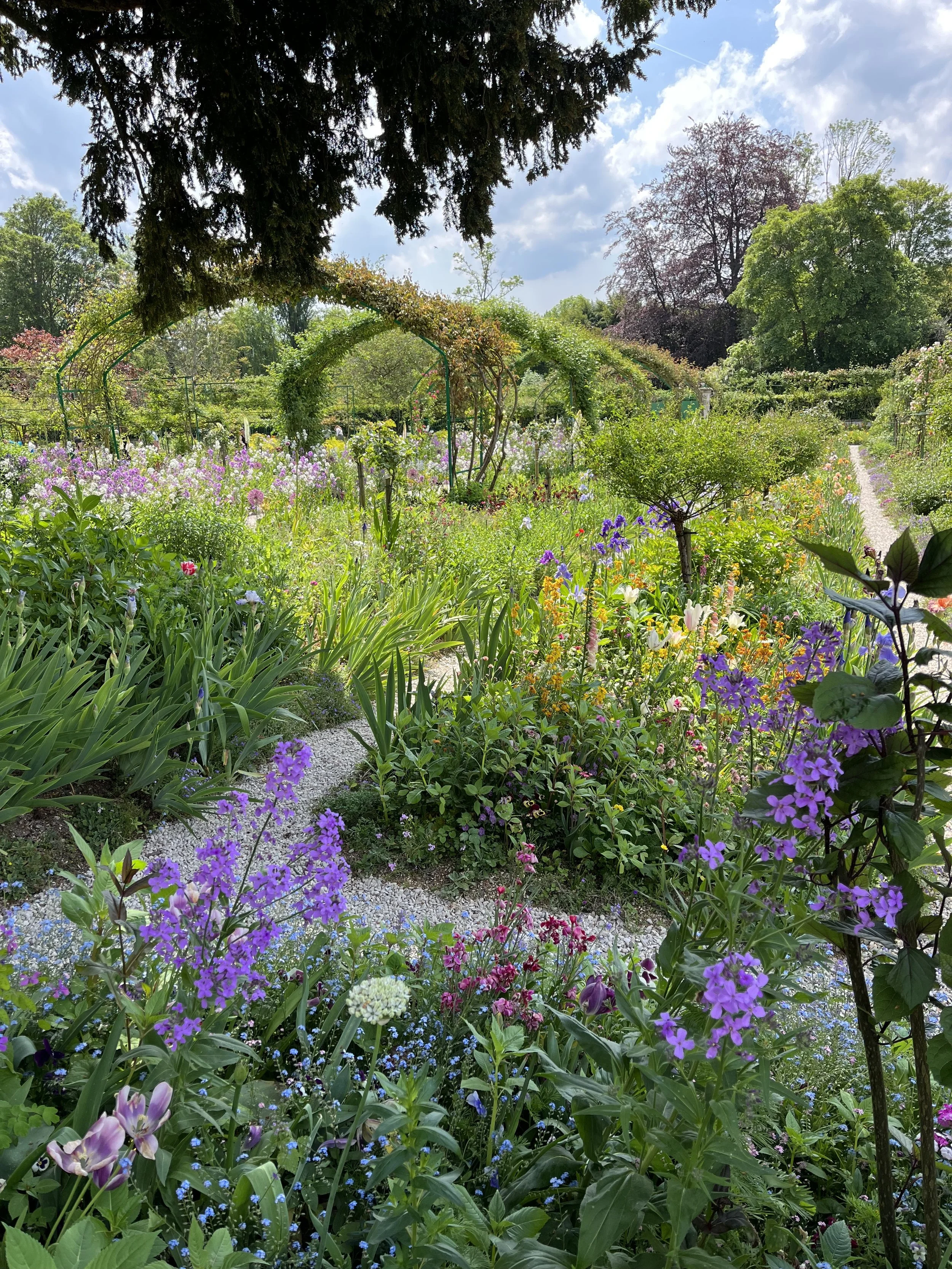
While a lot of our time there was spent navigating Auggie’s stroller around other people with no self-awareness, I still found moments of absolute peace. The stillness of the pond, the trickle of the stream. The pure, bright, colorful array literally surrounding me.
About a year ago, while on a run with a friend, we started getting philosophical and talking about what’s next for us after we die. Where we go. What we do. What happens. I told him that before Harrison died, I was fairly sure the answer was: nothing. Now? I don’t know, but occasionally I see or experience things that make me doubt that it’s nothing. He asked, “After Harrison died, what changed in you that made you see those things?” I said, “I pay attention. I look for him.” I’m sure there’s some better explanation for the little pockets of peace I found among the throngs of people in that little garden, but none would convince me it wasn’t Harrison, reminding me of his presence and saying, “Just enjoy this place, Dad.” So I did.
Some of you may remember that we planted wildflowers in our backyard garden after Harrison died. It was a reminder that love can still bloom, and our boy can still be present. Giverny gave me a lot of inspiration for a more intentional flower garden when we get home.
A month into Intermediate Cuisine already? Incredible. We’ve cooked eleven times, and to be honest it’s not quite as challenging as Basic was. I wonder if it’s similar to taking a 100-level class in college. I took 100-level geology in college to satisfy a math credit because surely a class about rocks would be easier than numbers pour moi, a guy who dealt mostly in letters and words. Au contraire. It was incredibly difficult, and my essays were graded harder than any of my English essays. I was told later that professors used those classes to weed out anyone who wasn’t serious about the major. I was, in fact, not serious about geology, so it worked.
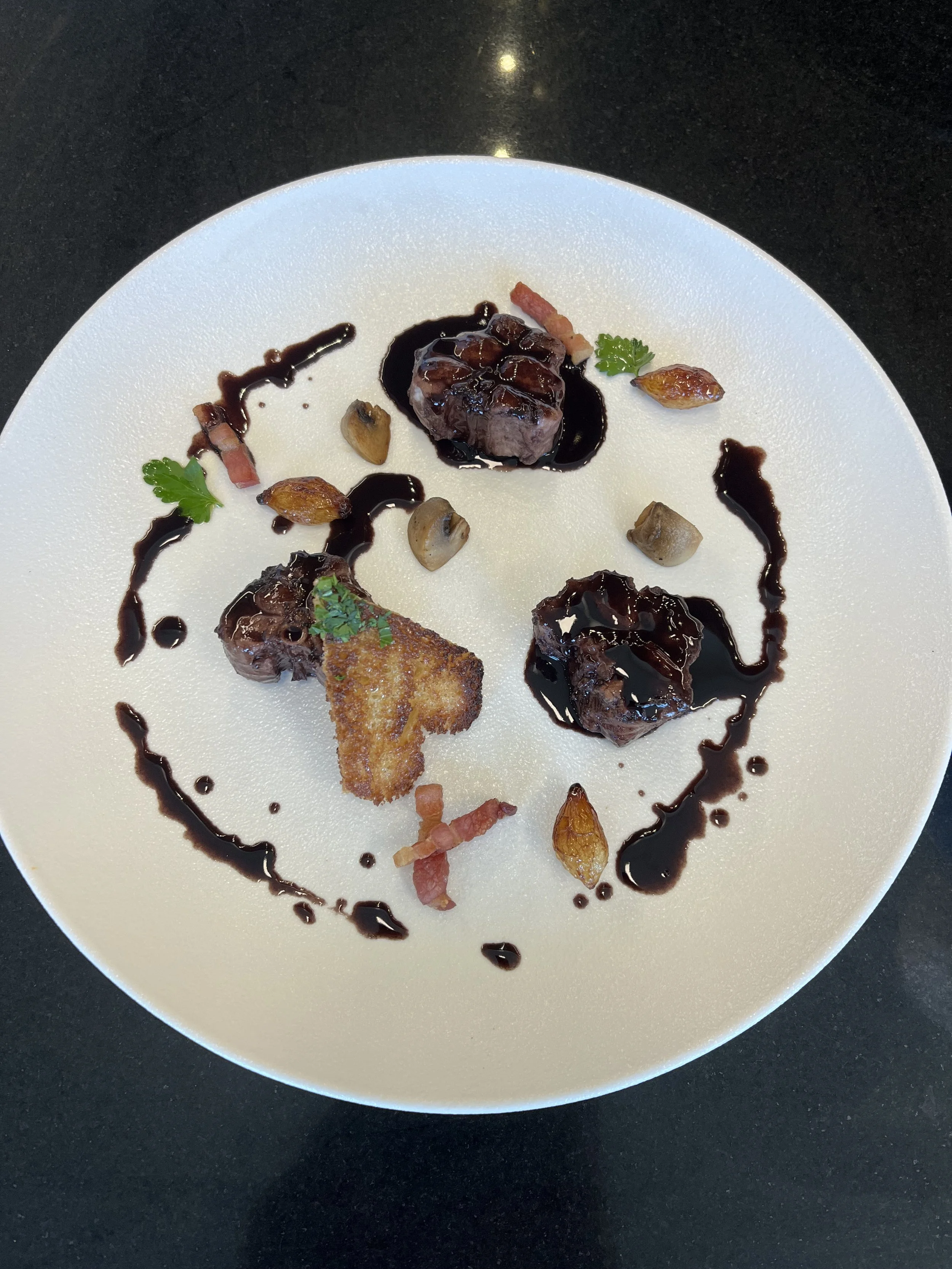
We’ve cooked a lot of fish, a little veal, some chicken. Things feel natural. I can tourné a potato without much thought. Same with breaking down a bird. There are some fun cooks coming up. I’m excited for bouillabaisse, and expect that one to be tough.
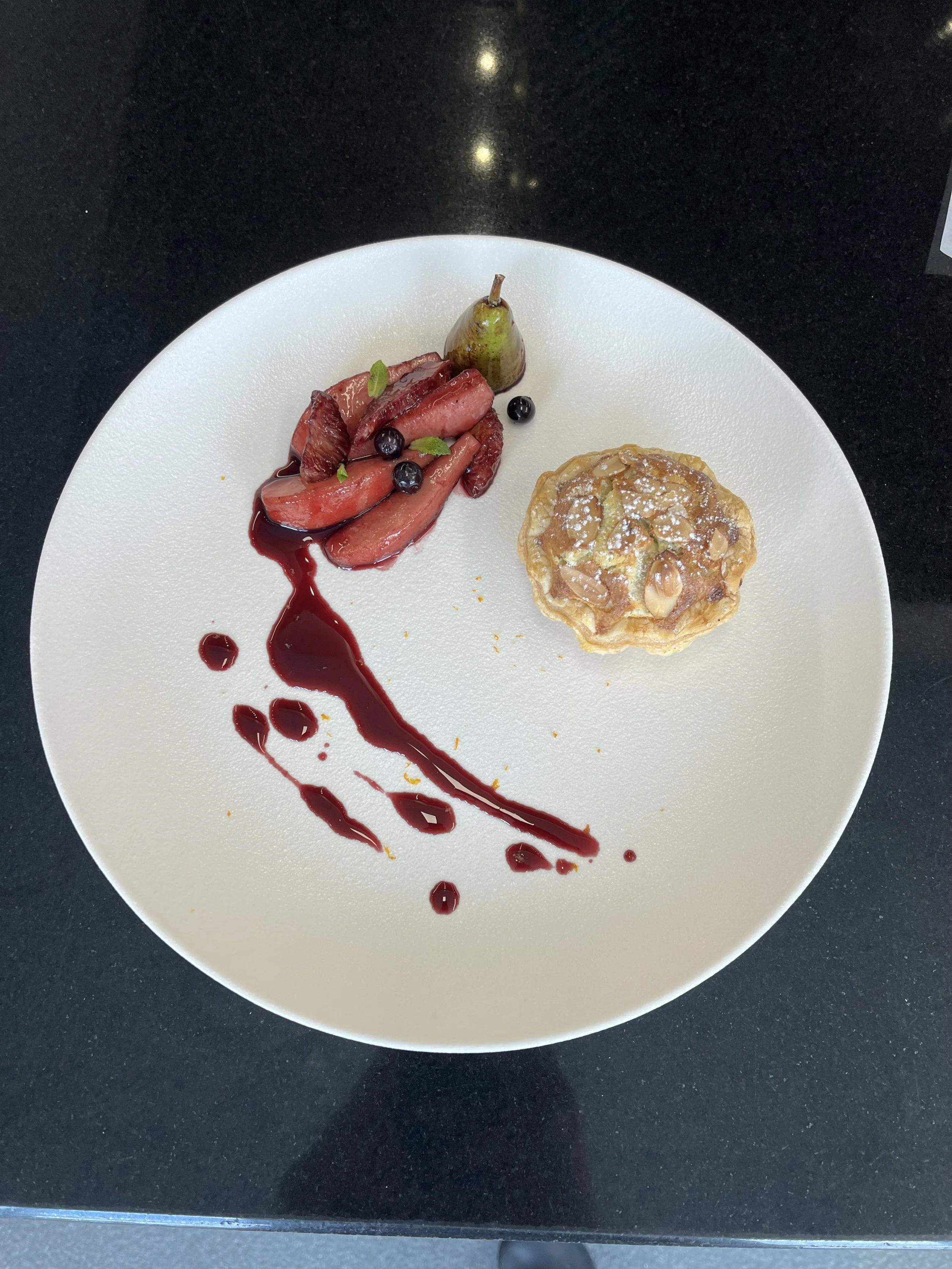
Intermediate includes more desserts as well. We’ve made two: a chocolate lava cake and an almond mirliton—similar to a miniature tarte or sweet quiche. When I bring those home, Auggie usually gets one to himself. As he ate the lava cake with caramel sauce, I’m fairly certain he finally understood what it is that I do when I go to class each day. And he’s excited about it. In fact, just recently he started calling me “Chef Daddy.” I like it.
Auggie’s Norwegian nanny left us to focus more on getting a proper career. But very quickly, in large part thanks to Katy’s exceptionally thorough research on the first go-round, we were able to find a South African nanny within a week. She already nannies for other families, and also starts as a kindergarten teacher not long after we head back state-side. She’s qualified. And she’s already making Auggie do things on his own, no matter how many times he pleads, “Please help me!” It’s a change that’s working out just fine.

Aug’s vocabulary keeps growing, for better and worse. When Katy asked him if he was ready to get up from a nap the other day, he said, “No, not quite.” When I asked him how his nap was just yesterday, he said, “Good, I slept well.” He commonly answers our requests with, “Of course!” He’s picking up a few more things in French, too, like “salut” after someone sneezes. Unfortunately, it also means he’s saying some of the things I probably shouldn’t say as often as I do, which I won’t write down here because my mother-in-law reads this newsletter.
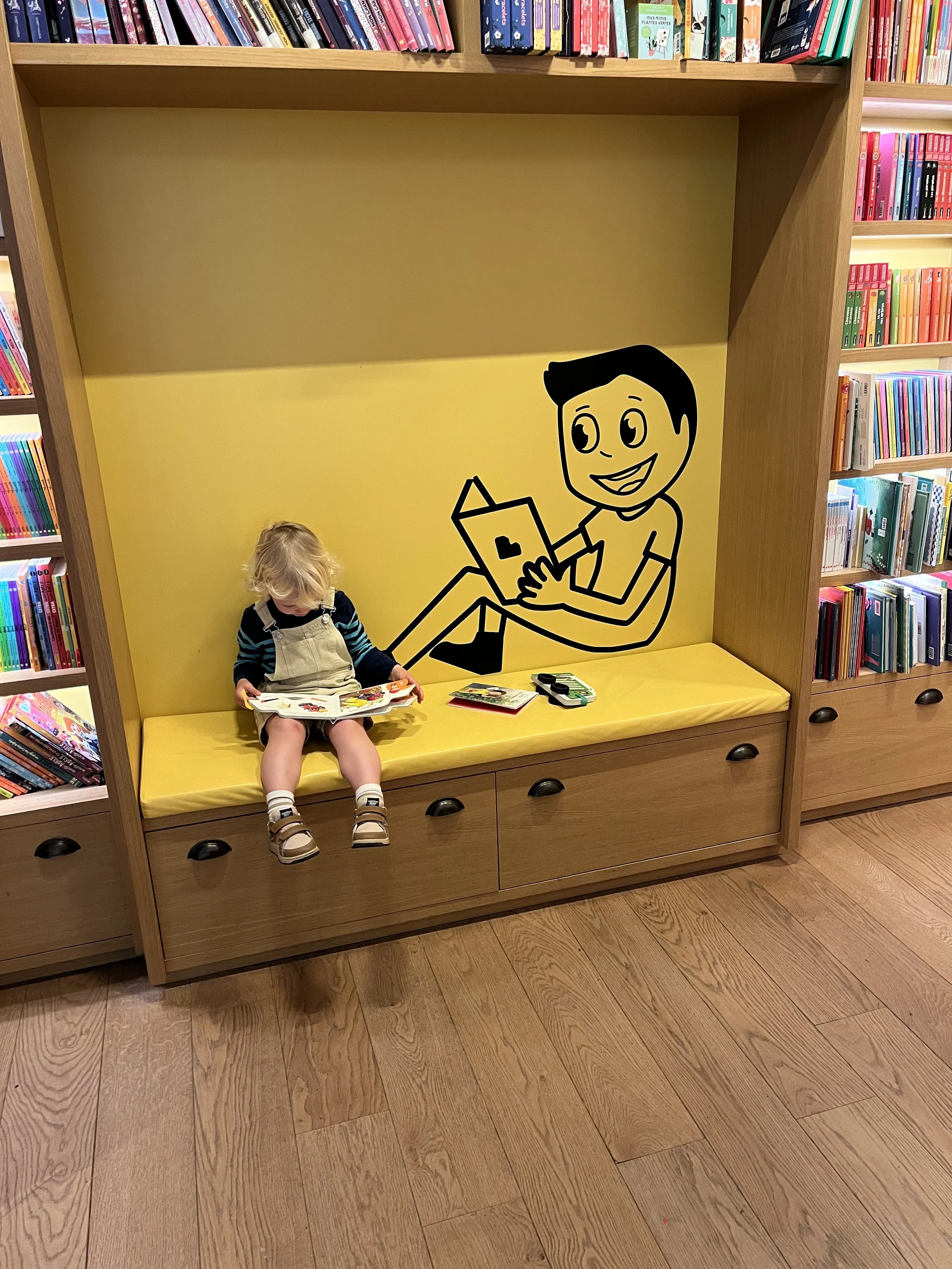
His tastes in entertainment are changing, too. While he still sometimes asks for Sesame Street, Miss Rachel, or Thomas the Tank Engine, we’ve now made that inevitable jump to simply watching videos of real trains on YouTube. I’m not sure yet if it’s better or worse, but I haven’t had “Jump Like a Froggy” stuck in my head in the kitchen for several weeks now.
Katy and I celebrated our sixth anniversary together. What a thing to do, in Paris. Neither of us would have imagined that in six years, both of us on our second marriages, we would have experienced everything we have together. Two kids, the loss of one, law school, moving across the world for culinary school at nearly 40 years old, settling albeit temporarily in one of the most beautiful cities on the planet. Our boys are already globetrotters. Harrison went to France and the Bahamas. Auggie has been to the UK, Italy, and France. What a life we’ve lived in just six years.
To celebrate, we obviously got a babysitter and went out to dinner. I write a lot about fine dining, or at least dining on the finer side. That’s certainly what a lot of French cooking is based on—originally designed for the royals and elites, it wasn’t until the Revolution that restaurants really began to take hold. It’s also primarily what I’m learning, despite some very old-school plating and cooking techniques we were taught in Basic Cuisine. Often, though, food doesn’t need to be that serious. It can—and should—just be fun. White tablecloths and wine service rituals are fine occasionally, but you can also throw away all that pomp and circumstance for a progressive meal from a bunch of folks who can just cook their asses off without sweating over a plate with a set of tweezers in their hands.
Cendrillon is a restaurant on the edge of the 20th arrondissement, in Belleville, which isn’t a neighborhood most tourists or travelers or anyone not living there might find themselves in. It’s a bit difficult to describe the restaurant, but let me start with the name. Cendrillon is the French translation for “Cinderella,” literally. There’s more, though: “Cendre” means ash. Hence why the logo is a cigarette laying in a glass slipper. The restaurant itself? Maybe a bit satirical, a bit post-modern. It’s almost anti-fine dining, but not to the point that the food loses its appeal or Chef Ralph Fiennes is ready to literally burn down the very idea of fine dining like in “The Menu” (which is an incredible movie). In fact, it’s one of the best meals we’ve eaten here, especially in Paris.
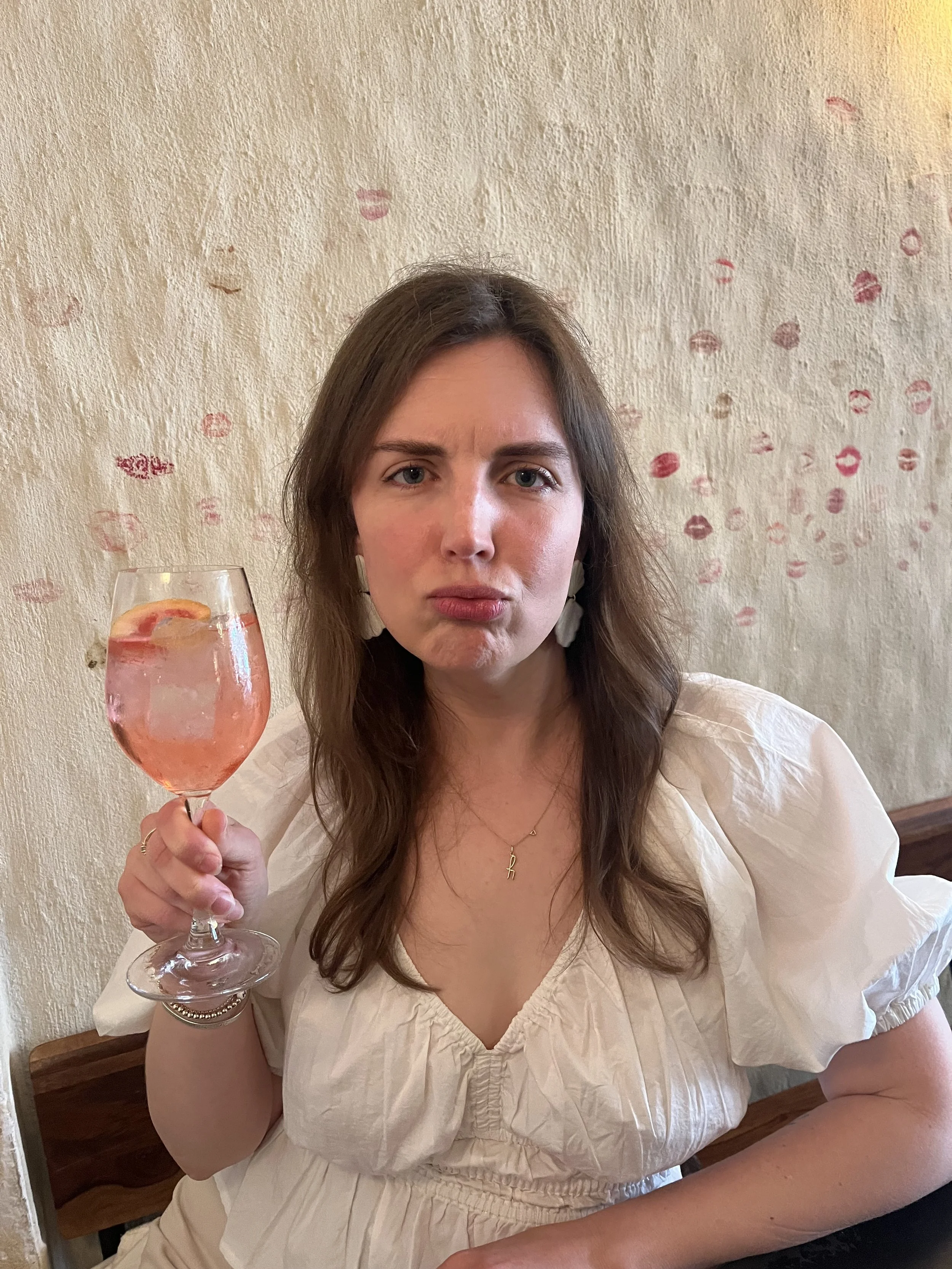
It’s like a bunch of dudes just cooking fire food and being goofy about it. There doesn’t have to be a bunch of yelling and screaming in a kitchen. There doesn’t have to be all this intensity and seriousness that takes all the fun out of cooking. The guys at Cendrillon just do it for the kicks.
We started with a drink around the corner at a bar called Kissproof. Like Oscar Wilde’s tomb, there were lipstick marks all across the walls inside. Cocktails aren’t a common game in Paris. It’s hard to find one that’s more than the basics, the classics, and a few touristy favorites thrown in for good measure. Kissproof, though, expanded our minds a bit. Katy immediately started saying we weren’t cool enough to be there. I rolled my sleeves up to show that I have tattoos.
We walked through Parc Belleville for what’s supposed to be a killer view of the Eiffel Tower, which we found, but also saw that the park just wasn’t very well maintained. In a way, it didn’t really feel like Paris there. We run into that here only occasionally. It’s a little jarring, when you see so much of the rest of the city behave in a certain way.
At Cendrillon there’s an option to order a la carte, or one of three semi-set menus. They just call it, “We decide what you eat,” and there are three levels. We chose the middle, six plates. Bring it on, chefs.
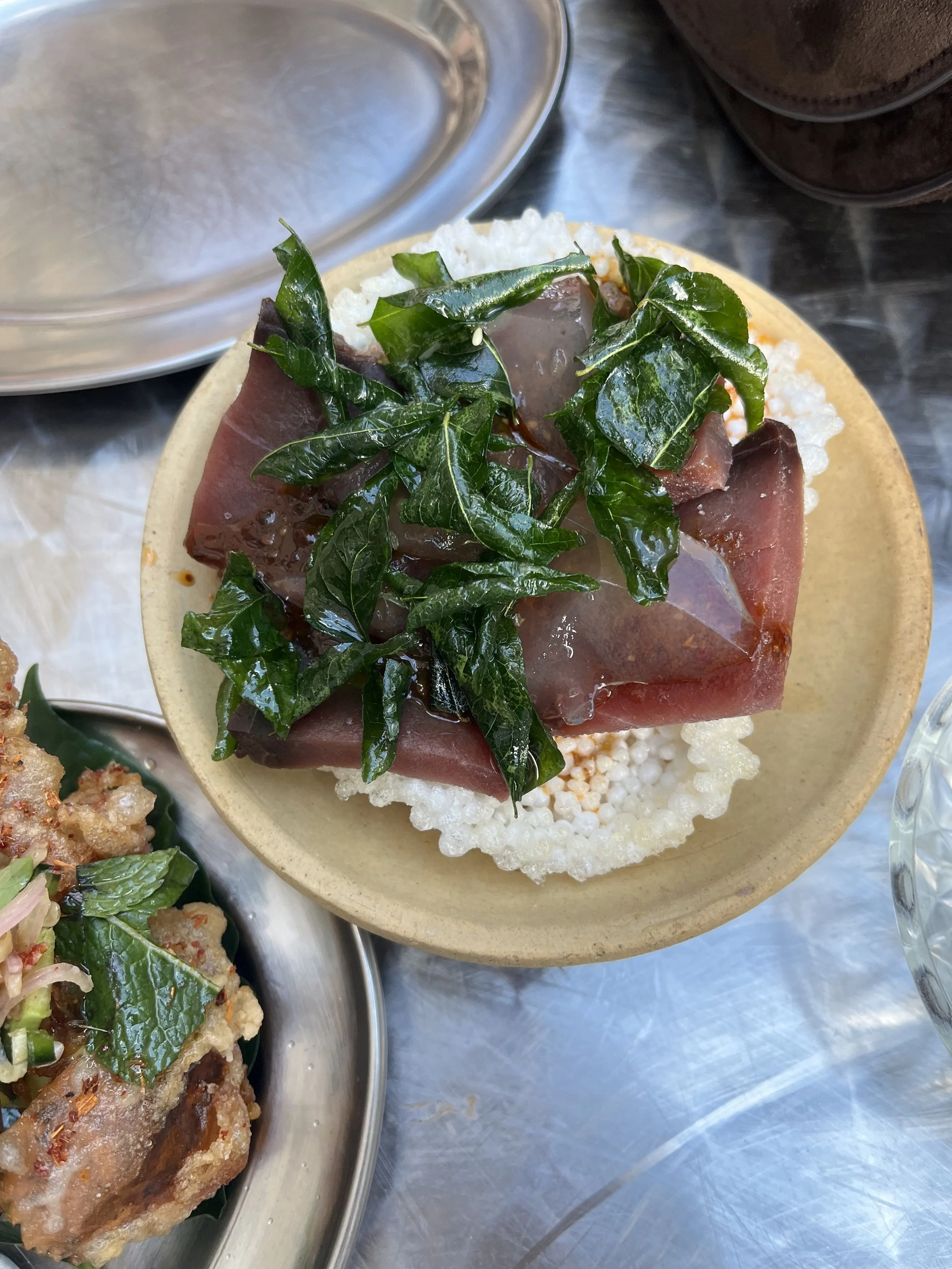
Two plates showed up at first: red tuna poppadom with tomato jelly and curry leaves, and tempura fried crab with Thai “gubbins” and salade coupe. A “poppadom” is a kind of Asian snack—it’s usually like a fried rice cracker which has puffed up. We took our first bites and literally gasped at how good it was. Beneath the rice cracker in the bowl were two different sauces, one like a chimichurri the other a creamier yogurt-style sauce. The curry leaves were just lightly fried for texture and the tomato jelly was crazy. It was a little difficult to eat, a little clumsy, but it tasted so good we really didn’t care.
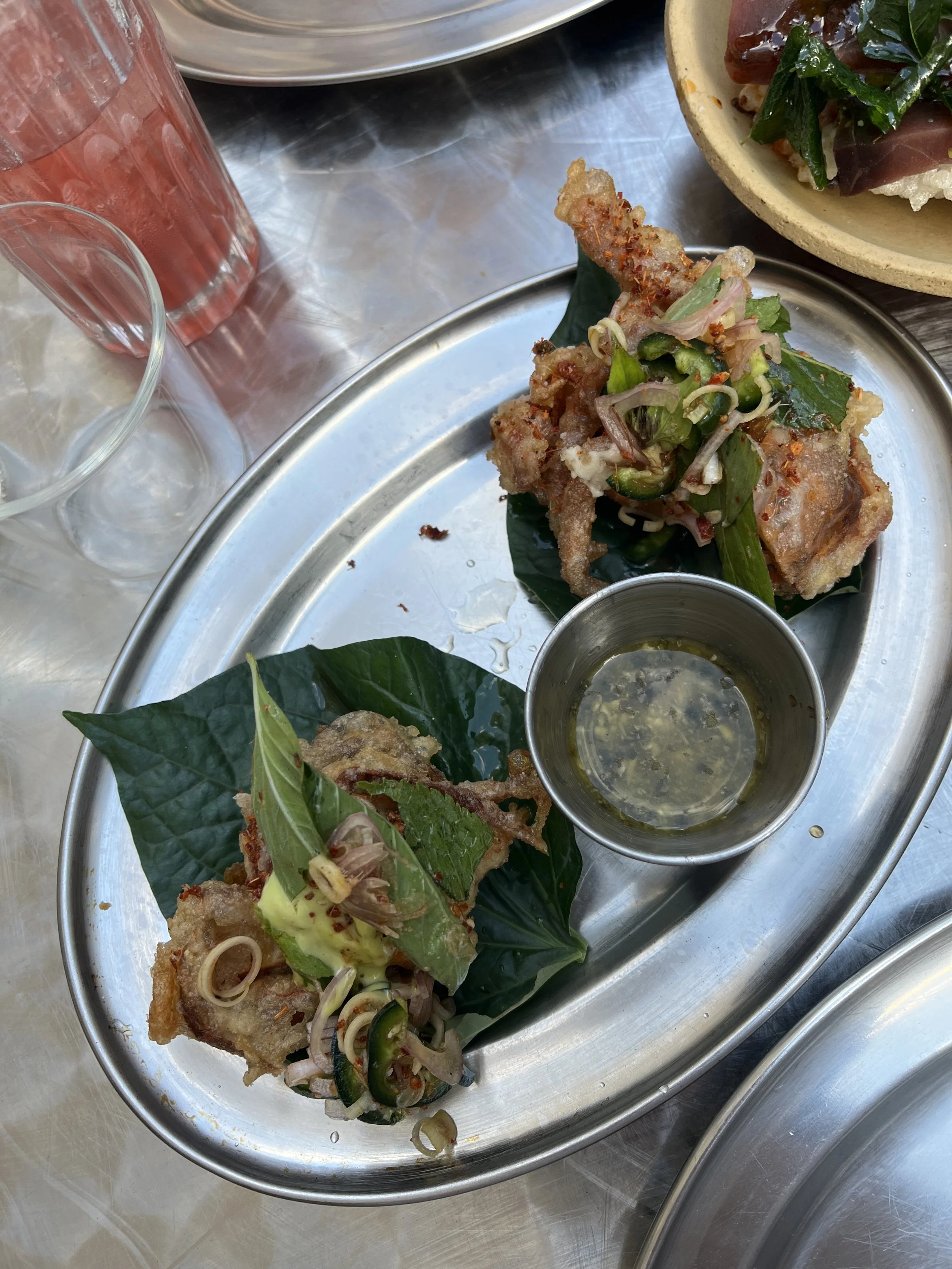
The crab was Thai-inspired. “Gubbins” is a word that generally means “things,” so it’s the kitchen’s way of saying they threw a bunch of Thai-things together as accoutrements. They served them on betel leaves to act as a wrap. I’ve only ever seen that online: betel leaves are a bit peppery and very fresh. After the first bite, Katy and I were ooh-ing and ahh-ing, and I realized something: “This crab tastes…uh…a little like Long John Silver’s. In a good way. What the hell?” And Katy gasped, because it did. There’s no LJS in France (they would revolt), but this dish was a ride.
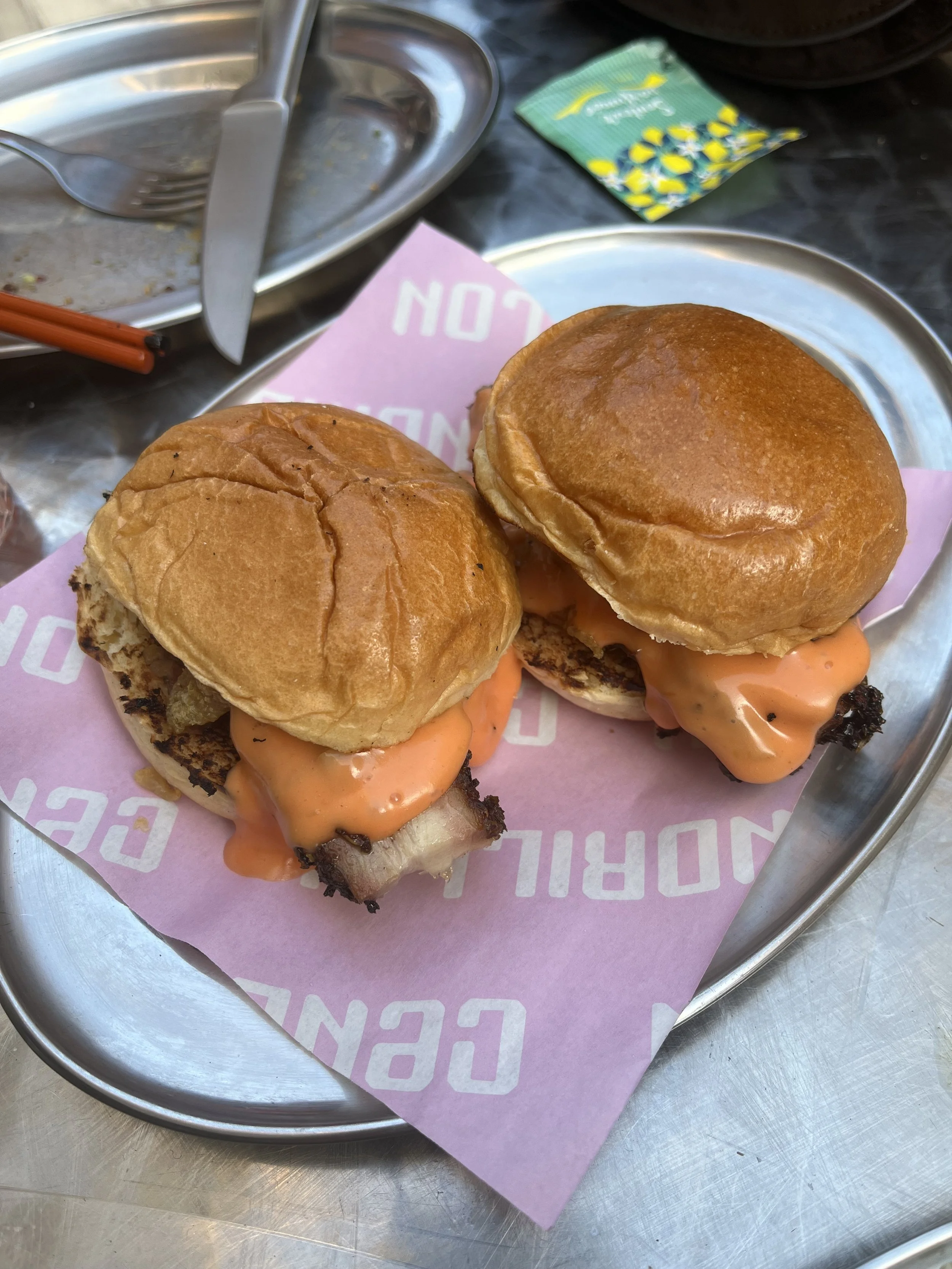
These were followed by the “World Famous” Los Passagios Pig Sando. From what I can tell, Los Passagios are just a group of guys who like to cook, and do so at a handful of restaurants in and around France including Cendrillon. This pig sandwich is a slice of braised pork belly on a brioche bun, topped with a pickle relish and the wildest sauce I’ve eaten in France. By the look of it, we thought it was some kind of Thousand Island, like an ode to the Big Mac, but when I tasted it I realized there was cheese in it too. Pourquoi pas les deux? I would eat a hundred of these, sitting on a warm deck at a backyard barbecue with a beer in my other hand.
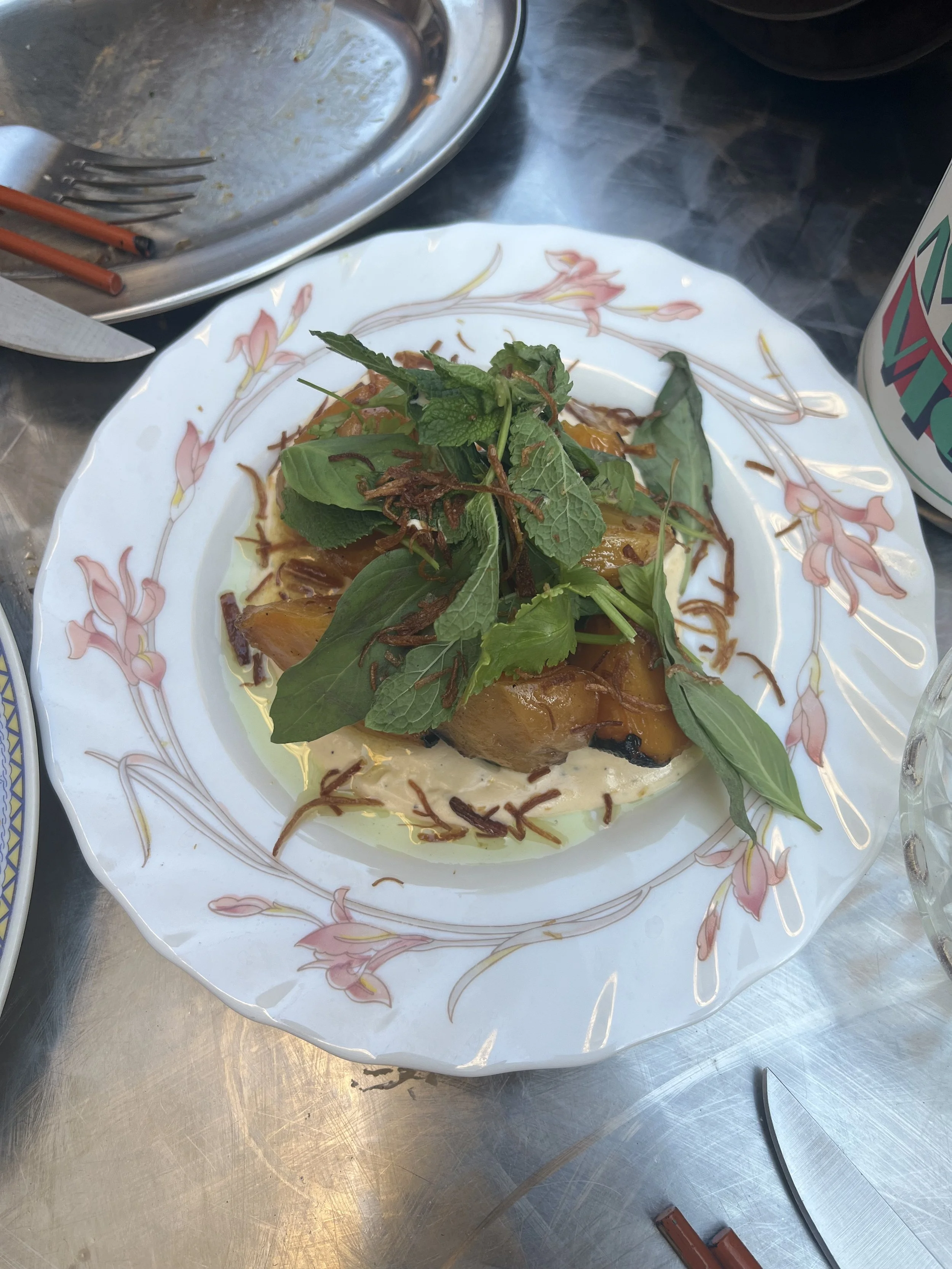
Next came two more dishes: Golden beets with chili yogurt and crispy shallots, and a BBQ quail which had been stuffed with “spicy meatball,” served on green risotto with small peas. The beets could’ve been a cop out. It could have been just…you know, beets. But they weren’t. Perfectly cooked, obviously, but on top of spicy yogurt and olive oil, then topped with a pile of fresh mint and some kind of basil I couldn’t identify. We’ve had another dish in Paris, butternut beignets at Chez Carrie, that are also covered in handfuls of fresh herbs. I like this trend, just a plain and raw herb salad thrown on top of a dish, and I intend to borrow it as often as I can.
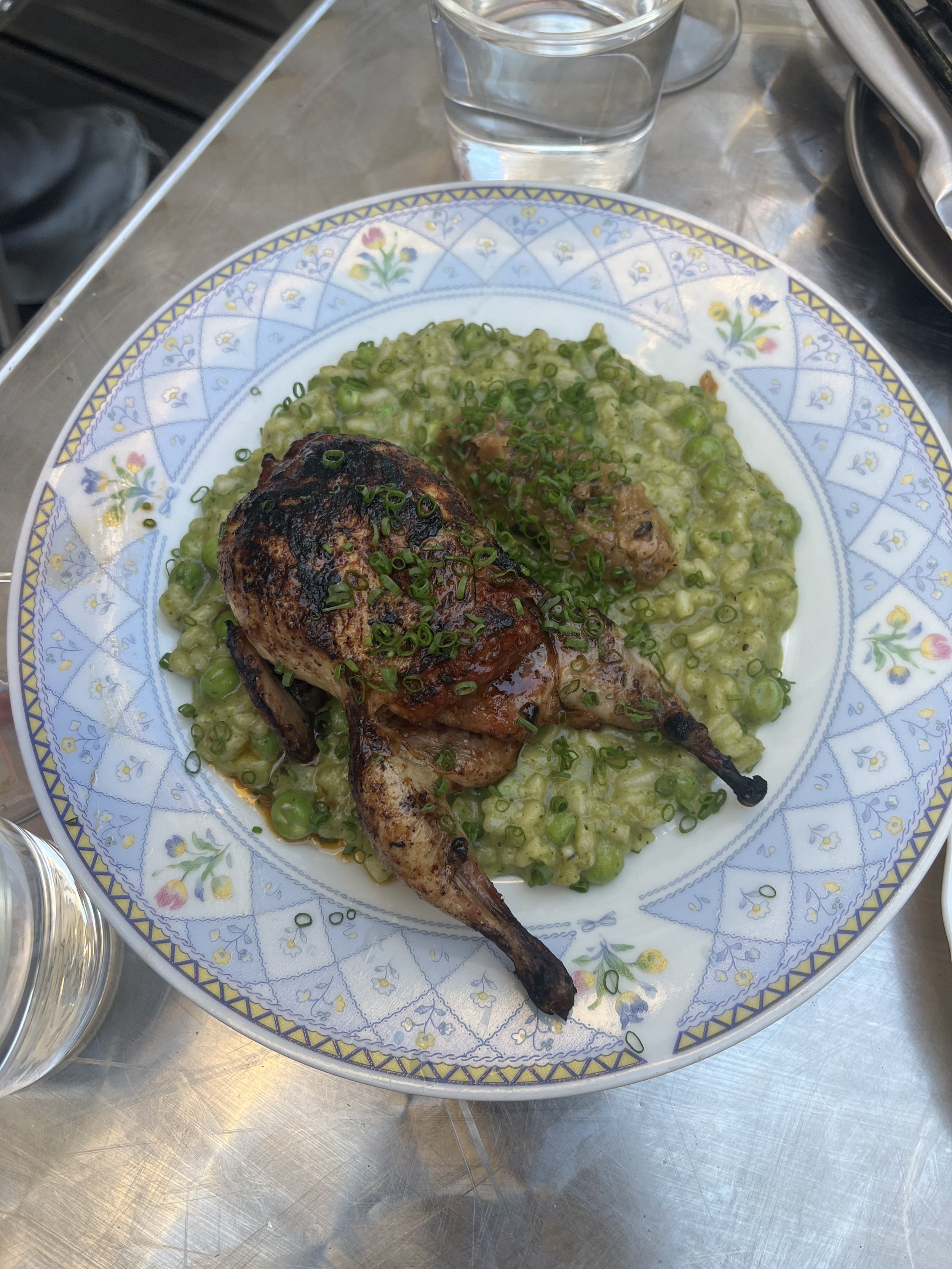
The barbecued quail’s breast had been de-boned, and it was stuffed with “spicy meatball,” which to me read like ground pork with some kind of Vietnamese spices. This little bird was perfectly cooked, and I want to emphasize how difficult it is to do that when it’s stuffed with an entirely different kind of meat—especially that small of a bird. That’s technical cooking. Katy and I were gnawing on these tiny wings and legs, just in awe of how good this whole thing was. The green risotto balanced the heavier flavors of the quail and rounded out the meal.
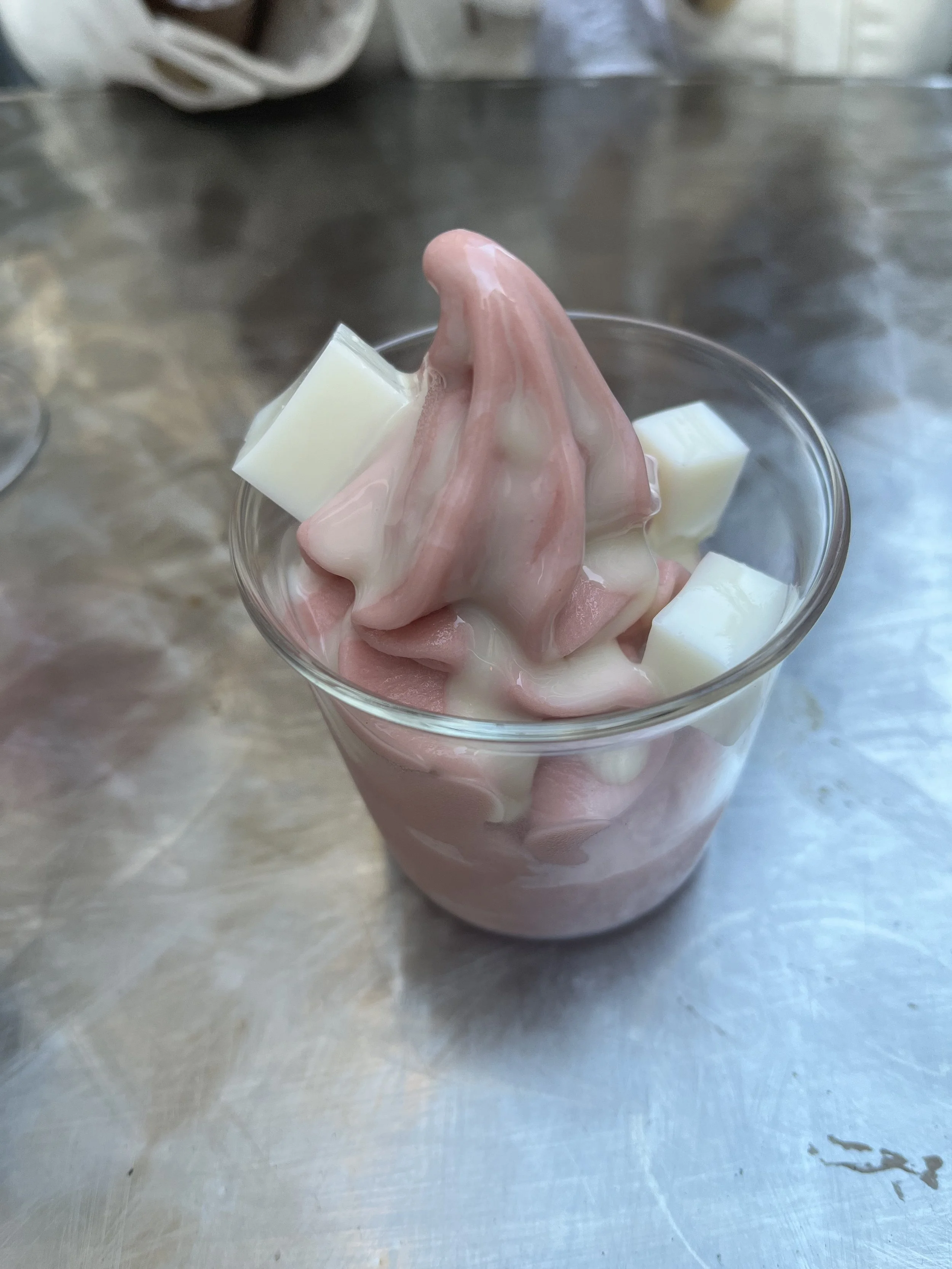
That made five, which led to dessert, which was two more dishes: rhubarb sorbet with milk jelly, and Sichuan-style pavlova with strawberries. Katy and I argued about the rhubarb sorbet. She kept calling it salty, which I wasn’t denying, necessarily, but I think it was far more acidic than it was salty. Delicious, either way.
The pavlova, though. After three bites, I looked at Katy and said, “my tongue’s numb. This has Szechuan peppercorn in it.” The menu confirmed it. Katy once claimed to not like pavlova, but she’s since changed her stance. I don’t know what’s not to like: it’s meringue that’s been baked until crispy. It was topped with fresh strawberries, and strawberry sauce.
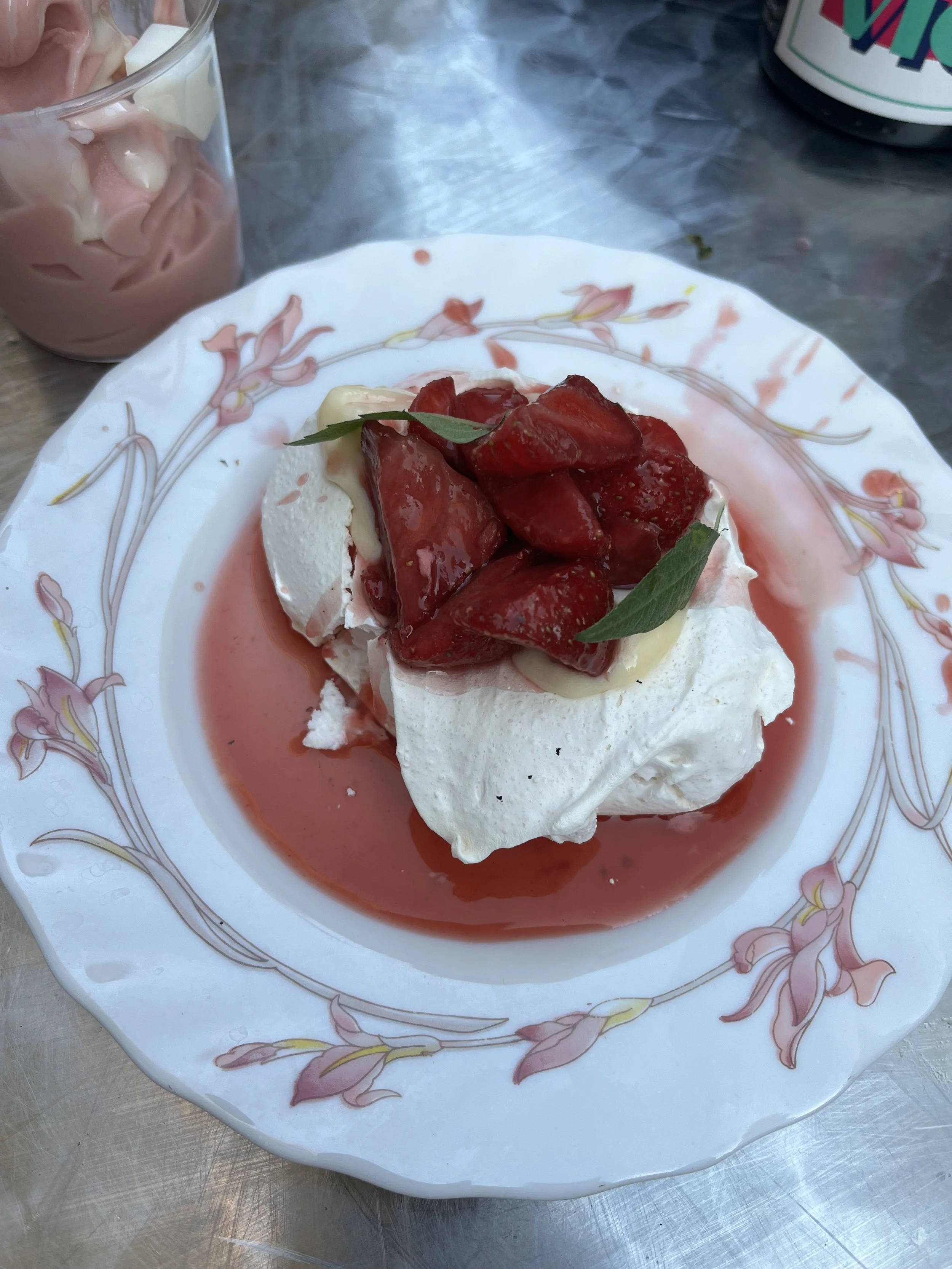
We devoured every bite put in front of us. I’ve said this before, but it’s rare that Katy and I don’t have some kind of “notes” about what we eat: how we would improve it, what we might do differently. Here? No notes. At all. In fact, I wanted to eat more.
My only two negatives weren’t really related to the meal. First, when I went to pay, I was asked to tip. Tipping isn’t part of European culture. I assume it’s because I’m American and they can sense a sucker. I’ve been asked to tip here and there, but it’s often only a couple euro. I haven’t been asked to tip at any nice restaurant—it’s just not done here. That unfortunately soured me at the end.
The other: the entire wine list was natural wine. I’m actually shocked at how much natural wine we’ve found not only in Paris but in France as a whole—and how often we’ve been offered bottles of it when we’ve asked for something traditional. If you’re not familiar, natural wine is made with little in the way of human intervention—the yeast and bacteria that is on the skin of the grapes are what ferment the juice into wine. Whereas traditionally, winemakers are very hands-on in the process. I know the wine industry here is age-old, and there may be places railing against it in whatever ways they can. I try to keep an open mind, but for me, I’m a purist. Give me a fun Burgundy and let me enjoy it.
I suppose rebelling against fine dining also means rebelling against traditional wine tastes, too. Maybe there’s a world where they can live together. Maybe I’ll go looking for that.