“Epicée” - Spicy
Intermediate cuisine is underway. The recipes are already much more…let’s say, palatable…than the fish-filets-stuffed-with-other-fish-mixed-with-cream we were cooking in Basic. They look better, too. More modern plating immediately makes them seem more appetizing. As the chefs say, we eat first with our eyes.
This trimester breaks our cooking (and therefore our studying) up into geographical regions of France. It’s meant to show us how much regional cuisine can vary even in a country as relatively small as this one. We spend more time talking about products that come from the region we’re cooking, why we’re cooking with certain ingredients. It’s respectful of the land, the terroir. It’s also a core component of “eating local,” which in the United States sounds a lot just like a marketing slogan—and also something bad producers and restaurants try to hide behind. But when in Brittany, France’s northwestern-most region which juts out into the Atlantic, why wouldn’t you eat loads and loads of fresh seafood? Which is why we cooked Muniére de coquillages et langoustine aux fettuccine (cockles and langoustine muniére-style with fettuccine).
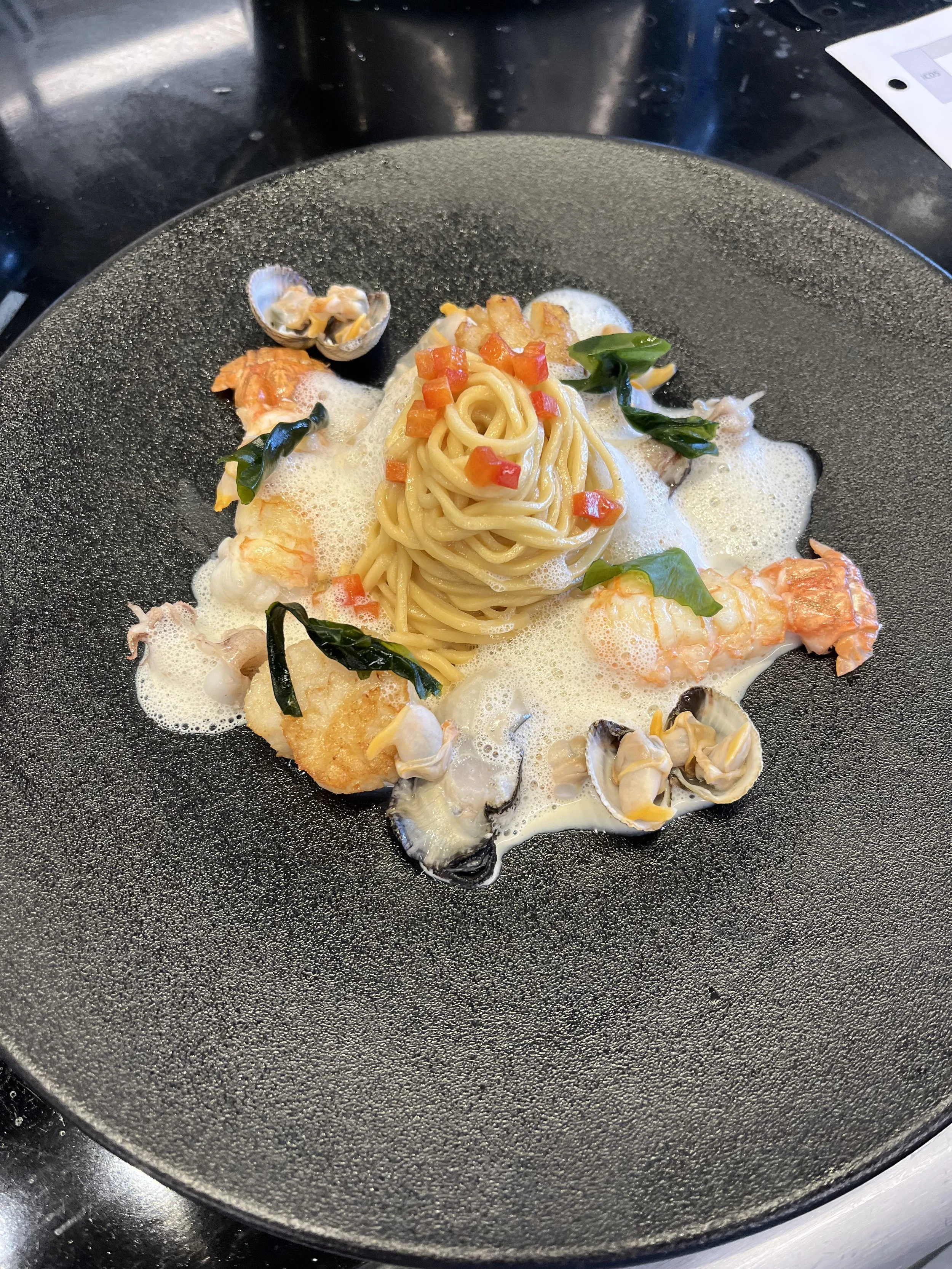
Of course the pasta was made from scratch in class. Otherwise, it was simple and straightforward—it just required a lot of touches, albeit quick ones. Cleaning scallops from the shell (new to me), shelling langoustine (which is basically a small lobster), cleaning and cooking cockles, shucking oysters, and steaming mussels (which turned out to be universally bad and chef instructed us to get rid of them after the kitchen began smelling like rotten seafood). We made a fumet (seafood stock) from the langoustine shells and the beards of the scallops. The final marniére sauce was foamed to suggest the crashing sea waves. A pretty dish, reminiscent of Brittany. I think we’ll have to visit.
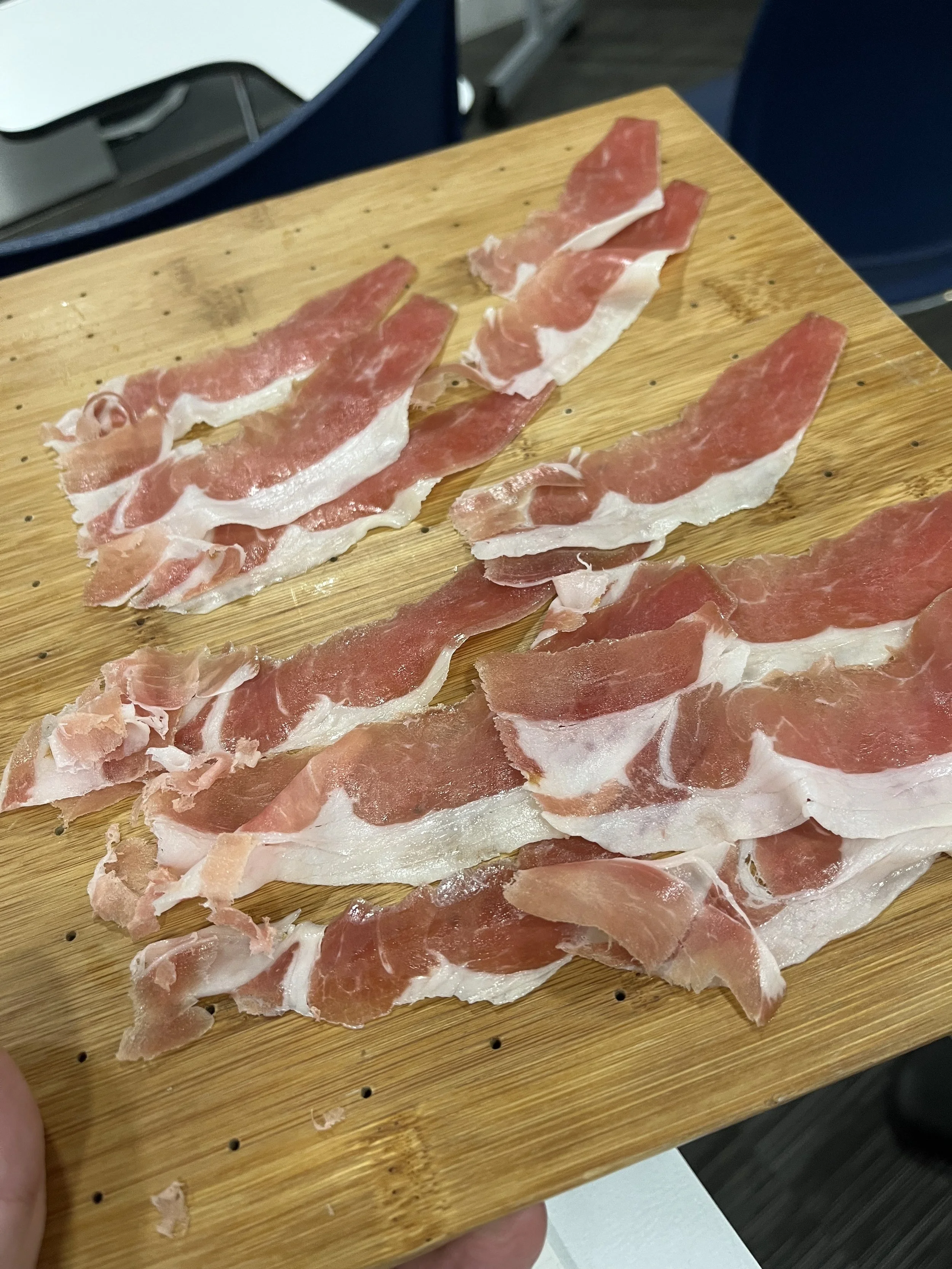
Intermediate is shaping up to be much closer to what I hoped Basic would be. We sit in lectures about food theory. It’s thrilling. In the first, a guest joined us to speak about Italian ingredients from a very French perspective. We tasted 24-month aged Parma ham. Parma ham is one of the few pork products which falls under appellation d'origine protégée, or AOP. It means that Parma ham can only be called as such if it meets certain requirements: 1) geographically, it must be made in the Parma region; 2) it must be made using very specific methods; and 3) it must have a “typical” taste and flavor. If you’re buying something labeled Parma ham, you know what you’re getting. Like how champagne (the wine) can only be made in Champagne (the region). We also tasted four ages of Parmigiano Reggiano: 12 (the “young” one), 24, 36, and 48-month. As the cheese ages, it gets drier, develops entirely new flavors, and crystals form from amino acids. Our guest was happy to proclaim that Parmigiano—while technically Italian—was developed by French monks. Though he also admitted that the French have tried numerous times to recreate such a cheese as Parmigiano, and failed every time. C’est la vie.
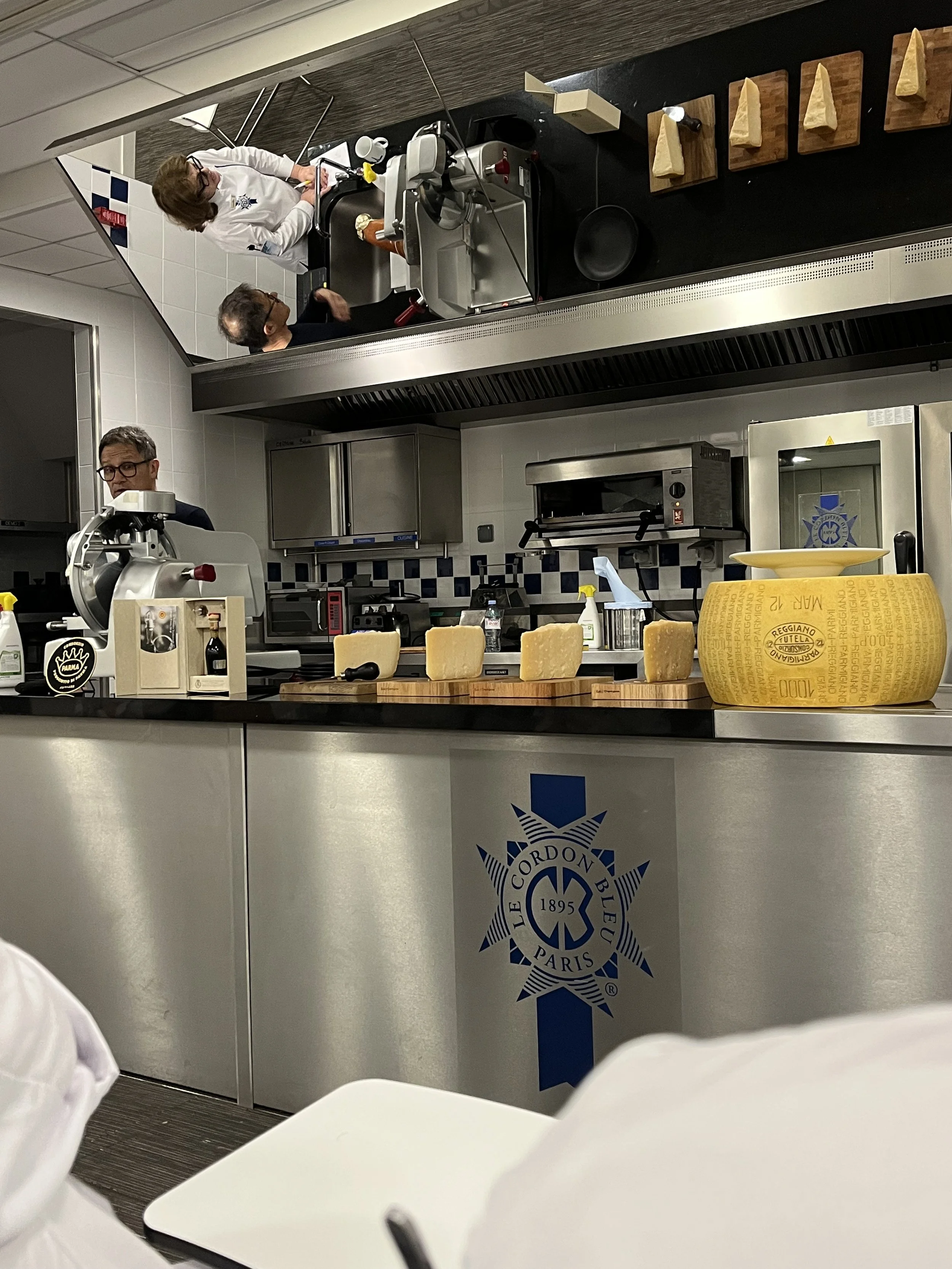
And lest I forget to mention the 25 year old (that’s not a typo) balsamic vinegar we also tasted. Many wineries make balsamic like this and sell it almost at a loss. For them, it’s a point of pride. They make their money on wine. Good for them. I’ll take that loss off their hands.
In France, butchers are “bouchers.” It’s a revered position. A skilled position. It’s a career that often runs in the family. The best bouchers work directly with farmers to designate what will become their meat. They plan for it. They work together with chefs to define the perfect cut of meat for the purpose the chef has in mind, and vice versa.
If you remember in my last newsletter, I talked briefly about the head chef of La Mere Braziere being a meilleur ouvrier de France—the absolute best of the best. We were fortunate to be joined by an MOF boucher. He’s one of only 17 in the country. The man’s father was also an MOF boucher. As is his brother. His name is Romain LeBœuf. Yes, that translates to Romain “Beef.” It’s his real name. Please see the above paragraph about running in the family. And conveniently for me and Katy, his boucherie is around the corner from our apartment.
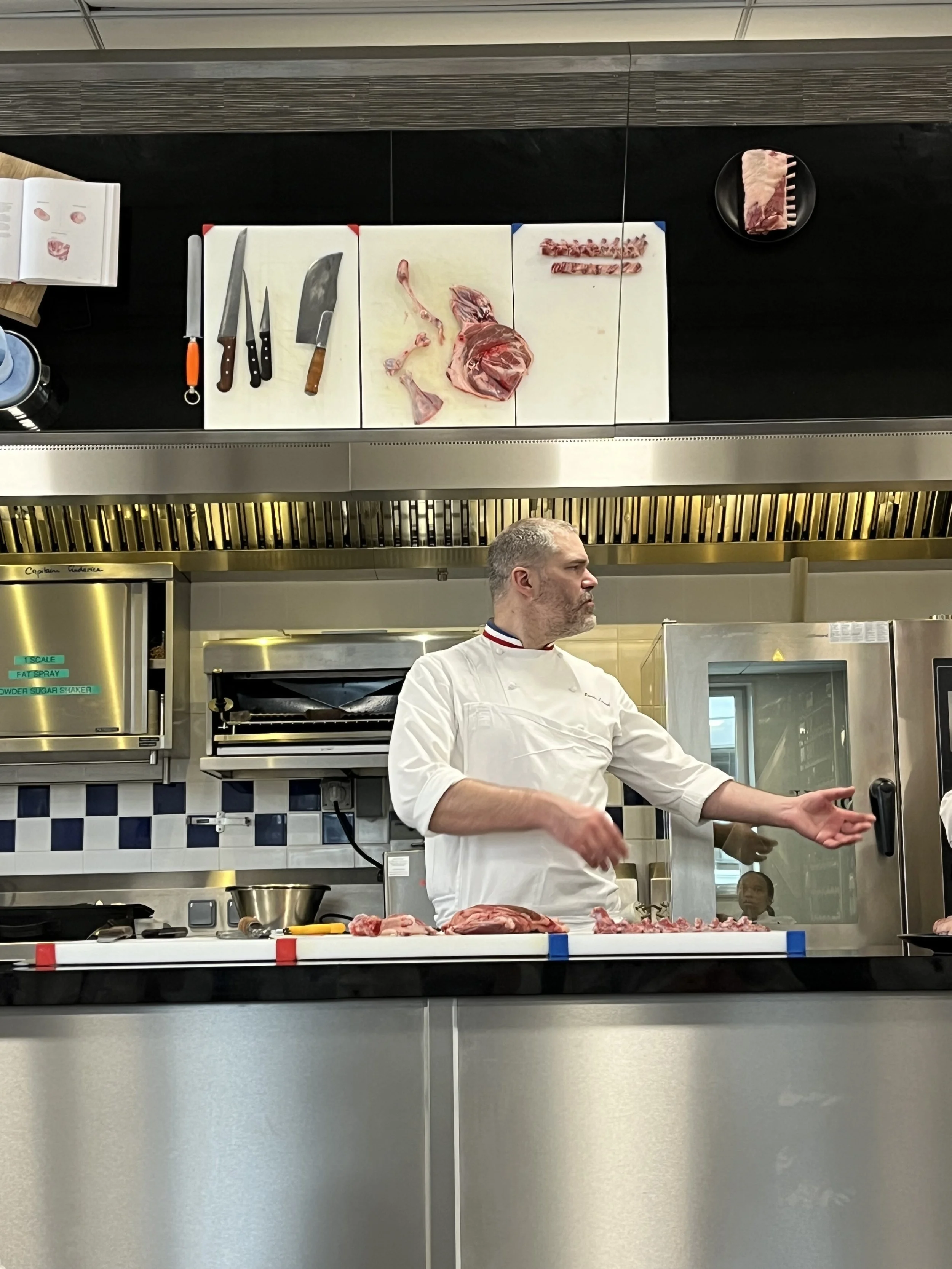
You probably know how satisfying it is to watch someone who has dedicated their entire life to a craft perform that craft. Chef LeBœuf deboned a lamb shoulder, trimmed it of its fat, and strung it together into a beautiful roast. He “frenched” (which means removing meat from a bone, not kissing) a côte de bœuf (think a bone-in ribeye) then removed a nerve from it, then stitched it back together. He took a veal cushion and created two shapes of paupiette (remember when I wrote about doing that?). And he deboned and frenched a rack of lamb.
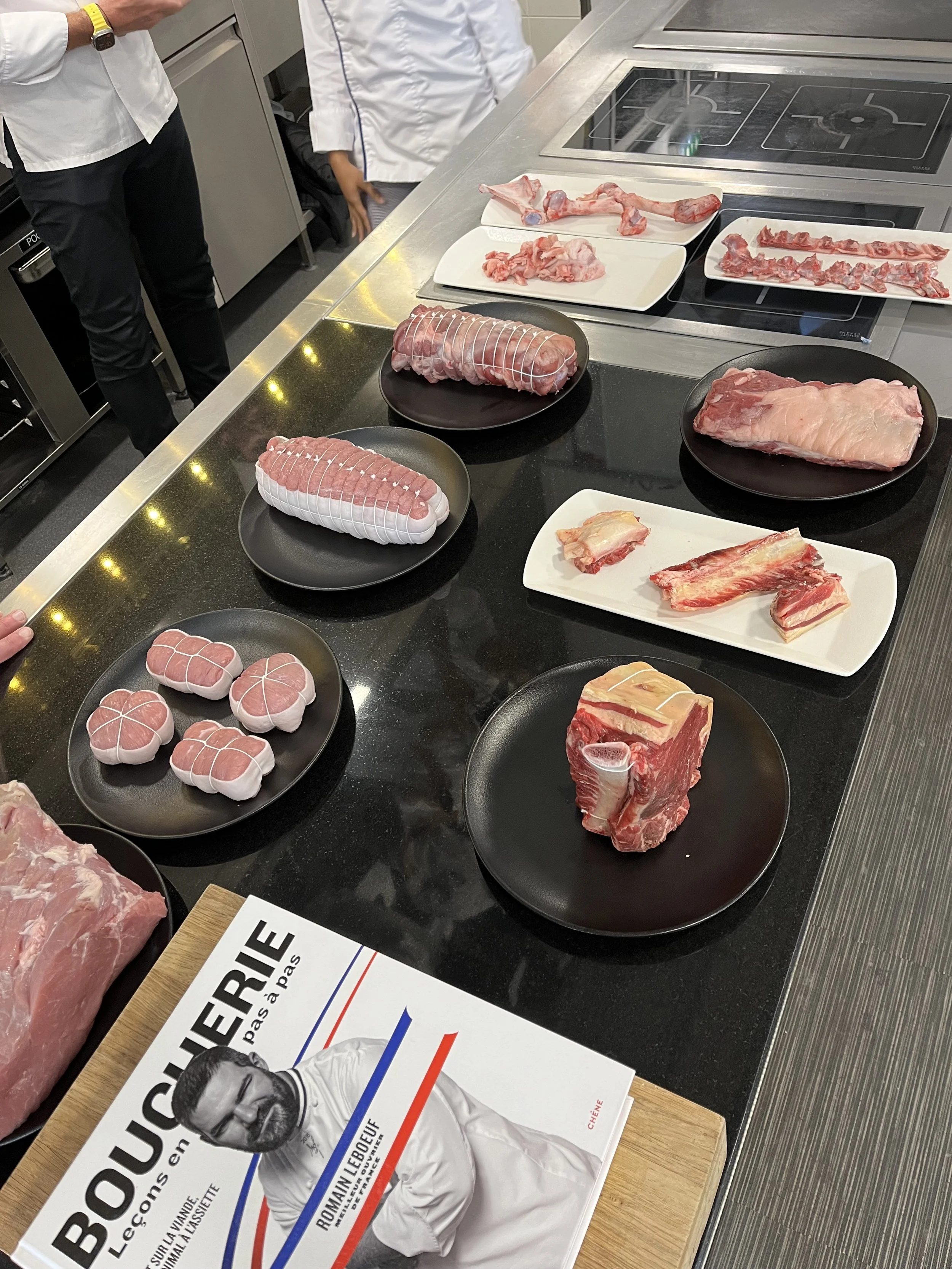
The day before this lecture, we cooked a rack of lamb. We had to french the bones—eight in total. You need to remove all of the meat from the ribs, otherwise it can burn in the oven. It’s an age-old French technique. You scrape and scrape to clean them. You’ve probably seen versions where they put the funny paper chef’s toque-looking things on the ends. They don’t really do that anymore. Regardless, we spent no less than 15 minutes removing and scraping every scrap of meat away from these ribs.
Chef LeBœuf did it in about three minutes. My jaw dropped. This is exactly why I came here.
Auggie bounced back from his first black eye experience. He’s still got a small mark, but there doesn’t seem to be any lasting damage because kids are made of elastic. He keeps growing. Recently, when we got off the elevator (or as he calls it, the “Auggie-roll”) in our apartment building, a woman was waiting for it with her dog. She commented, in French of course, on his very blond hair while looking hard at mine. She asked how old he is… “Quatre?”
“Ah, non. Il a deux ans.”
“DEUX?! Mon dieu!”
“Oui. Il est tres, tres grand.”
He answers questions in full sentences, making him an interviewer’s dream. Do you want some juice? “Yes, I want some juice.” Would you like to go to a park? “Yes, I want go to park.”
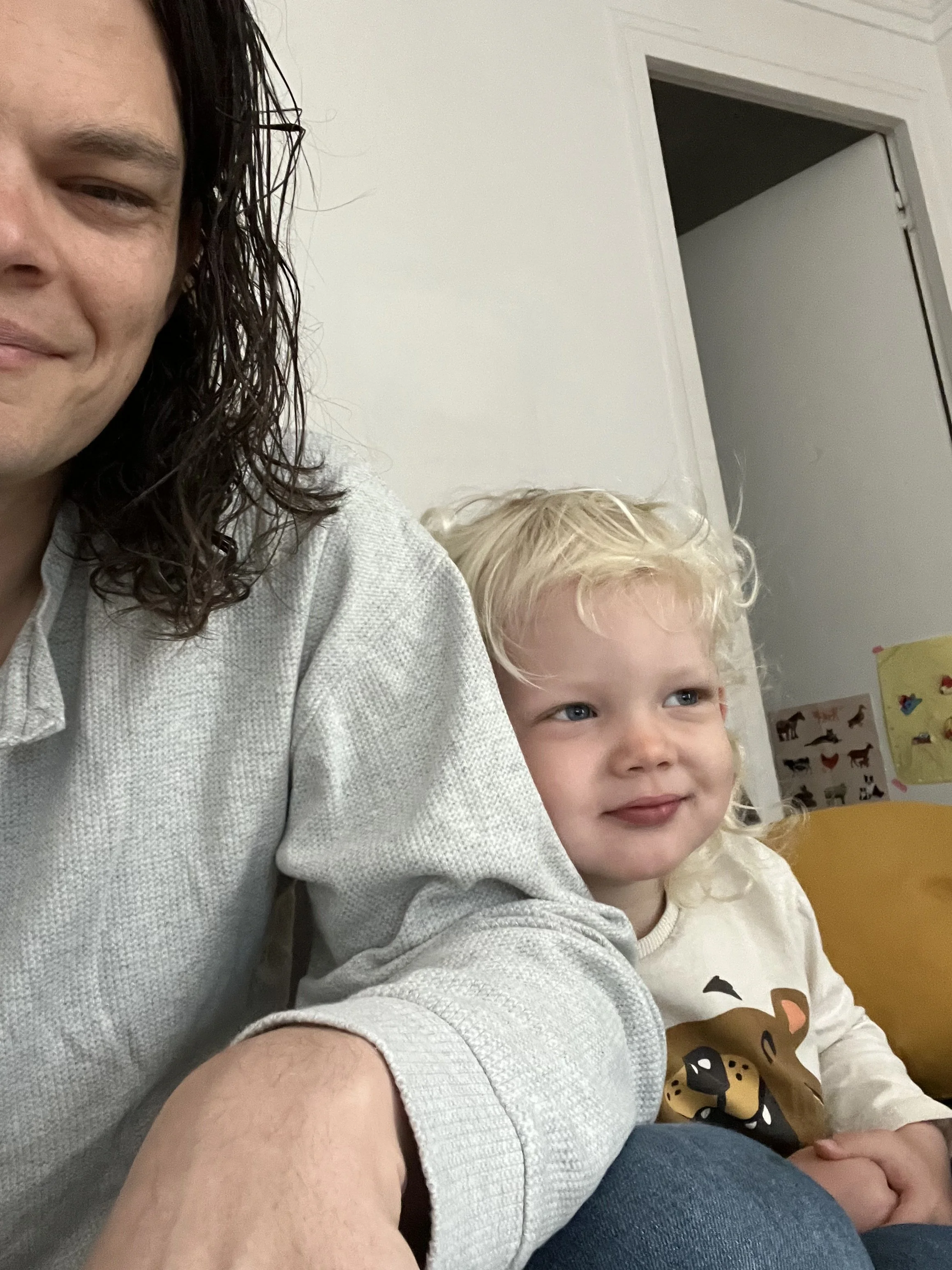
But he has one thing he says that I love the most. We strive to raise a polite child, so we’re constantly suggesting “please” and “thank you.” Recently, to deter him from grunting, yelling, and stomping his feet at us to tell us what he wants, we’ve suggested, “just say ‘help, please!’” He’s taken this and put his own spin on it. Now, when he needs anything at all, he says, “Please help me!” with a twinge of desperation in his voice. It doesn’t matter if he needs a leg up into the chair, can’t figure out how to hold his sandwich, or can’t find a certain toy. Katy says he gets his drama from me. Who’s to say?
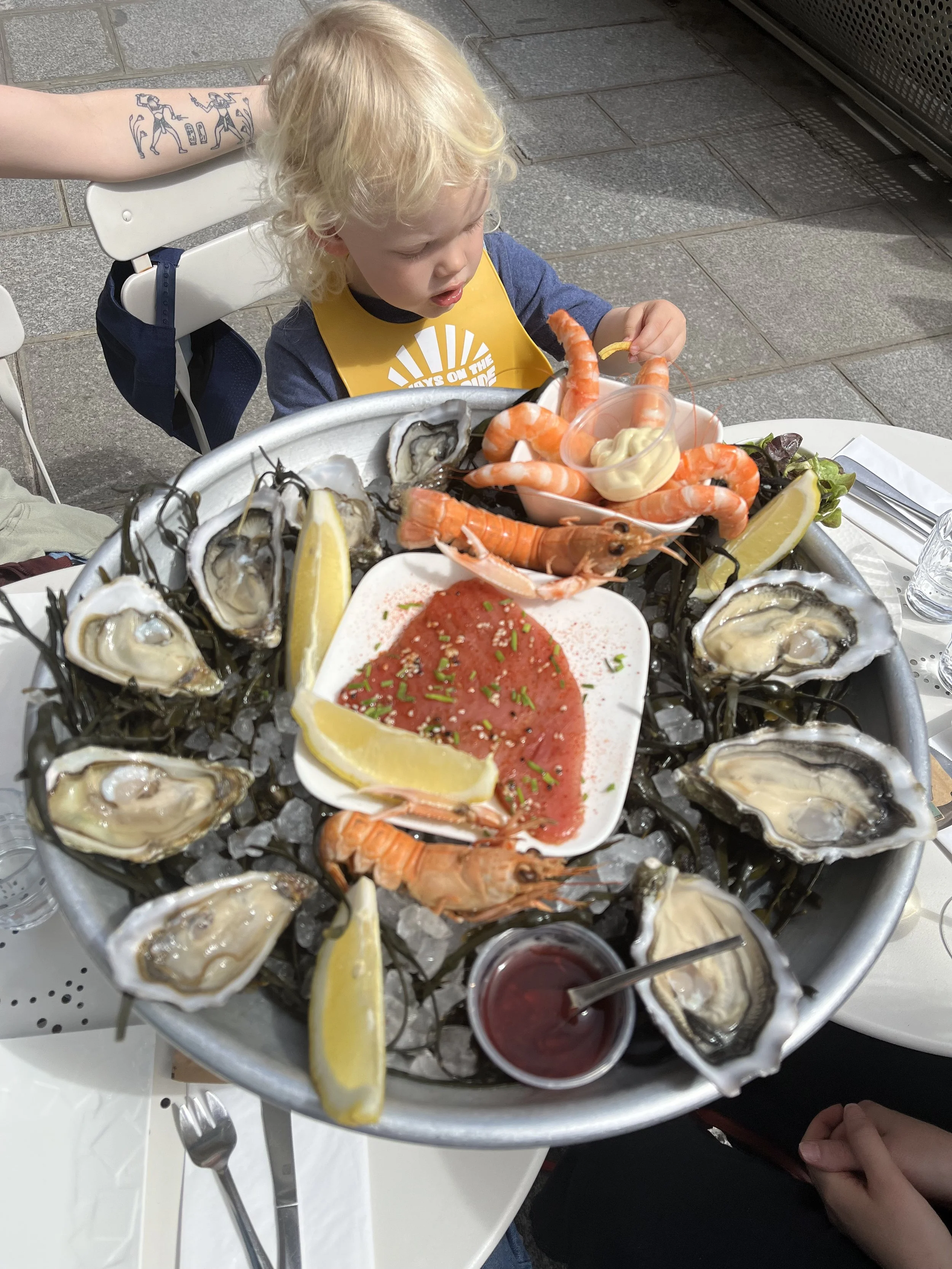
Meanwhile, we’ve begun to have guests and visitors. It’s so nice to see friendly faces from home. It’s giving us a reason to do even more exploring than we already do, try a few restaurants we haven’t tried yet. I took a friend and his son to Bistrot Paul Bert in the 11th, a spot that Anthony Bourdain rightfully lauded. I had the famous filet au poivre, he the “best moules frites [he’s] ever had.” High praise. We took a close friend of Katy’s to Poget & De Witte, the 2025 Medaille D’Or winner for oysters. Katy took her to Chateau Fontainebleu outside the city—a mini Versailles because sometimes when you’re royal you just can’t handle all the opulence of your biggest vacation home. As of this writing, Katy’s on her way to Amsterdam to see yet another friend. She’s on a train, probably reading. I know every jerk who travels to Europe says this, but it really is a shame that rail didn’t catch on in the States.
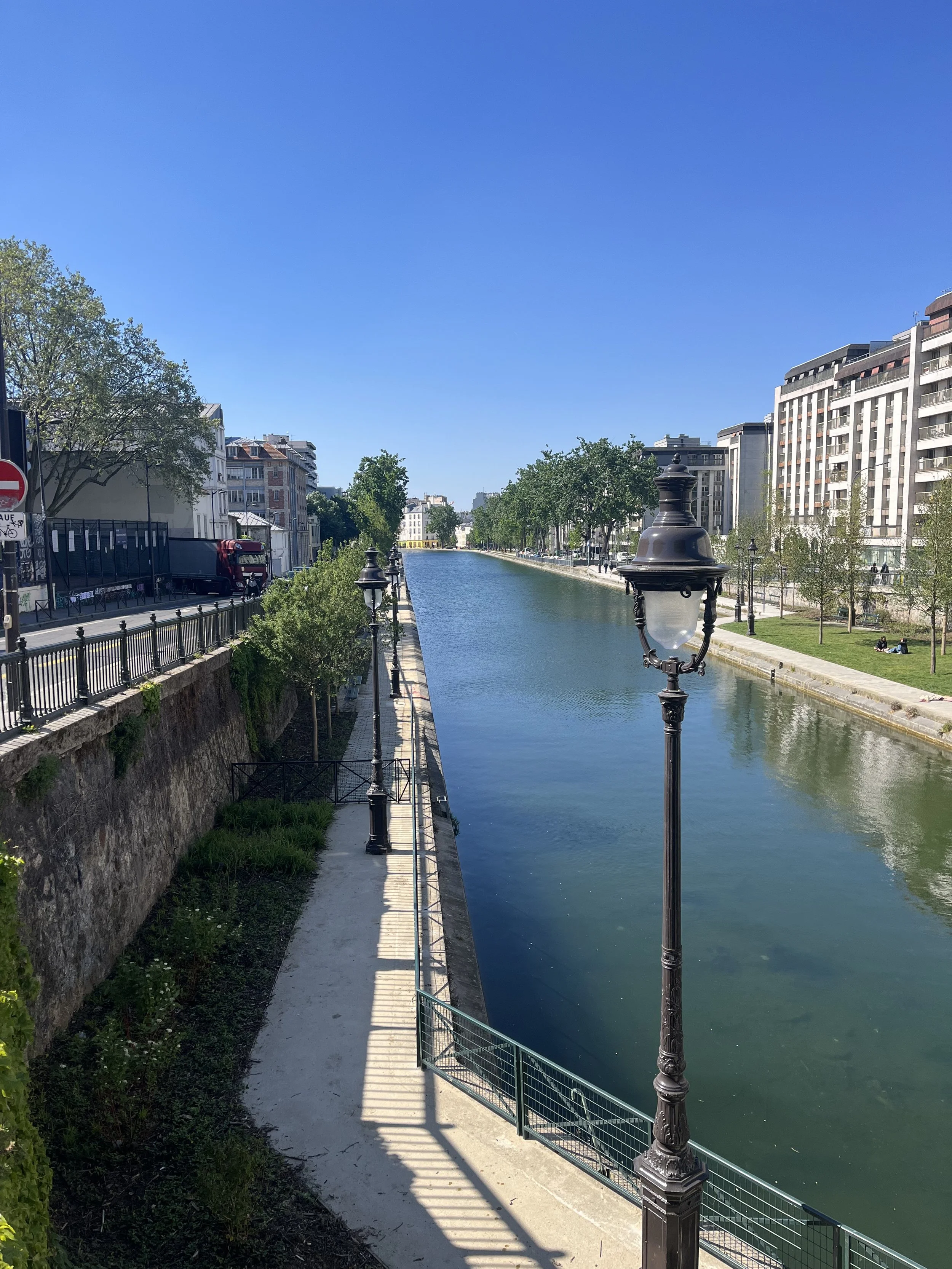
On a day off recently, I walked up and down Canal Saint Martin in the 10th and 11th arrondissements. It’s in what we might call an “up-and-coming” neighborhood. Lots of new restaurants across from lots of old buildings, like a jazz club that’s been around since the early 1900s. It was sunny. Parisians love to lounge on the best of days, but it was packed even at 10:30 on a Tuesday. You can sit right up against the water. It’s nice. I ate a pastry from Du Pain et Des Ideés (“Bread and Ideas,” which might be the best name for a business in history).
I wandered by half a dozen restaurants that had their doors hanging open while the teams did prep. Nothing opens until noon. Paris has plenty of French food, obviously. Every bistrot and brasserie has a take on every classic dish you’ve ever heard of and probably some you haven’t. But Paris is a major metropolitan city, with a lot of food from around the world. Here, near the canal, a Jamaican spot promised a spicy “patty” sandwich, confusingly not made with Jamaican patties but with jerk chicken. Next door was a taco stand that actually smelled legitimate. I know, I couldn’t believe it either. And eventually, I’ll go back and actually try them.
I bided my time by getting a little lost, popped into bookstores that don’t sell books in English, and kept getting hungrier. One thing I haven’t quite gotten used to is the idea of the French lunch—often over an hour, slow and relaxed, two or three courses. If I’m with someone, absolutely. If I’m not, I like to grab a bite and keep walking. Places do sell food to-go (à emporter), but they don’t necessarily like to. I wanted a sandwich, something quick and easy that I could eat on the steps of the Republique monument before heading home.
Down the street, I saw a bánh mì joint that called me in. A bánh mì is a classic Vietnamese sandwich with a lot of ties to French cuisine thanks to a little bit of casual colonialism in the late 1800s. It’s usually some kind of Vietnamese-style protein with pickled carrots, cilantro, and chilis, packed onto a baguette. Fusion food, before fusion became a bad word.
I popped in and the woman behind the counter immediately asked me “sur place ou à emporter?” I answered à emporter and she pegged my bad French immediately and switched to English.
“OK, to go. What you want?” And tapped on a menu taped to a plastic divider separating the kitchen from the dining room. I asked for a bánh mì with porc caramel.
“You want spicy?” I’m not used to getting asked that here. I love spice, I love heat, I love peppers. The French do not. “I…spicy? Yes. Yes, s’il vous plait.”
“How spicy? Medium?”
“Very. I’d like it very spicy.”
“Very spicy?” She shrugged. She yelled something in Vietnamese back to the kitchen. I was excited. Was I about to reach nirvana, finally, here in France? Was I done relying on terrible sriracha and the last dabs of my hot sauce stash I smuggled here from home?
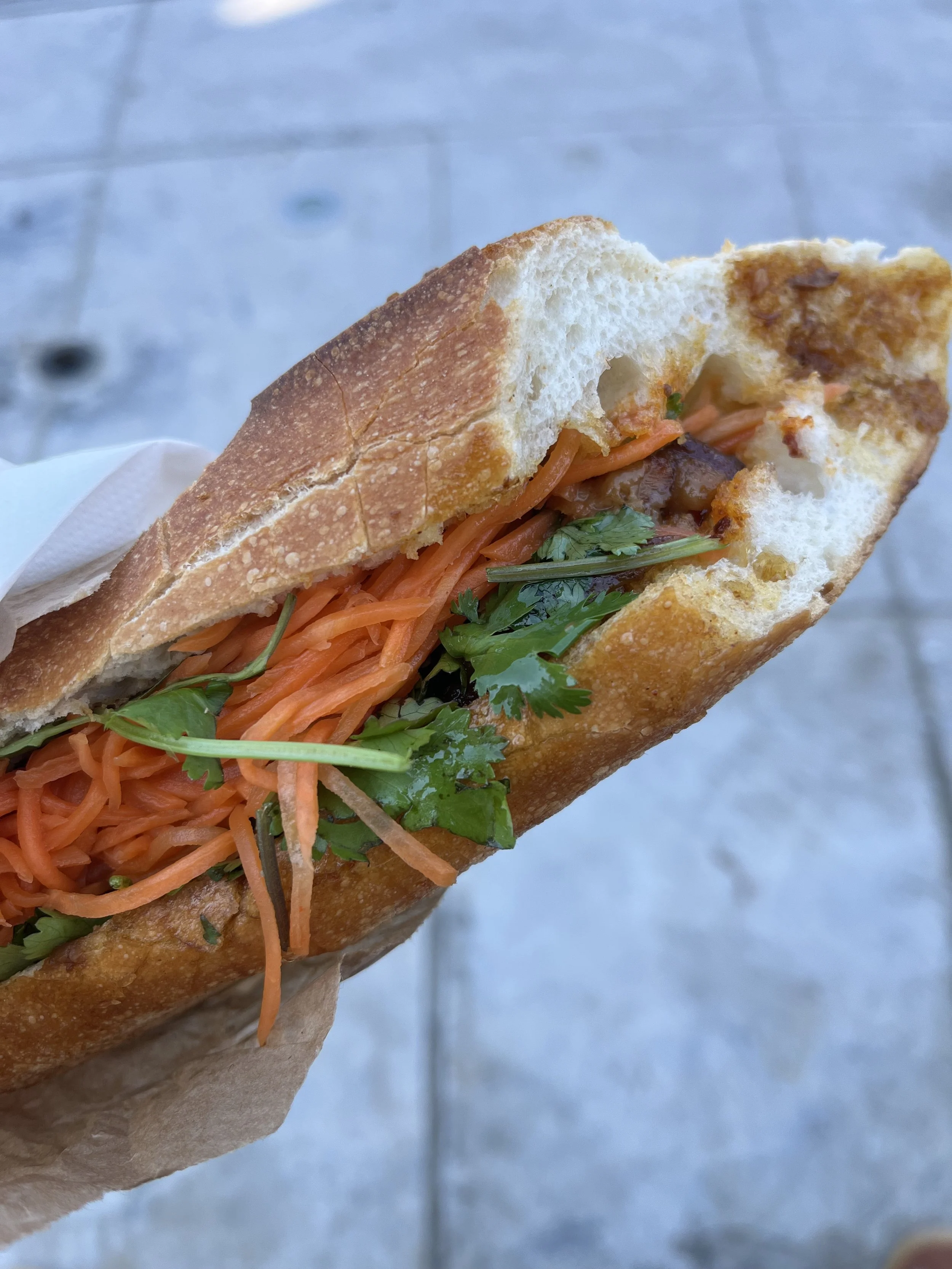
The sandwich was up in less than three minutes. I took it to the square, sat, and when I opened it I could see the chili oil soaked into the bread. Hallelujah. The pork had been braised, then tossed in the sauce caramel—which I’ve written about before, soy-based with a bit of honey or sugar added to caramelize. The carrots were acidic but naturally sweet and absolutely loaded on there. I’m fortunately not of the few who thinks cilantro tastes like soap, so that added just a touch of freshness. And the heat? Sigh. There were a couple of bites that got my attention, but overall it wasn’t very hot. It was, however, full of dark spices that added another element to every bite.
It didn’t light me on fire. But I am still thinking about it several days later.