"Rêves" - Dreams
Paris is empty. It’s a little dream-like, a little eerie, uncanny. The streets are strangely quiet. Shops are shut down, restaurants closed. It would be unsettling if it didn’t happen every year. It’s merely vacances, during which the vast majority of Parisians (and I’m not exaggerating—it’s nearly all of them) take vacation for a month. Yes, a month. The city all but shuts down except for a few touristy hotspots while people primarily head south to take advantage of the sun and ocean. When Katy, Harrison, and I were here in 2022, we unfortunately left Paris to head south around the same time literally every other Parisian did. The traffic was horrendous. Now we’re some of the select and odd few who are still here in our little city which feels even smaller. And I, for my part, am still cooking.

I’ve had two “ateliers” now. These workshops are where we are given a list of ingredients and a handful of techniques to exhibit, and we’re asked to come up with two unique dishes—an entrée and a plat—which we make in a total of four-and-a-half hours. Our dishes aren’t expected to be new or shiny or even overtly creative in any way. They want to see that we can manage our time and still cook something good.
But let’s be honest here. We’re at Le Cordon Bleu, one of the most prestigious and well-known cooking schools in the world. If we’re not here to get creative, then what are we doing?
There are traps that you can fall into when brainstorming a new dish. There probably aren’t many totally “new” dishes under the sun. Unless you’re eating at one of the most cheffy restaurants in the world, everything you see has been done, at least on some level. Molecular gastronomy has come and gone. There are new techniques that allow us to create things in new ways, but for the most part, we stick to tried and true cooking. Good ingredients, good practice, good taste. Balance your salts, your fats, your acids, and your heat (if you’re looking for a new cookbook to help you understand cooking, please grab Salt Fat Acid Heat by Samin Nosrat from your local bookstore or local library but please don’t buy from Amazon).
But new things can happen, which catch on and take the culinary world by storm. Fallow is a restaurant in London which originated a plate called “corn ribs.” All in all it’s not a terribly technical dish: corn-on-the-cob cut into quarters, fried in oil, and seasoned with kombu and Old Bay. Et voila, a new dish. Now, Trader Joe’s offers these things in their frozen aisle. (Thank you, Ryan, for keeping me up-to-date on this food trend.)
With that, I thought you might find it interesting to walk through the process of creating two dishes for an atelier. Allow me to do that, with a little preamble.
The first atelier nearly broke me. I wanted so badly to do something creative, and impressive, and smart, and unlike what anyone else in class might do. In many ways we were boxed in by the techniques we had to show—i.e., boning a chicken and creating a forcemeat from the breast almost necessitated we create a ballotine. However, we had freedom in the other ingredients in our dishes, and in how it was plated.
I was so stressed about these two dishes. I had dreams for a week about cutting crackers from phyllo dough—or worse, forgetting to do so—and I’m not being hyperbolic. Turns out, it was fine. Everything turned out fine. I had plenty of time. All of my techniques were on display. Sure, my farce was “not good,” but that’s ok. That’s what a workshop is about.
Had I sat back and looked at it, I would have realized that this whole thing is based on the creative process—something I’ve used so frequently in the last twenty years, it’s nearly second nature. So with that, here’s how this second round looked.
It starts with brainstorming. In the advertising world, we call it “concepting.” You find the core components of the dish, and think about how they can fit together. There are certain things that must be included (ingredients, techniques, limitations). You look at those first, because you have to. These are the guardrails. They keep your ideas inside the lines.
In the case of this atelier, I had these ingredients which must be included: a chicken, chicken livers, red mullet, cultivated mushrooms, zucchini, fennel, and potatoes. The fish has to be either filleted or butterflied through the backbone. The breasts and thighs must be removed from the chicken. Each recipe must include at least six ingredients (not exclusive to those required). We must create an original sauce or jus. And we must create a farce (the French love their forcemeats) for either the chicken or the fish.
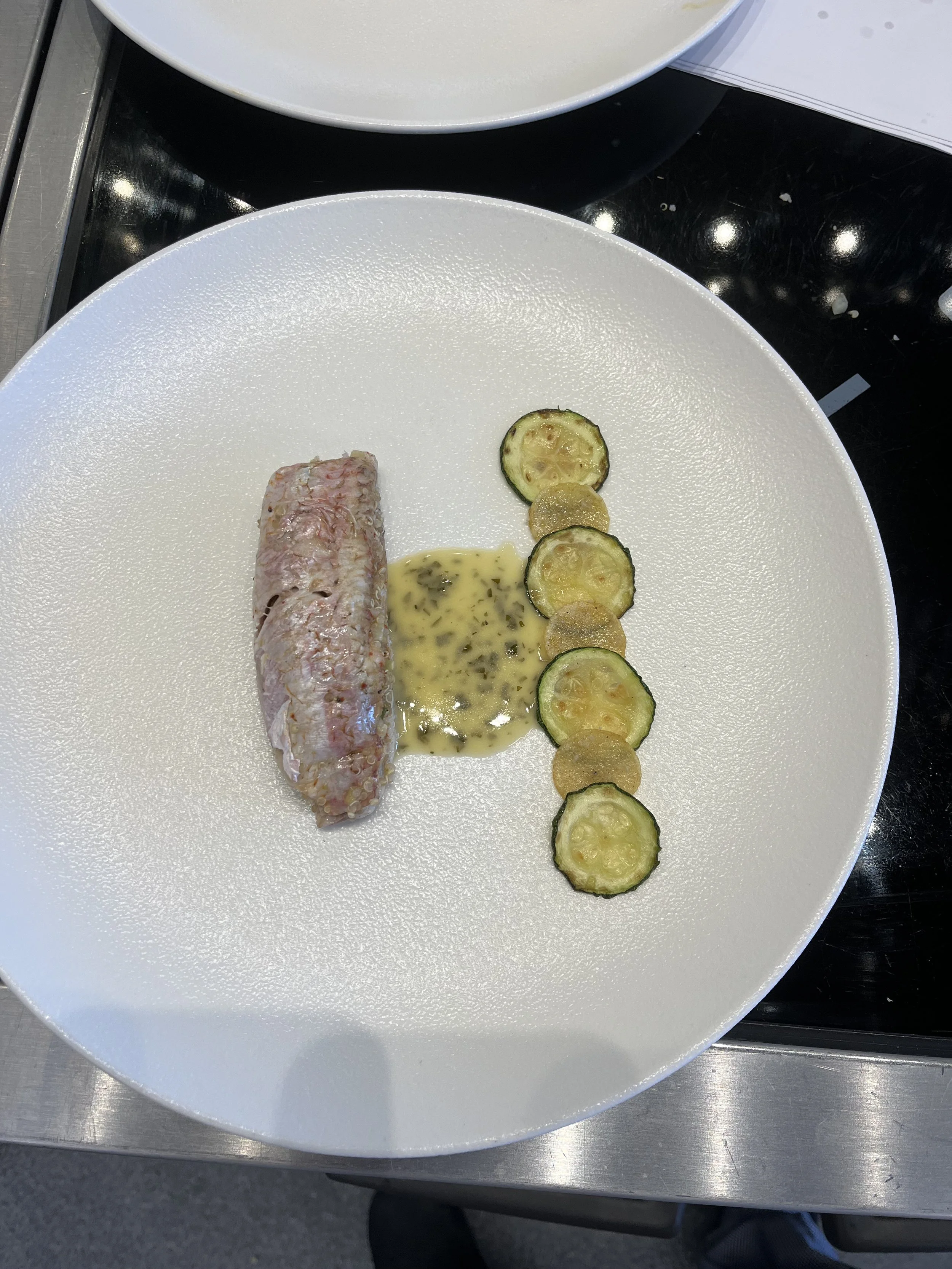
I stuffed a chicken last time, in a ballotine. So it was easy to decide I would stuff the mullet this time. I’m not going to stuff a fish with chicken, so that means I’m looking at the vegetables that are available. There’s zucchini and fennel, both of which I can easily brunoise and then sweat, but I need more. There are a handful of grains on the available ingredients list. Quinoa cooks fast and goes with nearly anything, so it’s natural. Ok, so: red mullet, stuffed with a farce of quinoa, zucchini, and fennel.
Now, how to garnish it? The mullet will be a lovely red, so I’ll want a complementary color to balance it. The zucchini is green, there’s a start. I can slice it thinly on a mandoline and sear it in hot olive oil. Done.
Now a sauce. I love beurre blanc with fish—with anything. I have the ingredients in the list, so, done: beurre blanc, and to personalize it I’ll add a handful of chopped tarragon and let it infuse. Dish 1, done (for now). I do five or six potential sketches for how I might plate it, because we eat first with our eyes and plating it beautifully is almost as important as cooking it well.
Now, for this chicken. I’ll break it down and turn it into…something. Not another ballotine. I don’t have cabbage this time so I can’t make a chou farci (stuffed cabbage). Not enough ingredients for a paupiette. Why don’t I just roast the thing? The roast chicken is a French religion. I can do a jus again, plate the breast and the cuisse (leg and thigh together) perpendicular, plate a light fennel salad under the drumstick. I need to use cultivated mushrooms, so I’ll just slice those thinly and include them in the salad, raw.
OK, now what? I still have to use potatoes. I can cook them fondant (which basically means melted into butter) and plate three of them. Chicken and potatoes are an iconic combo. This is all fine.
Oh those stupid chicken livers. I could put them into my jus but to me, adding liver to a jus doesn’t do good things. You know what we’d do at home? We’d fry the bastards. So that’s what I resolve to do. I’ll make a tempura batter and fry them, then toss them in a bit of lime zest. Plate two per dish. While I’m at it, I’ll fry some shallot rings and sage leaves to garnish the chicken. Et voila, two dishes, done and ready to submit.
But as I’m looking at my sketches, I realize something. One of these is supposed to be an entrée (like an appetizer), and the other a main course. These are two main courses. I could turn these in, but that’s so much work. Back to the drawing board.
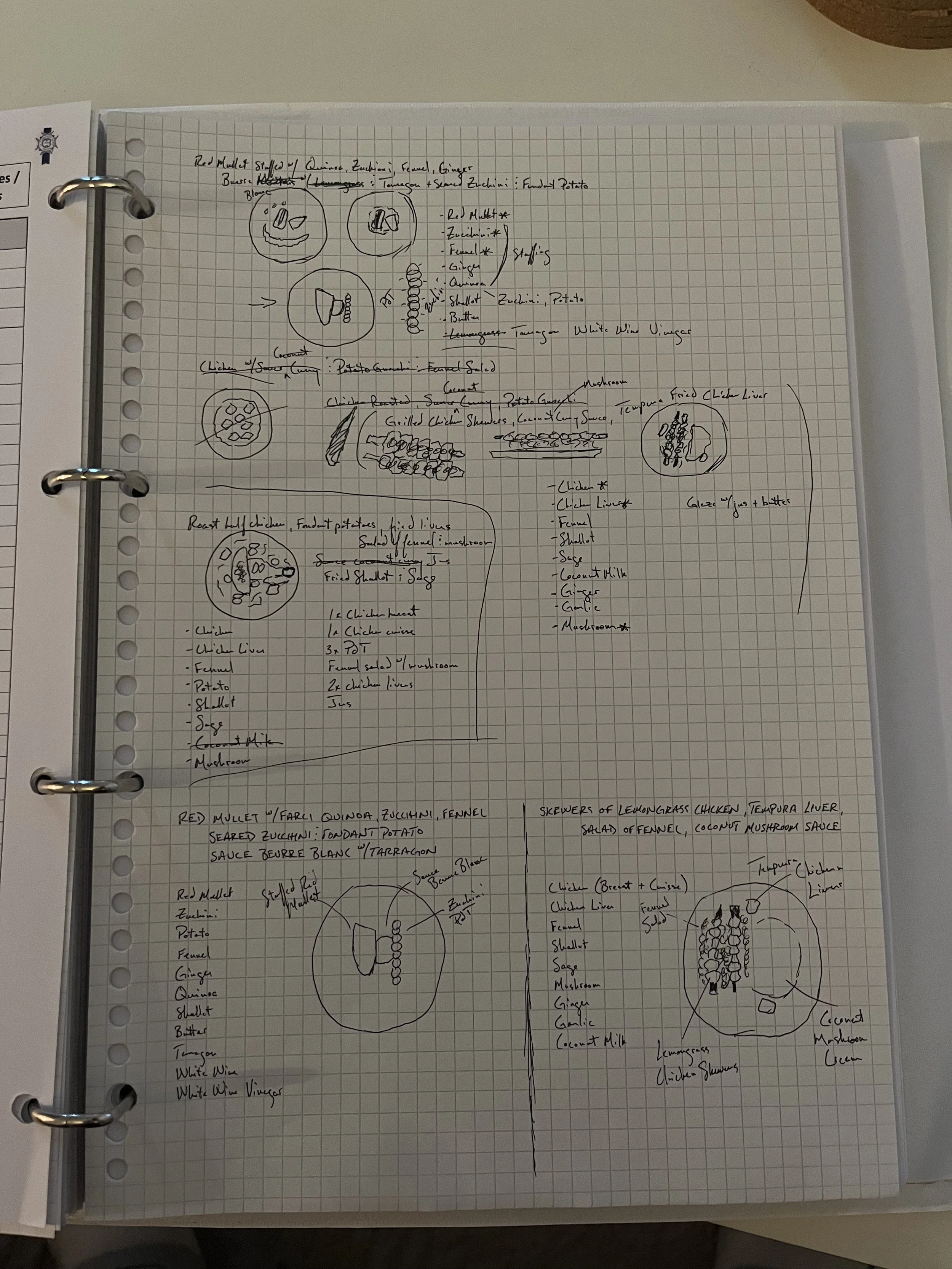
I’m sold on my fish dish as a plat. So what can I do to this chicken to turn it into an entrée? Maybe a karaage? I love fried chicken and would choose it as a final meal. But I can’t just fry a load of chicken and call it done—the chefs will eat me alive over that. Plus I have to do the liver, and I’m set on frying those, and a big load of fried things won’t fly in an atelier.
I have access to coconut milk. OK, curry. But no curry powder. That’s ok, we can work with something. Maybe treat it like a blanquet de veau, but with chicken—a white chicken stew with coconut milk. But now I’m back in main course territory. Wipe the slate, what can I do with chicken?
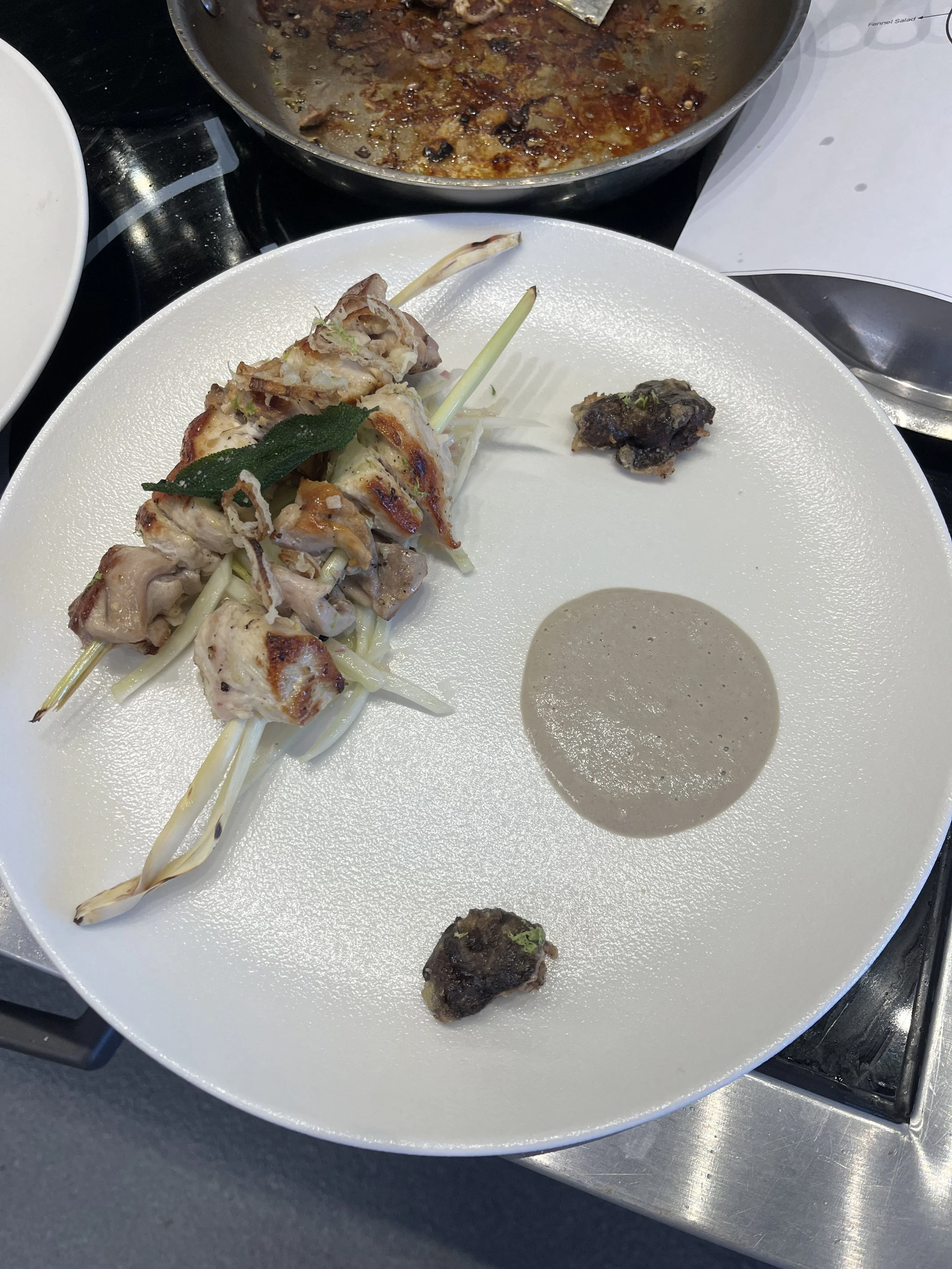
The thread tying these together (and turning them into an entrée) is cutting the chicken into bite-size pieces. I can still do that, but how do I cook them? We have a grill in the kitchen, I can grill them. Ok, skewers. But I won’t have access to skewers…but I do have access to lemongrass, which complements the idea of using coconut milk. I can quarter the lemongrass stalk, skewer the chicken onto it, and marinate it—then it works beautifully when plated. The lemongrass chicken gets plated on top of the fennel/mushroom salad. On the side, a coconut curry sauce (I’ll figure out how to curry it in a bit, the idea is there). Two fried chicken livers, done.
But what about the stupid potatoes that I have to use? I’m not going to mash them, that’s too easy. And now they don’t go well with my skewers. Which means I need to incorporate them into my mullet dish. Where? Not in the farce—too dense. But with the zucchini garnish—that can work. Two circular vegetables, both cooked golden, alternating in green and white next to the orange/red of the fish? Beautiful. I sketch it out. All set.
I find Katy to bounce ideas off of her, as I do with most things in life. She nods throughout my mullet dish, says, “sounds yummy,” offers a couple small ideas for plating and we’re good. I tell her the chicken skewers idea and when I get to the fennel/mushroom salad she says, “the mushroom feels like a cop out.” No, it’s not. I mean, I can sweat it if I need to, to do something to it. But the white will contrast against the green of the fennel. It’ll work. “I don’t think it will. I think it’s forced.” I get frustrated because I know she’s right.
So where do I put these mushrooms? I could duxelles, but I did that last time—and anyway, where do I put them? I could add them to the farce but there’s no need for that. I could do a mushroom pan sauce to glaze the chicken skewers, but that’s not the kind of dish I’m going for there. I start to think about flavor. Mushrooms are loaded with umami—the kind of savory flavor you get from ingredients like soy sauce or cooked tomatoes. It tastes “meaty” but isn’t, at least not always. And then I think to what’s missing from my dishes: I never figured out how to curry my coconut sauce which will plate next to my chicken. That’s it. I’ll quickly cook the mushrooms to release some of their water and begin to dry them, which concentrates the umami flavor. Then add the coconut milk and simmer, and blend it all up. Boom. Sauce.
Unfortunately, a core part of the creative process is failure. And that’s generally how I would describe my second atelier. My plat was fine, but not creative enough. My zucchini and potato didn’t show enough height or technique, so Chef suggested a handful of ways I could add both should I make this plate again in the future. And for all the times I have made fantastic beurre blanc in my tiny little apartment with mediocre ingredients and half-broken tools, the one time I try to make it in an environment in which I’m being graded, it fails spectacularly with entirely too much liquid.
For my entrée, Chef was too flabbergasted by it to offer any creative feedback—essentially, were I to make it again, it would mean starting over from scratch. The notes were, in short: a) it was much too large for an entrée, which I think I knew, and made a joke about American portions when his eyes bugged out; b) difficult to thread onto the lemongrass “skewers,” which slowed me down unnecessarily; c) the chicken was exceptionally dry; d) the fennel salad was underseasoned (a point with which I disagree); e) the chicken livers did not take to the tempura batter well, and dried out fast upon hitting the oil (I should have breaded and fried them traditionally, but even still, Chef said just frying the thing didn’t show enough technique—however, on that point, I would argue that they have taught us regularly that random little pops of something fried can and should be thrown on a plate just to add something. The number of times I’ve been ready to plate an already complex dish and realized I had to whip up a tempura batter to fry two stupid black olives….
And to that final point, Superior Cuisine has had more than a few head-scratching moments. Recently, we made a dish called cromesquis. They are a breaded-and-fried thing, differing from a croquette in that they’re something stuffed with something else. Our recipe was for a red Port wine gelée cromesquis stuffed with cubes of foie gras. In demo, even Chef said that if he were to go to a restaurant, he wouldn’t order these things. And I haven’t seen a single one (of any kind) on any menu of any restaurant we’ve visited. For whatever it’s worth, I have to admit they were tasty.
The problem for me came in the cooking. Despite nailing the texture of the gelée, very carefully cutting the cubes of foie into the right sizes, and then cutting and breading the shapes of gelée cubes perfectly, they didn’t cook well. As I stood in front of the fryer, Chef walked up to me and said, “No more than 10 seconds.” Which makes sense. Do you know what happens to gelée when you drop it into 180-degree-Celcius (356-degree-Fahrenheit) oil? It liquifies. I cooked the cromesquis for 10 seconds, then plated them and delivered them to Chef.
“They’re undercooked.” I’m sorry, what did you say? He had me press on it, and yes, it was certainly undercooked. But the gel had turned back to Port and cooking any longer would have made them disintegrate. (What I should have done is fried for 10 seconds, popped them into the blast chiller to quickly freeze them and reset the gel, then fried again for another eight seconds for color.)
I’m more than halfway done with Superior Cuisine. It’s nearly over. The whole thing. I’ve learned so much, come so far, and am suddenly a lot more comfortable doing my thing when I’m cooking. When we made duck breast recently, I absolutely screwed up my sauce. It was an orange caramel gastrique and it was so purely sweet I knew that Chef would mock-gag when he tried it. I couldn’t serve it to him, so I wanted to fix it. I started by adding more veal stock, and a little water in order to balance the sweetness with something savory. That didn’t land, because a gastrique is a kind of “sweet-and-sour” sauce—a blend of sugar and vinegar. So next came more sherry vinegar, a serious punch of it. The flavor was closer, but with all the new liquid my consistency was off. So I then reduced it to find the correct consistency again. Much, much better. This, I could serve. And I did. When Chef tried it, he squinted his eyes, looking for something, and finally said, “The sauce is good. For me, it could have a bit more vinegar.” Which means my gut was right.
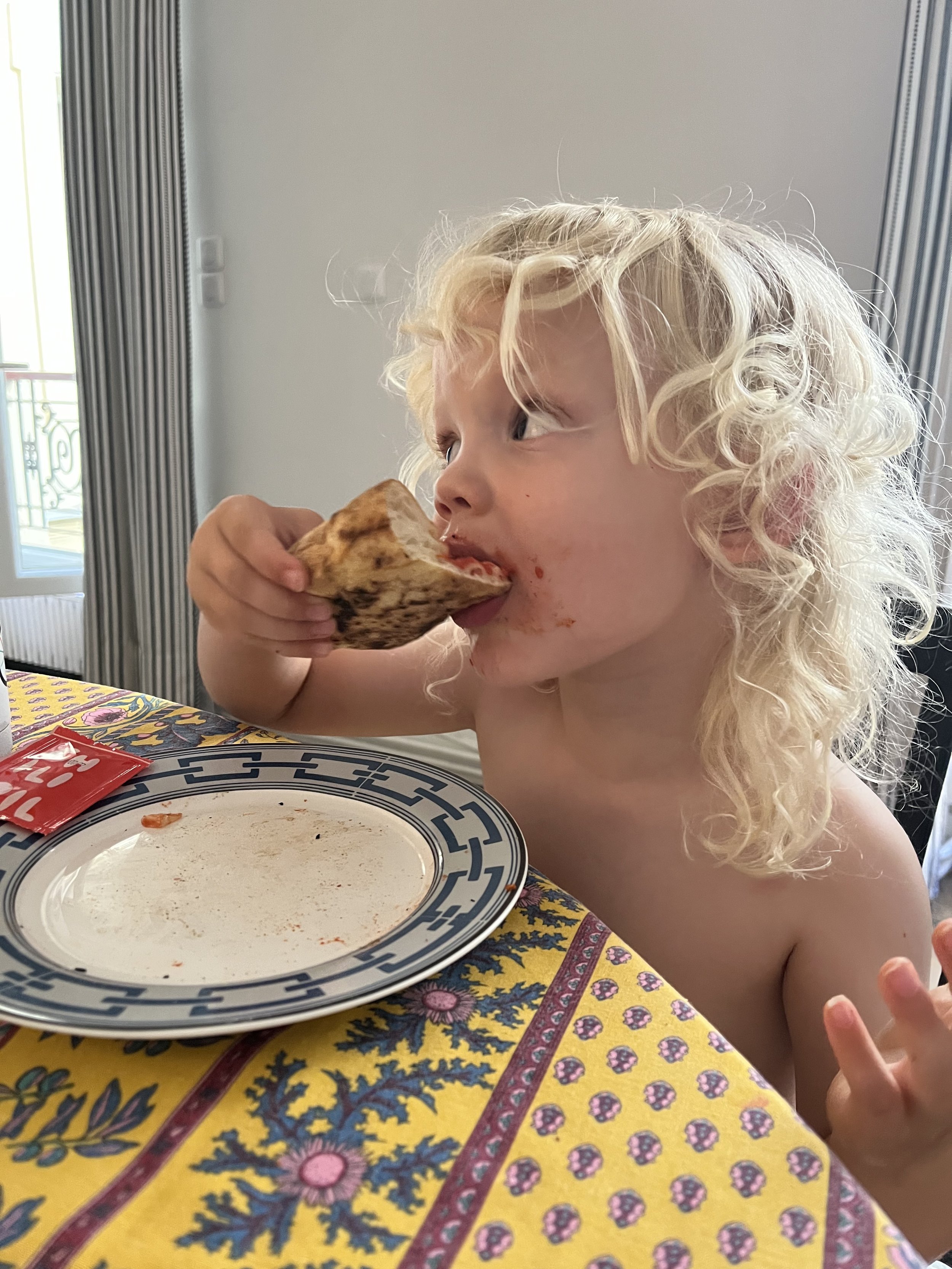
Auggie is in the thick of potty training. It’s trying the patience of the entire family. We’re doing the “stay-naked-most-of-the-time” method. He’s increasingly successful, impressively so. He’s also pooped once on the kitchen floor. The more we’ve talked to people, the more we’ve heard this method hasn’t been successful for most of the families who have tried it. And if nothing else, the amount of stress and tension it’s putting on all of us isn’t making it any easier on Aug. He has to learn before he starts in school once we’re back stateside in October. Until then, we’ll always have a spare pair of shorts.
For as much as I worried about moving here, it’s worse when I think about moving home. For me: outside a beautiful creative bubble where I can cook and learn and have constant new experiences. For Katy: who has to dive back into studying for the bar exam.
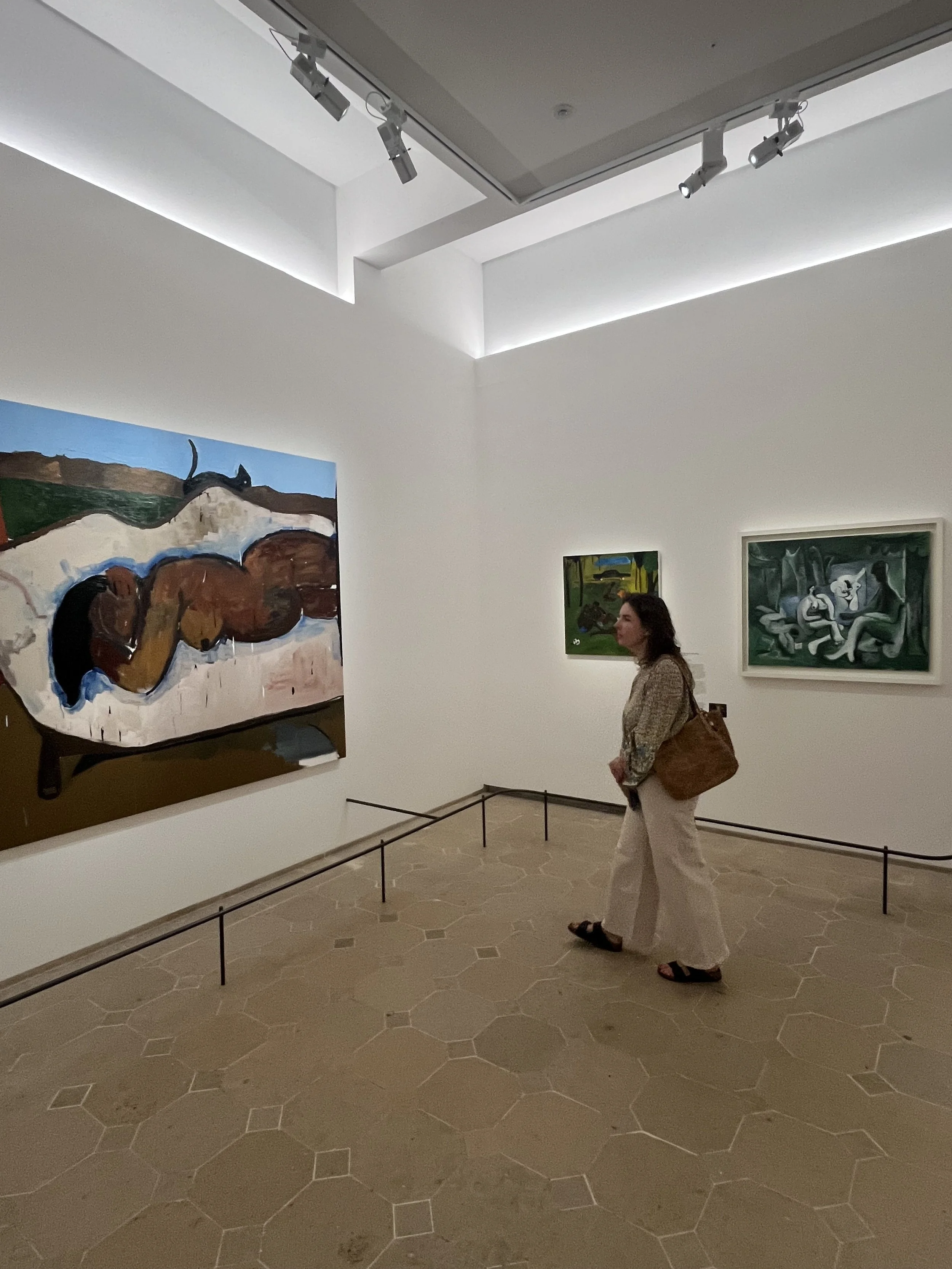
I dislike it most for Auggie. If you remember, when we left I was worried about taking him away from his home, day care, friends, and toys. It’s going to be quite an adjustment to take him back to Indiana where there are no trains, very few buses, and parks that are much more sporadic and less lively than the literal dozen within walking distance of our Paris apartment. I know he’ll thrive in the same way he did moving here—kids are resilient, isn’t that what we say? He’ll have his yard, his neighbors, a new school which I know he’ll love. But it might break my heart the first time he asks to go ride the Metro.

Before we leave, Auggie will get to have an Auggie Day—or what some parents I think call “yes days.” He can ride the metro as long as he wants. We’ll go to park after park after park. He can ride the carousel as many times as he wants. Maybe pizza for lunch (his favorite) and steak frites for dinner. It will be Auggie’s last hurrah in September before we take our final trips, pack up our little apartment, and move back home to continue our lives.
Dreams are funny, aren’t they? Harrison, who took up nearly 100% of my life when he was alive, has appeared in my dreams exactly once that I can remember. I got to pick him up and hold him, call him “Big Wubs” like I used to. It was several months after he died.

The other night, I had a dream of my father, the only one since his passing. I was FaceTiming with my parents. My mom held the phone, and I saw my dad shuffling up behind her leaning on his cane. I didn’t talk to him. Just watched him excitedly limping up to talk to me again. The call failed, which is fitting, because I woke up not long after. C’est la vie.
I’m not one to wax on about dreams—I’m not sure there’s a ton of hidden meaning in them, subconscious or otherwise. But the way we talk about dreams isn’t exclusive to our sleep. They’re just the things we want and hope to accomplish. And that has me thinking a lot more about coming back to the states and what happens then. The chefs and my classmates at school keep asking what I’m doing when I move home. So many of them will be moving to restaurants, Michelin-starred and otherwise. There are certainly some restaurants in Indy I’ll try to get a gig at, to get some experience, before I open my own place. That last bit, my own place, is the dream I’m talking about. It’s going to look something like this:
It will be a bookstore in Indy that focuses on cookbooks and food writing. An entire shop, dedicated to livres de cuisine. From basic cooking to the most advanced techniques. Hard to find copies. Books imported from around the world. Attached will be a kitchen, where I will sometimes host cooking classes which will cover everything from the classic poulet rôti to modern gastronomic techniques. I’m hoping to host chefs from around Indianapolis (and eventually, the midwest) to teach their cuisine. Come and learn a style of cooking completely foreign to you, or just something you’ve always been interested in and want more than a YouTube demo to cook it.
As a bookstore, we’ll host cookbook authors on tour so they’ll stop skipping the midwest. Maybe they’ll do demos, or at least do a little Q&A with guests, and sign copies of their books. They’ll get to see Indianapolis and see the potential in the area, maybe invest in our food scene, elevate it, bring it up to snuff with Chicago, Cincinnati, Detroit.
And most importantly, I will cook. Not every night, far from it—I don’t want to deal with those hours at my age. But for special events. Small dinners, for 15-20 people. Themed maybe around books: imagine a classic, seven-course French dinner designed around Mastering the Art of French Cooking by Julia Child. Or something grander: a 15-course gastronomic tour built on the prolific food writings of Jim Harrison, paired with his favorite wines—including the revered Domaine Tempier Bandol.
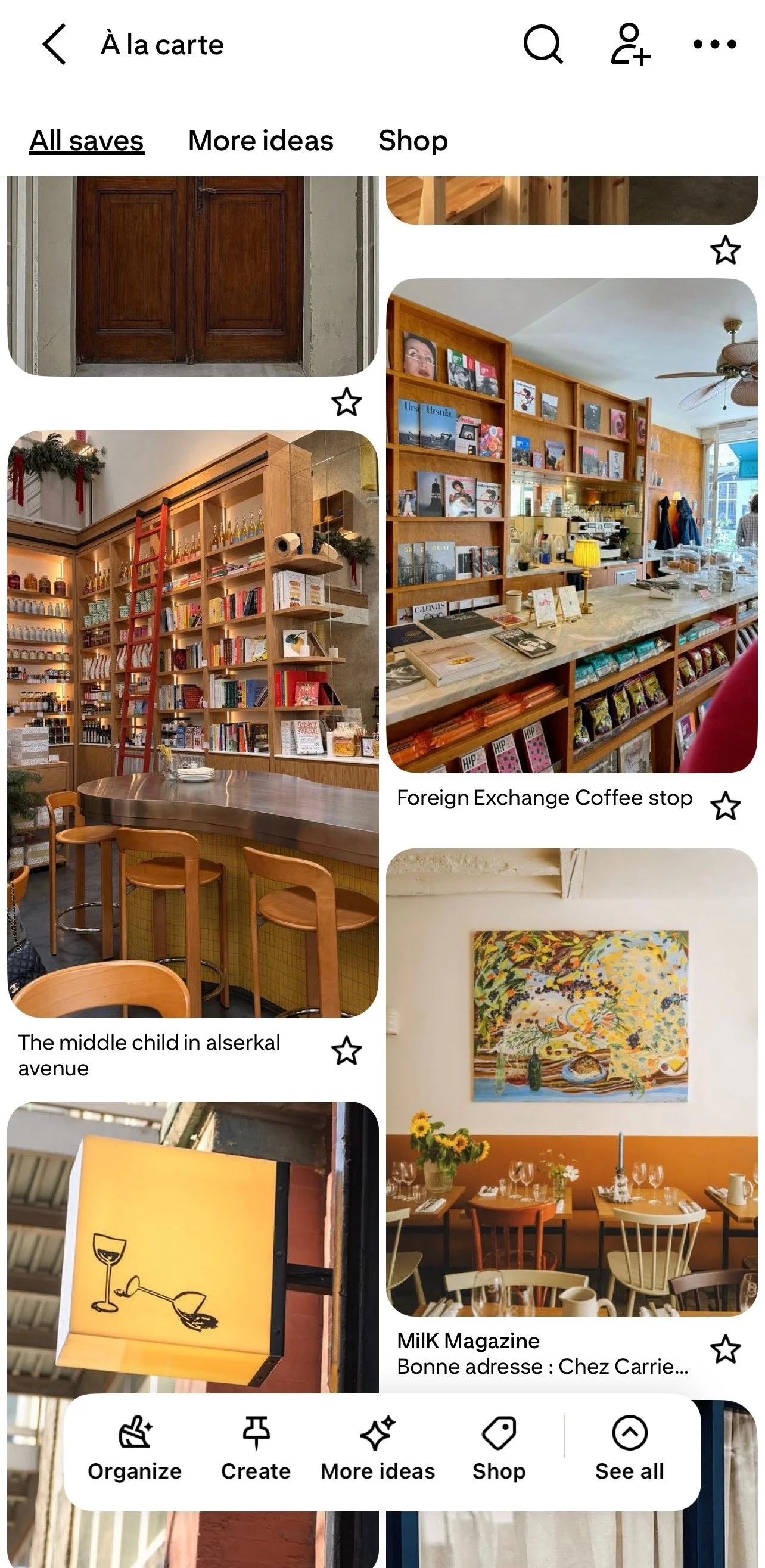
That’s the dream. I haven’t shared that very openly, especially not with all the 150+ of you who may read this. I’ll hit the ground running when I’m back. Katy has a nicely curated Pinterest board for vibes and design. I’ve got taglines rolling around my head, logo and brand ideas. Everyone I’ve spoken to, from chefs to classmates to friends and family, like the concept. If anything, I worry that maybe Indianapolis isn’t quite the right market for it. But that’s part of the idea—maybe it just needs a little more savoir faire to get there. And where better to spark curiosity and feed the mind than inside a book?
Alongside that, of course, I intend to keep writing about food. A major reason I came here was so that I could better speak the language—not French, necessarily, but the language of the kitchen. I’ve gotten that. I can speak confidently about technique and taste, and flawed recipes and areas for improvement. I can pinpoint flavors I couldn’t before, I can recognize the method used to cook a particular dish. I know sauce names and cuts of beef (granted, mostly in French). I can visualize the work that went into the cooking when I look at a dish, can imagine the variations of platings they must have tried before they landed on what sits in front of me. I’m equipped. Probably, some kind of memoir comes from this. As with most things in life, we’ll just keep dreaming and see where things go.